🦖dummy-spinosaurusReplace with real puzzle image
Free Dinosaur Printable
Spinosaurus Dot-to-Dot Printable
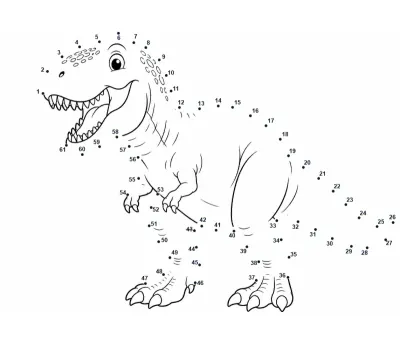
Connect the dots to reveal the largest carnivorous dinosaur ever discovered — bigger than even T-Rex! Spinosaurus had a giant sail on its back and hunted fish in rivers. Great for 1st and 2nd graders who love big dinosaurs.
Difficulty
Medium
!
Fun fact: Spinosaurus could be up to 59 feet long — longer than a school bus!
The printable PDF for this puzzle is coming soon. Check back shortly!
No sign-up needed. Opens as a PDF. Print on any US Letter (8.5 x 11 inch) paper. Free for home and classroom use.
Back to all dinosaur puzzlesSpinosaurus Dot-to-Dot Puzzle Guide
Move over, T-Rex — meet the Spinosaurus, the largest meat-eating dinosaur ever to walk the Earth! Longer than a school bus and equally at home in water as on land, Spinosaurus was a truly extraordinary animal. Its giant back sail makes it one of the most dramatic dinosaurs to draw. Grab a pencil and let this prehistoric giant rise from the page!
1–8 — The Head and Crocodile Jaws
Start at dot 1 and work through to dot 8 to sketch the long, narrow skull that looks more like a crocodile than a typical dinosaur. Children immediately notice how different this head shape is from T-Rex, which is a fantastic observation to encourage. The elongated snout rewards a steady, patient hand.
Fun fact!
Spinosaurus had cone-shaped teeth ideal for catching slippery fish — very different from the blade-like teeth of T-Rex. Its nostrils were positioned high on the skull, like a crocodile's, allowing it to keep most of its head submerged while still breathing. A brilliant piece of natural engineering.
Spinosaurus had cone-shaped teeth ideal for catching slippery fish — very different from the blade-like teeth of T-Rex. Its nostrils were positioned high on the skull, like a crocodile's, allowing it to keep most of its head submerged while still breathing. A brilliant piece of natural engineering.
9–20 — The Giant Sail
Continue from dot 9 to dot 20 to draw the towering sail that rises dramatically from the spine. This is the most thrilling section of the puzzle — the sail can be up to six feet tall, and children get to trace its full impressive height. Long, upward strokes build great arm confidence.
Fun fact!
The sail was supported by spines extending from the vertebrae, some stretching over five feet tall. Scientists still debate its purpose — it may have regulated temperature, stored fat like a camel's hump, or been a spectacular display structure for attracting mates or intimidating rivals.
The sail was supported by spines extending from the vertebrae, some stretching over five feet tall. Scientists still debate its purpose — it may have regulated temperature, stored fat like a camel's hump, or been a spectacular display structure for attracting mates or intimidating rivals.
21–32 — The Body
Trace dots 21 through 32 for the long, muscular body. Spinosaurus had a relatively low body profile compared to other large carnivores — adapted for swimming and wading in rivers. Children practise a flatter, more horizontal body shape here, which is a refreshing contrast to the upright stance of T-Rex.
Fun fact!
New fossil discoveries show Spinosaurus had short, dense bones — the opposite of what most dinosaurs had — which made it less buoyant and better suited to life underwater, much like modern diving birds. It is the only dinosaur we know of that spent significant time swimming.
New fossil discoveries show Spinosaurus had short, dense bones — the opposite of what most dinosaurs had — which made it less buoyant and better suited to life underwater, much like modern diving birds. It is the only dinosaur we know of that spent significant time swimming.
33–44 — The Legs and Tail
Connect dots 33 to 44 to add the legs and long, broad tail. The tail was paddle-shaped — another recent discovery that shocked palaeontologists — making it an effective swimming tool. Children practise both the stocky hind legs and the wide, flat tail shape in this final section.
Fun fact!
Spinosaurus was likely a slow, clumsy walker on land but a strong swimmer in rivers. Its paddle-like tail was confirmed only in 2020 from newly found fossil specimens in Morocco — proving that even the most studied dinosaurs can still surprise us.
Spinosaurus was likely a slow, clumsy walker on land but a strong swimmer in rivers. Its paddle-like tail was confirmed only in 2020 from newly found fossil specimens in Morocco — proving that even the most studied dinosaurs can still surprise us.
Outstanding effort on a 44-dot challenge! Your Spinosaurus is ready to wade into the river. This is a wonderful puzzle to pair with a trip to the library — there are brilliant books written specifically for children about Spinosaurus's extraordinary story.
More free dinosaur printables