
Gratis utskrivbar lekeplass
Swing Playground Punkt-til-punkt utskrivbar
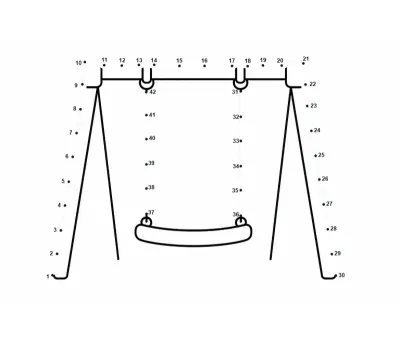
Connect 42 easy dots to reveal a cheerful playground scene complete with swings! This printable puzzle is perfect for preschool and kindergarten children practising number sequencing while celebrating the joy of outdoor play.
Vanskelighet
Lett
!
Morsomt faktum: Swings are one of the oldest playground inventions — children have been swinging on rope swings for thousands of years!
Last ned gratis utskrivbar PDF
Gratis for bruk hjemme og i klasserommet. Størrelse tilpasset papir i A4.
Foretrekker du Amerikansk brev? Last ned den versjonenIngen registrering nødvendig. Åpnes som PDF. Skriv ut på alle typer papir i amerikansk Letter-format (8,5 × 11 tommer). Gratis for bruk hjemme og i klasserommet.
← Tilbake til alle lekeplasspuslespillSwing Playground Prikk-til-prikk-puslespillguide
Playgrounds are places where imaginations run wild and friendships are made — and the swing is the undisputed king of the playground. Few things match the simple joy of pumping your legs and feeling the wind rush past as you arc higher and higher into the sky. This cheerful 42-dot puzzle captures that magic. Find dot 1, pick up your pencil, and let's play!
1–8 — The Swing Frame
Start at dot 1 and connect through to dot 8 to draw the tall A-frame that holds the swings in place. Children practise straight, confident lines that angle inward toward a point — a great introduction to geometric shapes in a fun, real-world context. Encourage a firm, deliberate stroke for the best result.
Morsomt faktum!
The classic A-frame swing set was designed to be as stable as possible — the triangular shape distributes weight evenly so the whole structure doesn't tip over even when children swing hard. Triangles are the strongest shape in engineering, which is why you see them everywhere from bridges to playground frames.
The classic A-frame swing set was designed to be as stable as possible — the triangular shape distributes weight evenly so the whole structure doesn't tip over even when children swing hard. Triangles are the strongest shape in engineering, which is why you see them everywhere from bridges to playground frames.
9–18 — The Crossbar and Chains
Continue from dot 9 to dot 18 to draw the horizontal crossbar at the top and the hanging chains. Children practise alternating between horizontal lines and downward-angling chains — a lovely exercise in changing direction deliberately and accurately. The chains are what make the swinging motion possible!
Morsomt faktum!
Modern playground chains are made from galvanised steel — steel coated with a layer of zinc — to prevent rust. Before steel chains, swings used thick ropes made from natural fibres like hemp or manila. Many children's first experience of a swing was a simple plank tied to a tree branch with rope, and that tradition continues in gardens around the world today.
Modern playground chains are made from galvanised steel — steel coated with a layer of zinc — to prevent rust. Before steel chains, swings used thick ropes made from natural fibres like hemp or manila. Many children's first experience of a swing was a simple plank tied to a tree branch with rope, and that tradition continues in gardens around the world today.
19–28 — The Swing Seat and Figure
Trace dots 19 through 28 to draw the swing seat and the outline of the child sitting on it. This is the most rewarding section of the puzzle — children see the whole purpose of the structure come together as a small figure takes their place. Remind children to look ahead to the next dot before lifting their pencil.
Morsomt faktum!
The sensation of swinging — the rising and falling, the brief moment of weightlessness at the top of each arc — activates the vestibular system in the brain, which is responsible for balance and spatial awareness. This is why swinging feels so good: it is genuinely beneficial sensory input that helps children develop balance, coordination, and body awareness.
The sensation of swinging — the rising and falling, the brief moment of weightlessness at the top of each arc — activates the vestibular system in the brain, which is responsible for balance and spatial awareness. This is why swinging feels so good: it is genuinely beneficial sensory input that helps children develop balance, coordination, and body awareness.
29–36 — The Ground and Surroundings
Connect dots 29 to 36 to draw the ground beneath the swings and the surrounding details. Children practise grounding the scene — giving the playground a sense of place and scale. This section builds an understanding of foreground and background that will serve them well in art and drawing for years to come.
Morsomt faktum!
Modern playgrounds use specially designed safety surfaces beneath swings — rubber tiles, wood chips, or rubber crumb — to cushion falls. This material is carefully engineered to absorb impact. Before safety surfacing became standard in the 1970s and 1980s, most playgrounds had hard concrete or packed dirt beneath the equipment.
Modern playgrounds use specially designed safety surfaces beneath swings — rubber tiles, wood chips, or rubber crumb — to cushion falls. This material is carefully engineered to absorb impact. Before safety surfacing became standard in the 1970s and 1980s, most playgrounds had hard concrete or packed dirt beneath the equipment.
37–42 — The Finishing Details
Finish by connecting dots 37 through 42 to add the final details that bring the playground scene to life. Just six dots to the finish line — encourage children to slow down and make these last lines their most careful and confident. A strong finish is the mark of a real dot-to-dot expert!
Morsomt faktum!
The world's longest swing set on record had over 100 swings in a single row. Community swing events — where large groups swing together — have been held in parks around the world as celebrations of outdoor play. The swing is one of the few pieces of playground equipment that adults enjoy just as much as children.
The world's longest swing set on record had over 100 swings in a single row. Community swing events — where large groups swing together — have been held in parks around the world as celebrations of outdoor play. The swing is one of the few pieces of playground equipment that adults enjoy just as much as children.
Brilliant — your playground is complete! Colour in the swings with your favourite colours and add some friends swinging alongside. Then head outside for the real thing — no coloured pencil can quite match the feeling of the wind in your hair at the top of a swing! For every age and theme, explore our full library of dot to dot printables.
Flere gratis utskrivbare lekeplassmaterialer
Du liker kanskje også
Vanlige spørsmål
Ofte stilte spørsmål
Er Swing Playground egnet for alderen Alder 4–7?
Ja. Dette 42-prikk-puslespillet er laget for barn i alderen Alder 4–7.
Hvordan skriver jeg ut Swing Playground?
Bruk knappen for gratis nedlasting på denne siden, og skriv deretter ut PDF-filen hjemme eller på skolen.
Hva bør barn bruke for å fullføre dette puslespillet?
En blyant fungerer best til å sette sammen prikkene, og barna kan fargelegge det ferdige bildet etterpå.