Οδηγοί
Γλωσσάρι Dot to Dot: Οι όροι Connect-the-Dots εξηγούνται απλά
Απλοί-αγγλικοί ορισμοί των όρων από τελεία σε κουκκίδα: σύνδεση των κουκκίδων, μέτρηση κουκκίδων, παζλ παράλειψης μέτρησης, λεπτές κινητικές δεξιότητες, λαβή μολυβιού, αλληλουχία αριθμών, ενσωμάτωση οπτικοκινητικής και άλλα.
Γονείς, δάσκαλοι και θεραπευτές χρησιμοποιούν μια εκπληκτική ορολογία γύρω από μια πολύ απλή δραστηριότητα. Εδώ είναι κάθε όρος που είναι πιθανό να συναντήσετε, ο οποίος ορίζεται σε μία ή δύο προτάσεις.
Η ίδια η δραστηριότητα
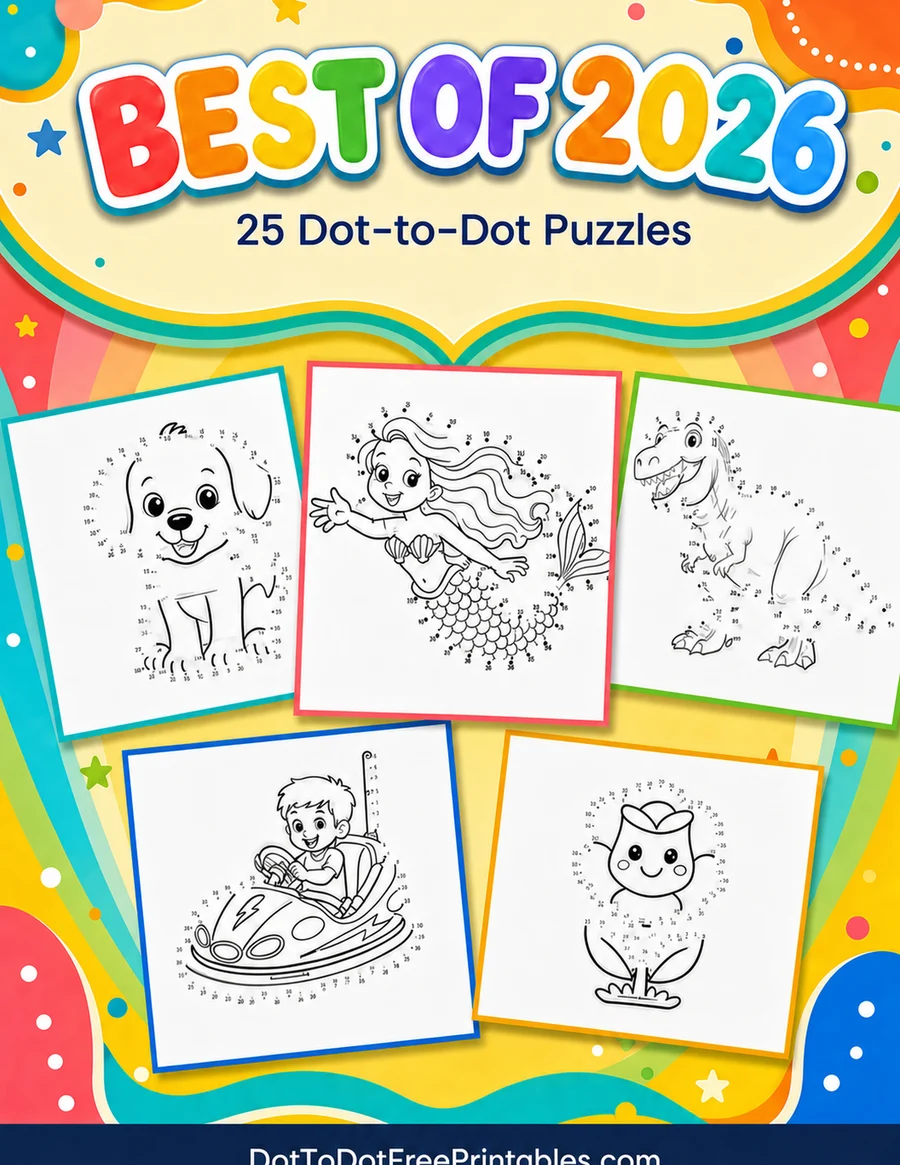
Dot to dot (επίσης, connect-the-dots, join-the-dots, point-to-point): ένα παζλ όπου οι αριθμημένες κουκκίδες ενώνονται με τη σειρά με ένα μολύβι μέχρι να εμφανιστεί μια κρυφή εικόνα. Και τα τέσσερα ονόματα περιγράφουν την ίδια δραστηριότητα. Το «dot to dot» κυριαρχεί στις ΗΠΑ, το «join the dots» στο Ηνωμένο Βασίλειο.
Αριθμός κουκκίδων: ο αριθμός των κουκκίδων σε ένα παζλ — το μοναδικό καλύτερο μέτρο δυσκολίας. Η συλλογή μας εκτείνεται από 67 κουκκίδες (Pterodactyl) έως 133 (Roller Coaster).
Παζλ παράλειψης μέτρησης: μια παραλλαγή όπου οι τελείες προχωρούν κατά 2, 5 ή 10 αντί για 1, μετατρέποντας την ίδια εικόνα σε πρακτική ετοιμότητας πολλαπλασιασμού.
Αλφάβητο από τελεία σε τελεία: μια παραλλαγή που χρησιμοποιεί γράμματα A–Z αντί για αριθμούς, που χρησιμοποιείται για εξάσκηση στη σειρά γραμμάτων στο Pre-K.
Αποκαλύψτε: τη στιγμή που οι τελευταίες γραμμές κάνουν αναγνωρίσιμη την κρυμμένη εικόνα — η ενσωματωμένη ανταμοιβή που κάνει τα παιδιά να επαναλαμβάνουν τη δραστηριότητα οικειοθελώς.
Οι δεξιότητες για τις οποίες μιλούν οι ενήλικες
Λεπτές κινητικές δεξιότητες: έλεγχος των μικρών μυών του χεριού και των δακτύλων. Η σχεδίαση γραμμών από τελεία σε τελεία είναι μια κλασική άσκηση με λεπτές κινήσεις.
Λήψη μολυβιού (λαβή τρίποδου): το κράτημα με τον αντίχειρα και τα δύο δάχτυλα που χρησιμοποιείται για αποτελεσματική γραφή. Η εργασία από τελεία σε τελεία ενισχύει τους μύες που τη συντηρούν.
Αλληλουχία αριθμών: γνωρίζοντας ότι το 7 ακολουθεί το 6 — η ακριβής ικανότητα που επαναλαμβάνεται σε κάθε κουκκίδα.
Αντιστοιχία ένα προς ένα: αντιστοίχιση ενός αριθμού με μία κουκκίδα. μια θεμελιώδης πρώιμα μαθηματικά έννοια.
Οπτική σάρωση / οπτική παρακολούθηση: μετακινήστε τα μάτια συστηματικά για να βρείτε την επόμενη κουκκίδα σε μια απασχολημένη σελίδα.
Οπτικοκινητική ολοκλήρωση (συντονισμός χεριού-ματιού): μεταφράζοντας αυτό που βλέπει το μάτι σε μια ακριβή κίνηση του χεριού — την ικανότητα που αναφέρουν οι εργοθεραπευτές πιο συχνά όταν συνιστούν τη σύνδεση των κουκκίδων.
Διάσχιση μέσης γραμμής: προσέγγιση του χεριού σχεδίασης κατά μήκος της κεντρικής γραμμής του σώματος, κάτι που φυσικά απαιτούν οι μεγάλες οριζόντιες συνδέσεις.
Ετοιμότητα γραφής (προεγγραφή): ο γενικός όρος για όλα τα παραπάνω — ο λόγος που τα φύλλα από κουκκίδα εμφανίζονται στα προγράμματα σπουδών του νηπιαγωγείου. Δείτε πώς λειτουργεί η εκμάθηση.
Όροι εκτύπωσης
US Letter / A4: τα δύο τυπικά μεγέθη χαρτιού (8,5×11 ίντσες / 210×297 mm). Κάθε PDF σε αυτόν τον ιστότοπο προσφέρεται και στα δύο.
Κατακόρυφος / οριζόντιος: κατακόρυφος ή οριζόντιος προσανατολισμός σελίδας. παρέχουμε και τα δύο για κάθε παζλ.
PDF έτοιμο για εκτύπωση: ένα αρχείο που εκτυπώνεται σωστά χωρίς λογισμικό ή προσαρμογές κλιμάκωσης — άνοιγμα, εκτύπωση, ολοκληρωμένη.
Δωρεάν εκτύπωση: ένα φύλλο εργασίας που διανέμεται χωρίς κόστος για προσωπική εκτύπωση ή εκτύπωση στην τάξη. Σε αυτόν τον ιστότοπο αυτό σημαίνει ότι δεν υπάρχει λογαριασμός, ηλεκτρονικό ταχυδρομείο ή πληρωμή — δείτε την πλήρη δωρεάν συλλογή.