Ozean
Wal Punkt zu Punkt Ausdruck — 42 Einfache Punkte zu Verbinden
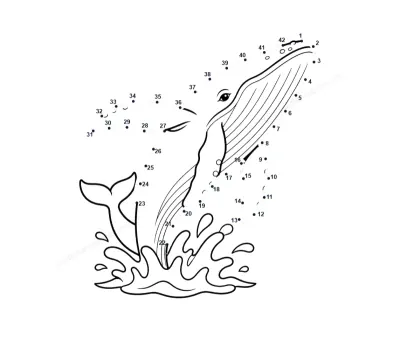
Verbinde 42 einfache Punkte, um einen prächtigen Wal zu enthüllen, der durch den Ozean schwimmt. Dieses druckbare Puzzle hilft Vorschul- und Kindergartenkindern, die Zahlenfolge, die Stiftkontrolle und die Konzentration zu üben.
Schwierigkeit
Einfach
Interessante Tatsache: Blauwale sind die größten Tiere, von denen bekannt ist, dass sie jemals auf der Erde gelebt haben!
Heruntergeladen15+malSie haben eine gute Wahl getroffen!
Downloads starten jetzt über die Schaltfläche unten. Tippe darauf, um das PDF dieses Rätsels zu erhalten.
Laden Sie das kostenlose druckbare PDF herunter
Kostenlos für den Gebrauch zu Hause und im Klassenzimmer. Größe für Papier der Größe A4.
Bevorzugen Sie US-Brief?Laden Sie diese Version herunterKeine Anmeldung erforderlich. Öffnet als PDF. Drucken Sie auf US-Letter- (8,5 × 11 Zoll) oder A4-Papier. Kostenlos für den Gebrauch zu Hause und im Klassenzimmer.
Ozean
Das könnte Ihnen auch gefallen
Alter 5–7 — Einfach
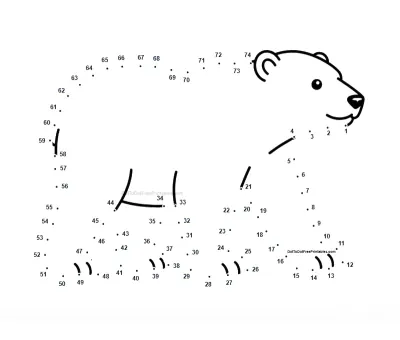
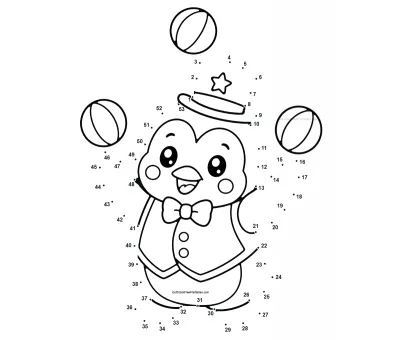
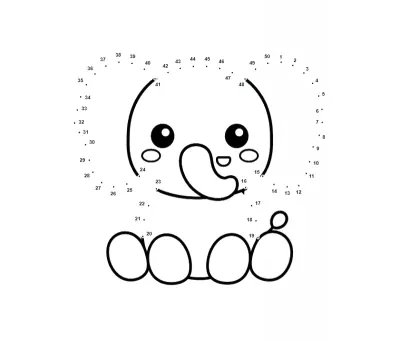
So löst du das Wal Punkt-zu-Punkt-Rätsel
The whale is the largest animal that has ever existed on our planet — bigger than any dinosaur, bigger than anything that has ever lived on land. And yet, for all their enormous size, whales are gentle, intelligent, deeply social creatures that sing to one another across hundreds of miles of open ocean. This 42-Punkt Rätsel captures that peaceful, unhurried quality. Take a deep breath, find Punkt 1, and dive in!
1–8 — Der Kopf und der Mund
Start at Punkt 1 and verbinde through to Punkt 8 to draw the whale's broad, rounded head and the gentle curve of the mouth. Whales have some of the most peacefully shaped heads in nature — no sharp teeth visible, no fierce expression. Children practise wide, slow curves here, matching the whale's own unhurried character.
Lustige Tatsache!
Das Herz eines Blauwals ist etwa so groß wie ein Kleinwagen – rund 400 Pfund – und schlägt nur etwa 8 bis 10 Mal pro Minute, wenn der Wal taucht. Wenn er an die Oberfläche kommt, beschleunigt sich der Herzschlag auf 25–37 Schläge pro Minute. Es ist das größte Herz aller Tiere, die jemals auf der Erde gelebt haben – wirklich unglaublich!
Das Herz eines Blauwals ist etwa so groß wie ein Kleinwagen – rund 400 Pfund – und schlägt nur etwa 8 bis 10 Mal pro Minute, wenn der Wal taucht. Wenn er an die Oberfläche kommt, beschleunigt sich der Herzschlag auf 25–37 Schläge pro Minute. Es ist das größte Herz aller Tiere, die jemals auf der Erde gelebt haben – wirklich unglaublich!
9–18 — Die Rücken- und Rückenflosse
Continue from Punkt 9 to Punkt 18 to trace the long, smooth back and the small dorsal fin. Compared to a dolphin's tall fin, a blue whale's dorsal fin is tiny — Kinder often comment on this, which sparks a lovely discussion about why different animals have different features. Long, flowing strokes work best for this gentle curve.
Lustige Tatsache!
Wal skin carries unique patterns of scars, spots, and markings — so distinctive that scientists can identify individual whales from photographs alone. Some whales in long-running studies have been followed for over 30 years. We know individual whales by name, personality, and family history. That is a remarkable thing.
Wal skin carries unique patterns of scars, spots, and markings — so distinctive that scientists can identify individual whales from photographs alone. Some whales in long-running studies have been followed for over 30 years. We know individual whales by name, personality, and family history. That is a remarkable thing.
19–30 — Der Bauch und der Körper
Trace Punkte 19 through 30 to fill out the enormous belly and complete the main body shape. The whale's underside is often a lighter colour than the back — a form of camouflage called countershading, common in ocean animals. Children practise the longest section of the Rätsel here, building real concentration stamina.
Lustige Tatsache!
A blue whale can eat up to four tonnes of krill — tiny shrimp-like creatures — in a single day. It does this by lunging into a swarm with its mouth open, gulping an enormous quantity of water, then pushing the water out through plates of baleen während the krill stays trapped inside. An elegant, ancient technique.
A blue whale can eat up to four tonnes of krill — tiny shrimp-like creatures — in a single day. It does this by lunging into a swarm with its mouth open, gulping an enormous quantity of water, then pushing the water out through plates of baleen während the krill stays trapped inside. An elegant, ancient technique.
31–36 — Die Flippers
Verbinde Punkte 31 to 36 to draw the long, paddle-shaped flippers. Wal flippers contain the same bones as a human hand and arm — five finger bones, a wrist, and an upper arm — just reshaped over millions of years for life in the ocean. Children love discovering this when you point it out mid-Rätsel.
Lustige Tatsache!
In einer Walflosse befinden sich dieselben Knochen, die man auch in der eigenen Hand hat – Daumen, Finger, Handgelenk und so weiter. Die Vorfahren der Wale bewegten sich vor etwa 50 Millionen Jahren an Land fort, und aus diesen Beinen sind im Laufe der Zeit die Flossen entstanden. Die Evolution ist im Grunde genommen ein sehr langsamer, sehr geduldiger Bildhauer.
In einer Walflosse befinden sich dieselben Knochen, die man auch in der eigenen Hand hat – Daumen, Finger, Handgelenk und so weiter. Die Vorfahren der Wale bewegten sich vor etwa 50 Millionen Jahren an Land fort, und aus diesen Beinen sind im Laufe der Zeit die Flossen entstanden. Die Evolution ist im Grunde genommen ein sehr langsamer, sehr geduldiger Bildhauer.
37–42 — Die Schwanzflossen
Finish the Rätsel by connecting Punkte 37 through 42 to draw the broad tail flukes — the most powerful structure in the animal kingdom relative to its purpose. Just six Punkte to complete this gentle giant. Encourage a confident, sweeping finish: the whale deserves a grand conclusion.
Lustige Tatsache!
A blue whale's tail flukes can be up to 25 feet wide — wider than many houses. Each downward stroke of those flukes propels the whale forward at up to 20 miles per hour in short bursts. Wal song — produced without any vocal cords — can travel over 1,000 miles through deep ocean water. These animals are extraordinary in almost every imaginable way.
A blue whale's tail flukes can be up to 25 feet wide — wider than many houses. Each downward stroke of those flukes propels the whale forward at up to 20 miles per hour in short bursts. Wal song — produced without any vocal cords — can travel over 1,000 miles through deep ocean water. These animals are extraordinary in almost every imaginable way.
Du hast gerade das größte Tier der Erde gezeichnet – gut gemacht! Dieses Rätsel passt wunderbar zu einem Gespräch über Meeresschutz. Wale wurden im letzten Jahrhundert fast bis zur Ausrottung gejagt und erholen sich heute langsam wieder. Kinder, die heute Wale lieben, sind genau die Menschen, die sie morgen schützen werden. Weitere Seiten für den Unterricht findest du in unseren Punkt-zu-Punkt-Arbeitsblättern.
Ausmalanleitung
Wal: Klassische echte Farben
Diese vertraute Palette verwendet Farben, die beim echten Motiv häufig vorkommen.
- 1–8 (Der Kopf und der Mund): Crayola Sea Green — Diese Farbe gibt diesem Teil sein vertrautes echtes Aussehen.
- 9–18 (Die Rücken- und Rückenflosse): Crayola Sky Blue — Diese Farbe gibt diesem Teil sein vertrautes echtes Aussehen.
- 19–30 (Der Bauch und der Körper): Crayola Cornflower — Diese Farbe gibt diesem Teil sein vertrautes echtes Aussehen.
- 31–36 (Die Flippers): Crayola Sea Green — Diese Farbe gibt diesem Teil sein vertrautes echtes Aussehen.
- 37–42 (Die Schwanzflossen): Crayola Sky Blue — Diese Farbe gibt diesem Teil sein vertrautes echtes Aussehen.
Wal: Sanfte Naturfarben
Diese hellere Palette zeigt eine echte blasse oder sonnenbeschienene Variante des Motivs.
- 1–8 (Der Kopf und der Mund): Crayola Silver — Der hellere Ton zeigt, wie dieser Teil bei hellem Tageslicht wirken kann.
- 9–18 (Die Rücken- und Rückenflosse): Crayola Gray — Der hellere Ton zeigt, wie dieser Teil bei hellem Tageslicht wirken kann.
- 19–30 (Der Bauch und der Körper): Crayola White — Der hellere Ton zeigt, wie dieser Teil bei hellem Tageslicht wirken kann.
- 31–36 (Die Flippers): Crayola Silver — Der hellere Ton zeigt, wie dieser Teil bei hellem Tageslicht wirken kann.
- 37–42 (Die Schwanzflossen): Crayola Gray — Der hellere Ton zeigt, wie dieser Teil bei hellem Tageslicht wirken kann.
Wal: Kräftige echte Farben
Diese kräftige Palette ist von echten Materialien, Zeichnungen oder Lackierungen inspiriert.
- 1–8 (Der Kopf und der Mund): Crayola Orange — Dieser dunklere Ton entspricht einer echten Zeichnung, einem Material oder einer Lackierung.
- 9–18 (Die Rücken- und Rückenflosse): Crayola Red Orange — Dieser dunklere Ton entspricht einer echten Zeichnung, einem Material oder einer Lackierung.
- 19–30 (Der Bauch und der Körper): Crayola Brown — Dieser dunklere Ton entspricht einer echten Zeichnung, einem Material oder einer Lackierung.
- 31–36 (Die Flippers): Crayola Orange — Dieser dunklere Ton entspricht einer echten Zeichnung, einem Material oder einer Lackierung.
- 37–42 (Die Schwanzflossen): Crayola Red Orange — Dieser dunklere Ton entspricht einer echten Zeichnung, einem Material oder einer Lackierung.
Warum ist das Wal Punkt-zu-Punkt-Bild als Einfach eingestuft?
Wal hat den Schwierigkeitsgrad Einfach. Von den 42 Punkten verlaufen 28 in geraden Linien, dazu kommen 6 runde, 3 Zickzack- und 5 Punkte mit scharfen Wendungen. Der Abschnitt, bei dem du langsamer machen solltest, ist Kopf und Mund bei den Punkten 2–3. Folge der nummerierten Reihenfolge, auch wenn ein anderer Punkt näher aussieht, und sieh dir vor jeder Kurve die nächste Zahl an.
Gerade
28 Punkte · 67 %
Am einfachsten — zwei Punkte mit einem geraden Strich verbinden.
Gebogen
6 Punkte · 14 %
2 3
Zickzack
3 Punkte · 7 %
Schnelle Richtungswechsel hin und her. Gute Zählübung.
Enge Kurven
5 Punkte · 12 %
Die schwierigsten Stellen — enge Ecken, an denen die Linie zurückläuft.
Wir haben alle 42 Punkte auf genau diesem Arbeitsblatt von Hand nachgezeichnet, um das zu schreiben — keine pauschale Schätzung.
Wichtige Abschnitte
Jeder auffällige Abschnitt der Linie, Punkt für Punkt.
| Punktbereich | Muster | Warum das wichtig ist |
|---|---|---|
| 2 3 | Gebogen | Die Umrisslinie schwingt hier um Kopf und Mund — zeichne die Punkte 2 bis 3 in kurzen Strichen. |
Fazit: Das Wal Punkt-zu-Punkt-Bild ist als einfach eingestuft — 81 % ruhige Linien, mit keinen kniffligen Stellen, auf die man achten sollte.