UAE
Burj Al Arab Dot to Dot — Free 66-Dot Printable for Ages 5–7
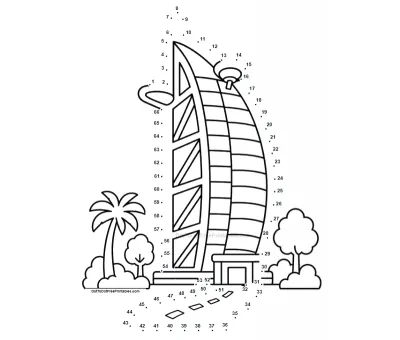
Connect 66 dots to reveal the Burj Al Arab, the iconic sail-shaped hotel rising from its own island off the coast of Dubai. This easy puzzle is perfect for young learners practising number sequencing while discovering one of the world's most famous skylines.
Difficulty
Easy
Fun fact: The Burj Al Arab stands on an artificial island and is one of the tallest hotels in the world!
Downloaded0+timesYou’ve made a great choice!
Downloads now start from the button below. Tap it to get this puzzle's PDF.
Number Version
Connect the numbered dots from 1 to the end to reveal the picture.
Free for home and classroom use.
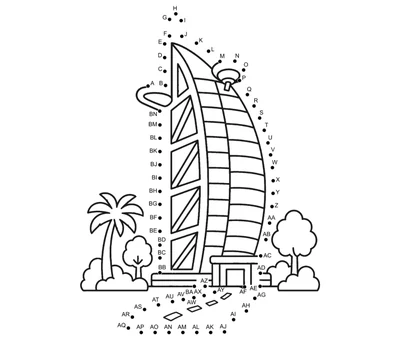
Alphabet Version
Includes alphabet-themed design for easy learning.
No sign-up needed. Opens as a PDF. Print on US Letter (8.5 × 11 inch) or A4 paper. Free for home and classroom use.
UAE
You might also like
Ages 5–7 — Easy
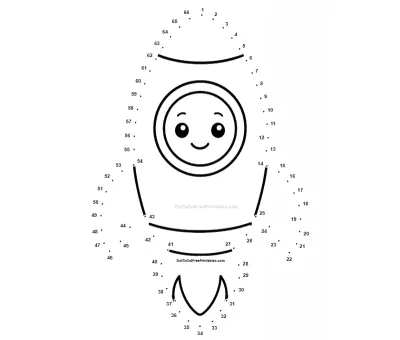
How to Solve the Burj Al Arab Dot-to-Dot Puzzle
The Burj Al Arab is one of the most recognisable buildings on Earth — a gleaming, sail-shaped tower rising from its own man-made island in the Arabian Gulf. Built to look like the billowing sail of a traditional dhow boat, it has become a symbol of modern Dubai and the United Arab Emirates. This 66-dot puzzle traces its dramatic curved silhouette. Find dot 1 and let's build this famous skyline together!
1–13 — The Mast and Tip
Start at dot 1 and connect through to dot 13 to trace the tall, curving mast at the very top of the building. This narrow section builds steady pencil control right from the start — a great warm-up before the wider shapes below. Encourage children to keep their lines smooth and slightly curved, just like the real sail.
Fun fact!
The Burj Al Arab stands about 321 metres (1,053 feet) tall, with a helipad that sticks out from the building near the top and has hosted a tennis match and golf demonstrations high above the sea! Read more on Jumeirah's official Burj Al Arab page.
The Burj Al Arab stands about 321 metres (1,053 feet) tall, with a helipad that sticks out from the building near the top and has hosted a tennis match and golf demonstrations high above the sea! Read more on Jumeirah's official Burj Al Arab page.
14–26 — The Curving Sail
Continue from dot 14 to dot 26 to sweep out the building's famous curved front — the part that looks just like a sail filled with wind. Children practise a long, graceful outward curve here, one of the most satisfying shapes in the whole puzzle. A slow, steady hand gives the best sweeping line.
Fun fact!
The building was designed by architect Tom Wright, who wanted to create a structure as iconic as the Sydney Opera House or the Eiffel Tower. The sail shape was inspired by the traditional Arab dhow sailing vessels that have sailed the Gulf for centuries.
The building was designed by architect Tom Wright, who wanted to create a structure as iconic as the Sydney Opera House or the Eiffel Tower. The sail shape was inspired by the traditional Arab dhow sailing vessels that have sailed the Gulf for centuries.
27–39 — The Back Support Frame
Trace dots 27 through 39 to draw the tall vertical support structure that braces the building from behind. This section introduces straighter lines mixed with gentle angles, giving children practice moving between curved and straight strokes in the same puzzle.
Fun fact!
The Burj Al Arab is not actually the tallest building in Dubai — that title belongs to the Burj Khalifa, which is over twice as tall! But the Burj Al Arab remains one of the most photographed buildings in the world thanks to its unique shape.
The Burj Al Arab is not actually the tallest building in Dubai — that title belongs to the Burj Khalifa, which is over twice as tall! But the Burj Al Arab remains one of the most photographed buildings in the world thanks to its unique shape.
40–52 — The Main Tower Body
Connect dots 40 to 52 to fill in the wide main body of the hotel tower. This is the biggest section of the puzzle, helping children build focus and patience as the recognisable silhouette really starts to take shape.
Fun fact!
Inside, the Burj Al Arab is famous for its enormous atrium — tall enough to fit a 590-foot-high open space, one of the tallest atriums in the world. The lobby fountains inside are choreographed to dance in time with music.
Inside, the Burj Al Arab is famous for its enormous atrium — tall enough to fit a 590-foot-high open space, one of the tallest atriums in the world. The lobby fountains inside are choreographed to dance in time with music.
53–66 — The Island Base
Finish the puzzle by connecting dots 53 through 66 to draw the base of the building and the artificial island it stands on. Just fourteen dots to the finish line — encourage children to complete the outline with a confident, grounded set of final lines.
Fun fact!
The hotel sits on its own private island, connected to the mainland by a curving bridge. Engineers had to build the island first, using sand and rock, before construction on the tower itself could even begin — the whole project took years of careful planning.
The hotel sits on its own private island, connected to the mainland by a curving bridge. Engineers had to build the island first, using sand and rock, before construction on the tower itself could even begin — the whole project took years of careful planning.
Wonderful — your Burj Al Arab is complete! Now give it a shimmering gold, blue, or sunset colour scheme to match the real hotel's dramatic lighting shows. Ready for another famous landmark? Explore more UAE dot to dot printables to keep the fun going.
Coloring Guide
Burj Al Arab: Classic Real-Life Colors
Everyday colours you would spot on a postcard of the Burj Al Arab — the blue of the Gulf around it and the warm glow the tower takes from the Dubai sun.
| Dot Range | Part | Color | Why this color | |
|---|---|---|---|---|
| Numeric | Alphabet | |||
| 1–13 | A–M | The Mast and Tip | Crayola Scarlet | This is the slim steel mast crowning the tower; keep the strokes narrow and straight. |
| 14–26 | N–Z | The Curving Sail | Crayola Sky Blue | The billowing front was shaped after a dhow's sail, so a sweeping line here matches both the design idea and the Gulf behind it. |
| 27–39 | AA–AM | The Back Support Frame | Crayola Goldenrod | The exposed A-frame running down the back braces the whole tower; a warmer tone sets these girders apart from the pale sail. |
| 40–52 | AN–AZ | The Main Tower Body | Crayola Scarlet | This broad midsection holds the hotel's rooms and its towering indoor atrium, the largest single block of colour on the page. |
| 53–66 | BA–BN | The Island Base | Crayola Sky Blue | The hotel stands on a man-made island ringed by sea, so colour at the foot shows the water it rises from. |
Burj Al Arab: Soft Natural Colors
At midday the hotel's fabric front turns almost white and the sea fades to a pale turquoise, which is the washed-out look this lighter set goes for.
| Dot Range | Part | Color | Why this color | |
|---|---|---|---|---|
| Numeric | Alphabet | |||
| 1–13 | A–M | The Mast and Tip | Crayola Silver | In full daylight the steel mast catches sun and looks almost silver-grey against the sky. |
| 14–26 | N–Z | The Curving Sail | Crayola Tan | The woven fabric screen glares near-white at noon, so only a faint warm tint stays visible on the sail. |
| 27–39 | AA–AM | The Back Support Frame | Crayola Sea Green | Bright overhead sun washes the rear support frame to a pale, chalky green-grey. |
| 40–52 | AN–AZ | The Main Tower Body | Crayola Silver | Midday light flattens the tower body to a soft, almost shadowless pale tone. |
| 53–66 | BA–BN | The Island Base | Crayola Tan | Sunlit shallows around the island turn a gentle, milky blue-green. |
Burj Al Arab: Bold Real-Life Colors
After sunset the Burj Al Arab is floodlit in slowly changing colours, so this stronger set leans into those deep show-lighting shades.
| Dot Range | Part | Color | Why this color | |
|---|---|---|---|---|
| Numeric | Alphabet | |||
| 1–13 | A–M | The Mast and Tip | Crayola Forest Green | During the evening light shows the top of the mast burns a saturated colour, deep green here. |
| 14–26 | N–Z | The Curving Sail | Crayola Brown | The sail becomes a projection screen after dark, taking rich painted-on hues like this warm brown. |
| 27–39 | AA–AM | The Back Support Frame | Crayola Orange | Strong uplighting makes the back frame glow a hot orange against the night sky. |
| 40–52 | AN–AZ | The Main Tower Body | Crayola Forest Green | The main body carries the boldest, most solid wash of the nightly colour show. |
| 53–66 | BA–BN | The Island Base | Crayola Brown | Even the island and its curving bridge are lit after dark, so a deep tone grounds the scene. |
Why Is the Burj Al Arab Dot to Dot Printable Rated Easy?
The Burj Al Arab is rated easy. Of its 66 dots, 44 run in straight lines, with 8 curved, 8 zigzag and 6 sharp-turn dots. The stretches to slow down for are back support frame at dots 31–32 and mast and tip at dots 5–7. Follow the numbered order even when another dot looks nearer, and check the next number before each turn.
Straight
44 dots · 67%
Easiest — join two dots with one straight pencil stroke.
Curved
8 dots · 12%
A gentle bend, so the pencil has to slow down and steer.
Zigzag
8 dots · 12%
5 7
Sharp turns
6 dots · 9%
31 32
We traced all 66 dots on this exact worksheet by hand — the sharp turns at dots 31–32 is where it got tricky, and you can check that against your own printout.
Key Sections to Know
Every notable stretch of the path, dot by dot.
| Dot Range | Pattern | Why It Matters | |
|---|---|---|---|
| Numeric | Alphabet | ||
| 5 7 | E G | Zigzag | The line saw-tooths along mast and tip from dot 5 to dot 7; check every number as you go. |
| 31 32 | AE AF | Sharp turns | There is a tight angle at back support frame here; treat dots 31 and 32 as two separate short lines. |
Bottom line: The Burj Al Arab dot to dot is easy rated — 79% smooth lines with just 2 short sections to watch for.