America 250 Years
Winged Liberty Bell Dot to Dot — Free 64-Dot Printable for Ages 5–8
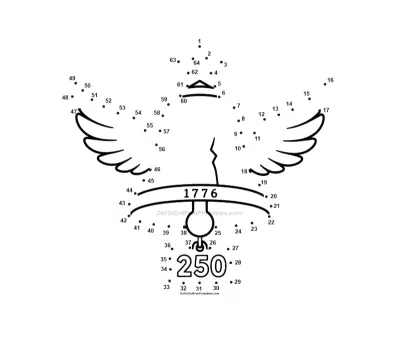
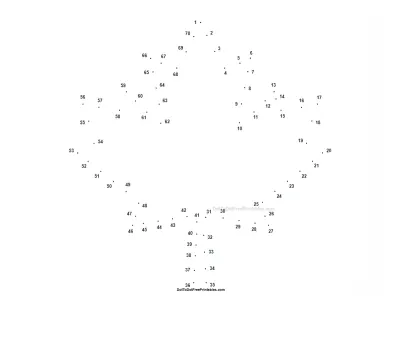
Connect 64 dots to reveal the iconic Liberty Bell soaring with wings to celebrate America's 250th anniversary! This free printable worksheet helps young children practise number sequencing and fine motor skills while exploring one of America's most beloved symbols of freedom. Perfect for ages 5–8.
Difficulty
Medium
Fun fact: The Liberty Bell famously cracked after years of use. The original State House bell was ordered from London in 1751, cracked on its first test ring, and was recast in Philadelphia by John Pass and John Stow in 1753. Its inscription reads "Proclaim Liberty Throughout All the Land."
Downloaded0+timesYou’ve made a great choice!
Downloads now start from the button below. Tap it to get this puzzle's PDF.
Number Version
Connect the numbered dots from 1 to the end to reveal the picture.
Free for home and classroom use.
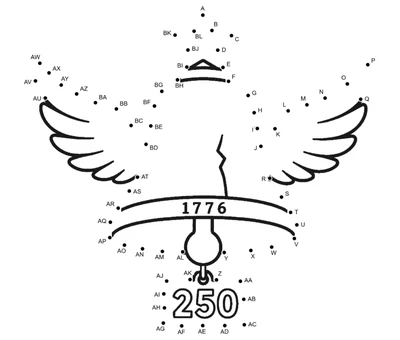
Alphabet Version
Includes alphabet-themed design for easy learning.
No sign-up needed. Opens as a PDF. Print on US Letter (8.5 × 11 inch) or A4 paper. Free for home and classroom use.
America 250 Years
You might also like
Ages 5–8 — Medium
How to Solve the America 250 Liberty Bell Wings Dot-to-Dot Puzzle
America is turning 250 years old — and what better symbol to celebrate than the Liberty Bell! This legendary State House bell hung in Philadelphia when the Declaration of Independence was adopted, and its message of liberty became famous in the 1800s. Grab your pencil, find dot 1, and let's make freedom ring!
1–13 — The Bell's Crown and Yoke
Start at dot 1 and connect through to dot 13 to trace the crown and yoke at the very top of the Liberty Bell — the sturdy frame that holds it in place. These steady curved and straight lines help children warm up their pencil grip and practise the controlled strokes they'll need for the rest of the picture.
Fun fact!
The Liberty Bell's wooden yoke is made from American elm, though historians cannot prove it is the bell's original yoke. The bell was hung from a wooden support so it could swing freely and produce its deep, resonant tone across colonial Philadelphia.
The Liberty Bell's wooden yoke is made from American elm, though historians cannot prove it is the bell's original yoke. The bell was hung from a wooden support so it could swing freely and produce its deep, resonant tone across colonial Philadelphia.
14–26 — The Bell Body
Continue from dot 14 to dot 26 to draw the wide, rounded body of the Liberty Bell. These broad, sweeping curves are great practice for smooth wrist movements, helping children develop the pencil control they need for confident, fluent handwriting.
Fun fact!
The Liberty Bell weighs 2,080 pounds — nearly a tonne! It was cast from a mix of copper and tin, which is the traditional recipe for bronze. The bell's distinctive deep tone comes from its large size and the precise ratio of metals used in its construction.
The Liberty Bell weighs 2,080 pounds — nearly a tonne! It was cast from a mix of copper and tin, which is the traditional recipe for bronze. The bell's distinctive deep tone comes from its large size and the precise ratio of metals used in its construction.
27–39 — The Soaring Wings
Trace dots 27 through 39 to add the magnificent wings that lift the Liberty Bell towards the sky. These bold, sweeping arcs give children a wonderful opportunity to practise long, flowing lines — building the arm movement and directional control that are key early writing skills.
Fun fact!
The bald eagle — symbol of the United States since 1782 — is famous for its enormous wingspan of up to 2.4 metres (8 feet). Its powerful wings allow it to soar on warm air currents called thermals, staying aloft for long stretches with very little flapping.
The bald eagle — symbol of the United States since 1782 — is famous for its enormous wingspan of up to 2.4 metres (8 feet). Its powerful wings allow it to soar on warm air currents called thermals, staying aloft for long stretches with very little flapping.
40–52 — The Stars and Patriotic Details
Connect dots 40 through 52 to add the patriotic stars and decorative details that surround the bell. These shorter, more precise lines are great for building fine motor control — children must focus carefully to hit each dot accurately, which sharpens the hand–eye coordination needed for reading and writing.
Fun fact!
The 50 stars on the American flag each represent one of the 50 states. The first official Stars and Stripes design was approved in 1777 with 13 stars and 13 stripes for the original states. New stars have been added as new states joined the Union, with the most recent — Hawaii — added on 4 July 1960.
The 50 stars on the American flag each represent one of the 50 states. The first official Stars and Stripes design was approved in 1777 with 13 stars and 13 stripes for the original states. New stars have been added as new states joined the Union, with the most recent — Hawaii — added on 4 July 1960.
53–64 — The 1776 Inscription and Finishing Touches
Finish the puzzle by connecting dots 53 through 64 to complete the "1776" inscription and the final flourishes that bring the whole image to life. Take your time with these last dots — a steady, careful finish is the mark of a true dot to dot champion!
Fun fact!
1776 is one of the most important years in American history. On 4 July 1776, the Continental Congress formally adopted the Declaration of Independence, proclaiming that all thirteen American colonies were free and independent states. That date is now celebrated every year as Independence Day — America's birthday.
1776 is one of the most important years in American history. On 4 July 1776, the Continental Congress formally adopted the Declaration of Independence, proclaiming that all thirteen American colonies were free and independent states. That date is now celebrated every year as Independence Day — America's birthday.
Wonderful work — your Liberty Bell is soaring with freedom! That's 64 dots and one spectacular symbol of American independence. Colour the bell in golden bronze, the wings in brown and white, and the stars in red, white, and blue to give America the most patriotic 250th birthday tribute possible. Let freedom ring! Love a challenge? Explore more America 250 dot to dot printables to keep the fun going.
Coloring Guide
America 250 Liberty Bell Wings: Classic Real-Life Colors
The real Liberty Bell is bronze on a wooden yoke; this palette adds flag red and blue around that golden-brown metal.
| Dot Range | Part | Color | Why this color | |
|---|---|---|---|---|
| Numeric | Alphabet | |||
| 1–13 | A–M | The Bell's Crown and Yoke | Crayola Scarlet | The crown bolts the bell to an American elm yoke so it can swing; red picks the frame out here. |
| 14–26 | N–Z | The Bell Body | Crayola Sky Blue | The 2,080-pound body is cast bronze - copper and tin - which gives its deep tone; blue stands in for that mass. |
| 27–39 | AA–AM | The Soaring Wings | Crayola Goldenrod | The added wings borrow the bald eagle's shape; warm gold suits feathers lifting toward the light. |
| 40–52 | AN–AZ | The Stars and Patriotic Details | Crayola Scarlet | These stars stand for the 50 states; red is one of the three true flag colours around them. |
| 53–64 | BA–BL | The 1776 Inscription and Finishing Touches | Crayola Sky Blue | 1776 is the year the Declaration was adopted; blue keeps the numerals clear in the finished picture. |
America 250 Liberty Bell Wings: Soft Natural Colors
In soft daylight old bronze and elm read as pale grey-gold and tan rather than dark metal.
| Dot Range | Part | Color | Why this color | |
|---|---|---|---|---|
| Numeric | Alphabet | |||
| 1–13 | A–M | The Bell's Crown and Yoke | Crayola Silver | Polished spots on the crown and hardware catch light as bright silver. |
| 14–26 | N–Z | The Bell Body | Crayola Tan | Aged bronze lit from the side looks warm and pale, closer to tan than brown. |
| 27–39 | AA–AM | The Soaring Wings | Crayola Sea Green | Bronze that weathers outdoors grows a soft green patina, the shade used here for the wings. |
| 40–52 | AN–AZ | The Stars and Patriotic Details | Crayola Silver | Pale silver suits star outlines catching flat, even daylight. |
| 53–64 | BA–BL | The 1776 Inscription and Finishing Touches | Crayola Tan | The carved 1776 digits read as light tan where sun falls across them. |
America 250 Liberty Bell Wings: Bold Real-Life Colors
Deep bronze, brown and rust tones show the bell as a heavy, cast, much-repaired object.
| Dot Range | Part | Color | Why this color | |
|---|---|---|---|---|
| Numeric | Alphabet | |||
| 1–13 | A–M | The Bell's Crown and Yoke | Crayola Forest Green | Dark green is the patina thick old bronze grows; it settles first in the crown's crevices. |
| 14–26 | N–Z | The Bell Body | Crayola Brown | Rich brown is close to the bell's real bronze - the copper-tin mix that rings so deep. |
| 27–39 | AA–AM | The Soaring Wings | Crayola Orange | Burnt orange suits bronze wings freshly cast, before weather dulls them. |
| 40–52 | AN–AZ | The Stars and Patriotic Details | Crayola Forest Green | A strong green gives the stamped patriotic details the look of old painted metal. |
| 53–64 | BA–BL | The 1776 Inscription and Finishing Touches | Crayola Brown | Deep brown fits the 1776 inscription cut into dark, aged bronze. |
Why Is the America 250 Liberty Bell Wings Dot to Dot Printable Rated Medium?
America 250 Liberty Bell Wings is rated medium. Of its 64 dots, 33 run in straight lines, with 9 curved, 11 zigzag and 11 twisted dots — a livelier mix than most puzzles this size. The Bell's Crown and Yoke and The Bell Body sections stay smooth and curved, while The Soaring Wings bring the boldest sweeping arcs in the picture, so ease into the line rather than rushing it there.
Straight
33 dots · 52%
Easiest — join two dots with one straight pencil stroke.
Curved
9 dots · 14%
1 64
Zigzag
11 dots · 17%
Quick in-and-out changes of direction. Good counting practice.
Sharp turns
11 dots · 17%
The hardest bits — tight corners where the line doubles back.
We traced all 64 dots on this exact worksheet by hand to write this — not a generic guess.
Key Sections to Know
Every notable stretch of the path, dot by dot.
| Dot Range | Pattern | Why It Matters | |
|---|---|---|---|
| Numeric | Alphabet | ||
| 1 64 | A BL | Curved | The line moves between straight stretches and curved, zigzag, and twisted turns throughout, from the Bell's Crown and Yoke and Bell Body up through the Soaring Wings, the Stars and Patriotic Details, and the 1776 Inscription at the finish — check the next number before each turn rather than guessing ahead. |
Bottom line: The America 250 Liberty Bell Wings dot to dot is medium rated — 66% smooth lines with no tricky spots to watch for.