Playgrounds
Seesaw Dot to Dot — Free 68-Dot Printable for Ages 5–7
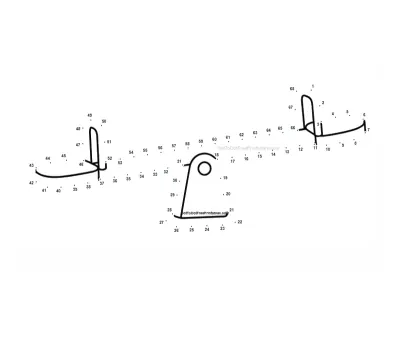
Connect 68 dots to reveal two friends balancing on a classic playground seesaw. With a dot count in the middle of the playground range, this one is a solid middle step for kids building up their number-sequencing confidence.
Difficulty
Easy
Fun fact: Seesaws are sometimes called 'teeter-totters' in American English — both names describe the same simple up-and-down motion that's kept kids entertained for generations.
Downloaded1+timesYou’ve made a great choice!
Downloads now start from the button below. Tap it to get this puzzle's PDF.
Free for home and classroom use.
No sign-up needed. Opens as a PDF. Print on US Letter (8.5 × 11 inch) or A4 paper. Free for home and classroom use.
Playgrounds
You might also like
Ages 5–7 — Easy
How to Solve the Seesaw Playground Dot-to-Dot Puzzle
There's a small bit of teamwork built right into the seesaw — it only works if both riders play along, pushing off and rising in turn. This 68-dot puzzle draws that back-and-forth balance from the ground up, plank first, riders last. It's a nice step up in length from our easiest playground sheet without tipping into expert territory. Find dot 1 and let's get this thing balanced.
1–14 — The Fulcrum
Start at dot 1 and connect through to dot 14 to draw the sturdy central support that the whole seesaw balances on. These lines are short and angled, giving children practice building a solid base shape before anything else gets added on top.
Fun fact!
The central support of a seesaw is called a fulcrum — the same word engineers use for the pivot point of any lever. A seesaw is technically one of the simplest machines there is: a lever balanced on a fixed point.
The central support of a seesaw is called a fulcrum — the same word engineers use for the pivot point of any lever. A seesaw is technically one of the simplest machines there is: a lever balanced on a fixed point.
15–28 — The Plank
Continue from dot 15 to dot 28 to draw the long plank that rests across the fulcrum. Children practise drawing one continuous, gently sloped line — good preparation for steady hand control on longer strokes.
Fun fact!
Older seesaws were often built from a single wooden plank, and the name is thought to come from the back-and-forth motion — 'see' and 'saw' echo the back-and-forth motion of an old two-person saw being pulled across a log.
Older seesaws were often built from a single wooden plank, and the name is thought to come from the back-and-forth motion — 'see' and 'saw' echo the back-and-forth motion of an old two-person saw being pulled across a log.
29–42 — The Handles
Trace dots 29 through 42 to add the handles at each end of the plank. This section has children working on both sides of the puzzle in turn, practising symmetry as they build a matching shape at each end.
Fun fact!
Handles weren't always standard on seesaw designs. Early playground versions had riders grip the plank itself, which is part of why modern safety standards now call for dedicated hand grips on either end.
Handles weren't always standard on seesaw designs. Early playground versions had riders grip the plank itself, which is part of why modern safety standards now call for dedicated hand grips on either end.
43–56 — The First Rider
Connect dots 43 to 56 to draw the child sitting on the raised end of the seesaw. This is where the scene starts to feel alive — remind children to look ahead to the next dot before lifting their pencil so the figure comes out smooth.
Fun fact!
Riding a seesaw is a genuinely useful balance exercise. Shifting your weight to stay upright as the plank tips activates the same core muscles and inner-ear balance system used in gymnastics and dance.
Riding a seesaw is a genuinely useful balance exercise. Shifting your weight to stay upright as the plank tips activates the same core muscles and inner-ear balance system used in gymnastics and dance.
57–68 — The Second Rider and Ground
Finish by connecting dots 57 through 68 to draw the second child on the lowered end and the ground beneath the seesaw. Just twelve dots left — a careful, confident finish here completes the whole scene.
Fun fact!
Some modern playgrounds have replaced the traditional two-rider seesaw with spring-mounted versions that let one child rock alone, though the classic pivoting two-seater is still the most common design worldwide.
Some modern playgrounds have replaced the traditional two-rider seesaw with spring-mounted versions that let one child rock alone, though the classic pivoting two-seater is still the most common design worldwide.
Nicely done — your seesaw is perfectly balanced! Colour in the two riders with your favourite outfits, or add a playground full of friends waiting for their turn. Explore more playground dot to dot printables to keep the fun going.
Coloring Guide
Seesaw Playground: Classic Real-Life Colors
A real seesaw is a coated-steel pivot and a painted beam with grips at each end, and this palette keeps those parts and the two riders close to life.
- 1–14 (The Fulcrum): Crayola Scarlet — The central pivot is a heavy steel casting or tube, powder-coated a strong colour and bolted low to the ground.
- 15–28 (The Plank): Crayola Sky Blue — Older seesaw planks were bare timber; modern ones are steel or tough plastic beams painted a bright block colour.
- 29–42 (The Handles): Crayola Goldenrod — The end grips are coated steel bars or moulded plastic, kept a bright colour so hands find them fast.
- 43–56 (The First Rider): Crayola Scarlet — A child on the seesaw wears everyday playground clothes, so this part can be whatever colour a child likes.
- 57–68 (The Second Rider and Ground): Crayola Sky Blue — The second rider matches the first for everyday clothes, and the ground below is loose bark or rubber mulch.
Seesaw Playground: Soft Natural Colors
This lighter set shows the seesaw under strong sun, when paint looks bleached and the metal grips shine pale silver.
- 1–14 (The Fulcrum): Crayola Silver — Midday light bounces off the coated pivot, washing it pale where the steel curves.
- 15–28 (The Plank): Crayola Tan — Strong daylight washes the plank's paint to a lighter, sun-warmed version along its length.
- 29–42 (The Handles): Crayola Silver — Sunlight polishes the metal grips to a pale silver where thousands of hands have thinned the coating.
- 43–56 (The First Rider): Crayola Silver — Under midday sun a rider's clothes look bleached and pale, their colours softened by the strong light.
- 57–68 (The Second Rider and Ground): Crayola Tan — Bright light fades the second rider's clothes too, and dries the ground cover to a pale straw tone.
Seesaw Playground: Bold Real-Life Colors
This bolder set is a freshly painted seesaw with bright new grips, ridden by two children in bold playground clothes.
- 1–14 (The Fulcrum): Crayola Forest Green — The pivot takes the hardest wear on the ride, so it gets the toughest, deepest coat of rust-proof paint.
- 15–28 (The Plank): Crayola Brown — A stronger colour suits a newly painted beam, deep and glossy before years of sun fade it.
- 29–42 (The Handles): Crayola Orange — A bold accent stands in for new grip coating, bright and grippy before it wears back to bare metal.
- 43–56 (The First Rider): Crayola Forest Green — A rich colour is the kind of bold outfit a child might really wear to the playground.
- 57–68 (The Second Rider and Ground): Crayola Brown — A deep tone suits a bold outfit on the second rider and fresh dark bark chips underneath.
Why Is the Seesaw Playground Dot to Dot Printable Rated Easy?
The Seesaw Playground is rated easy. Of its 68 dots, 48 run in straight lines, with 7 curved, 4 zigzag and 9 sharp-turn dots. The stretches to slow down for are fulcrum at dots 6–7 and handles at dots 42–43. Follow the numbered order even when another dot looks nearer, and check the next number before each curve.
Straight
48 dots · 71%
Easiest — join two dots with one straight pencil stroke.
Curved
7 dots · 10%
6 7
Zigzag
4 dots · 6%
Quick in-and-out changes of direction. Good counting practice.
Sharp turns
9 dots · 13%
The hardest bits — tight corners where the line doubles back.
We traced all 68 dots on this exact worksheet by hand to write this — not a generic guess.
Key Sections to Know
Every notable stretch of the path, dot by dot.
| Dot Range | Pattern | Why It Matters |
|---|---|---|
| 6 7 | Curved | A gentle curve shapes fulcrum across dots 6–7. Spot dot 7 before you commit to the line. |
| 42 43 | Curved | Follow handles as it curls from dot 42 to dot 43, easing the line rather than snapping it. |
Bottom line: The Seesaw Playground dot to dot is easy rated — 81% smooth lines with no tricky spots to watch for.