Playgrounds
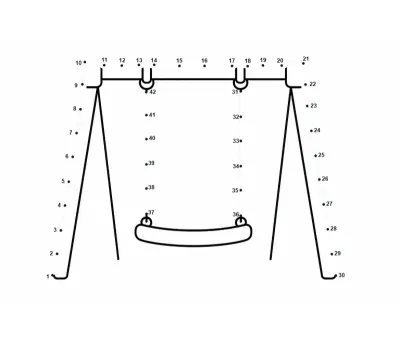
Swing Set Dot to Dot — Free 42-Dot Printable for Ages 5–7
Connect 42 easy dots to reveal a cheerful playground scene complete with swings! This printable puzzle is perfect for preschool and kindergarten children practising number sequencing while celebrating the joy of outdoor play.
Difficulty
Easy
Fun fact: Swings are one of the oldest playground inventions — children have been swinging on rope swings for thousands of years!
Free for home and classroom use.
No sign-up needed. Opens as a PDF. Print on US Letter (8.5 × 11 inch) or A4 paper. Free for home and classroom use.
Playgrounds
You might also like
Ages 5–7 — Easy
How to Solve the Swing Playground Dot-to-Dot Puzzle
Playgrounds are places where imaginations run wild and friendships are made — and the swing is the undisputed king of the playground. Few things match the simple joy of pumping your legs and feeling the wind rush past as you arc higher and higher into the sky. This cheerful 42-dot puzzle captures that magic. Find dot 1, pick up your pencil, and let's play!
1–8 — The Swing Frame
Start at dot 1 and connect through to dot 8 to draw the tall A-frame that holds the swings in place. Children practise straight, confident lines that angle inward toward a point — a great introduction to geometric shapes in a fun, real-world context. Encourage a firm, deliberate stroke for the best result.
Fun fact!
The classic A-frame swing set was designed to be as stable as possible — the triangular shape distributes weight evenly so the whole structure doesn't tip over even when children swing hard. Triangles are the strongest shape in engineering, which is why you see them everywhere from bridges to playground frames.
The classic A-frame swing set was designed to be as stable as possible — the triangular shape distributes weight evenly so the whole structure doesn't tip over even when children swing hard. Triangles are the strongest shape in engineering, which is why you see them everywhere from bridges to playground frames.
9–18 — The Crossbar and Chains
Continue from dot 9 to dot 18 to draw the horizontal crossbar at the top and the hanging chains. Children practise alternating between horizontal lines and downward-angling chains — a lovely exercise in changing direction deliberately and accurately. The chains are what make the swinging motion possible!
Fun fact!
Modern playground chains are made from galvanised steel — steel coated with a layer of zinc — to prevent rust. Before steel chains, swings used thick ropes made from natural fibres like hemp or manila. Many children's first experience of a swing was a simple plank tied to a tree branch with rope, and that tradition continues in gardens around the world today.
Modern playground chains are made from galvanised steel — steel coated with a layer of zinc — to prevent rust. Before steel chains, swings used thick ropes made from natural fibres like hemp or manila. Many children's first experience of a swing was a simple plank tied to a tree branch with rope, and that tradition continues in gardens around the world today.
19–28 — The Swing Seat and Figure
Trace dots 19 through 28 to draw the swing seat and the outline of the child sitting on it. This is the most rewarding section of the puzzle — children see the whole purpose of the structure come together as a small figure takes their place. Remind children to look ahead to the next dot before lifting their pencil.
Fun fact!
The sensation of swinging — the rising and falling, the brief moment of weightlessness at the top of each arc — activates the vestibular system in the brain, which is responsible for balance and spatial awareness. This is why swinging feels so good: it is genuinely beneficial sensory input that helps children develop balance, coordination, and body awareness.
The sensation of swinging — the rising and falling, the brief moment of weightlessness at the top of each arc — activates the vestibular system in the brain, which is responsible for balance and spatial awareness. This is why swinging feels so good: it is genuinely beneficial sensory input that helps children develop balance, coordination, and body awareness.
29–36 — The Ground and Surroundings
Connect dots 29 to 36 to draw the ground beneath the swings and the surrounding details. Children practise grounding the scene — giving the playground a sense of place and scale. This section builds an understanding of foreground and background that will serve them well in art and drawing for years to come.
Fun fact!
Modern playgrounds use specially designed safety surfaces beneath swings — rubber tiles, wood chips, or rubber crumb — to cushion falls. This material is carefully engineered to absorb impact. Before safety surfacing became standard in the 1970s and 1980s, most playgrounds had hard concrete or packed dirt beneath the equipment.
Modern playgrounds use specially designed safety surfaces beneath swings — rubber tiles, wood chips, or rubber crumb — to cushion falls. This material is carefully engineered to absorb impact. Before safety surfacing became standard in the 1970s and 1980s, most playgrounds had hard concrete or packed dirt beneath the equipment.
37–42 — The Finishing Details
Finish by connecting dots 37 through 42 to add the final details that bring the playground scene to life. Just six dots to the finish line — encourage children to slow down and make these last lines their most careful and confident. A strong finish is the mark of a real dot to dot expert!
Fun fact!
The world's longest swing set on record had over 100 swings in a single row. Community swing events — where large groups swing together — have been held in parks around the world as celebrations of outdoor play. The swing is one of the few pieces of playground equipment that adults enjoy just as much as children.
The world's longest swing set on record had over 100 swings in a single row. Community swing events — where large groups swing together — have been held in parks around the world as celebrations of outdoor play. The swing is one of the few pieces of playground equipment that adults enjoy just as much as children.
Brilliant — your playground is complete! Colour in the swings with your favourite colours and add some friends swinging alongside. Then head outside for the real thing — no coloured pencil can quite match the feeling of the wind in your hair at the top of a swing! Explore more playground dot to dot printables to keep the fun going.
Coloring Guide
Swing Playground: Classic Real-Life Colors
A real swing set is coated steel, galvanised chain and a rubber seat over soft ground, and this palette stays close to those materials.
- 1–8 (The Swing Frame): Crayola Scarlet — Swing-set A-frames are tubular steel, powder-coated in a strong colour like green or blue that lasts for years outdoors.
- 9–18 (The Crossbar and Chains): Crayola Sky Blue — The top bar is the same coated steel as the frame, and the chains are bare galvanised steel with a dull silver shine.
- 19–28 (The Swing Seat and Figure): Crayola Goldenrod — Modern swing seats are a bendy black rubber strap, shaped to fold gently around whoever sits on them.
- 29–36 (The Ground and Surroundings): Crayola Scarlet — The ground beneath is loose wood chips or rubber mulch, a mix of browns that cushions a fall.
- 37–42 (The Finishing Details): Crayola Sky Blue — Bolt caps, S-hooks and other small fittings are galvanised steel or bright plastic safety covers.
Swing Playground: Soft Natural Colors
This lighter set shows the swing under bright midday sun, when the steel glares pale and the chain sparkles silver.
- 1–8 (The Swing Frame): Crayola Silver — In full sun the coated steel frame looks pale and glary, its colour lifted almost to white where the light lands.
- 9–18 (The Crossbar and Chains): Crayola Tan — Bright daylight catches every link, turning the galvanised chain a pale, sparkling silver.
- 19–28 (The Swing Seat and Figure): Crayola Sea Green — Sunlight warms the rubber seat to a soft, dusty grey, lighter than fresh black rubber.
- 29–36 (The Ground and Surroundings): Crayola Silver — Dry and sunlit, the wood chips fade to a pale straw colour across the whole surface.
- 37–42 (The Finishing Details): Crayola Tan — Daylight bleaches the little plastic caps to soft pastel and makes the metal fittings glint silver.
Swing Playground: Bold Real-Life Colors
This bolder set is a newly installed swing: fresh powder-coat, new dark chain and springy brown surfacing underfoot.
- 1–8 (The Swing Frame): Crayola Forest Green — New powder-coat on the steel is a deep, even colour, the baked finish that keeps an outdoor frame from rusting.
- 9–18 (The Crossbar and Chains): Crayola Brown — A stronger grey suits new galvanised chain, heavier and darker before years of weather polish it bright.
- 19–28 (The Swing Seat and Figure): Crayola Orange — A bold black is the real colour of a new rubber swing strap, deep and slightly matte.
- 29–36 (The Ground and Surroundings): Crayola Forest Green — A rich brown matches fresh wood-fibre surfacing, dark and springy before the sun dries it out.
- 37–42 (The Finishing Details): Crayola Brown — A deep accent picks out new safety caps and the zinc coating on freshly fitted hardware.
Why Is the Swing Playground Dot to Dot Printable Rated Easy?
The Swing Playground is rated easy. Of its 42 dots, 36 run in straight lines, with 0 curved, 0 zigzag and 6 sharp-turn dots. The stretch to slow down for is ground and surroundings at dots 30–31. Follow the numbered order even when another dot looks nearer, and check the next number before each turn.
Straight
36 dots · 86%
Easiest — join two dots with one straight pencil stroke.
Sharp turns
6 dots · 14%
3031
We traced all 42 dots on this exact worksheet by hand — the sharp turns at dots 30–31 is where it got tricky, and you can check that against your own printout.
Key Sections to Know
Every notable stretch of the path, dot by dot.
| Dot Range | Pattern | Why It Matters |
|---|---|---|
| 3031 | Sharp turns | Expect an abrupt turn on ground and surroundings between dots 30 and 31, so pause before joining them. |
| 3637 | Sharp turns | There is a tight angle at ground and surroundings here; treat dots 36 and 37 as two separate short lines. |
Bottom line: The Swing Playground dot to dot is easy rated — 86% smooth lines with just 2 short sections to watch for.