Ocean
Mermaid Dot to Dot — Free 54-Dot Printable for Ages 5–8
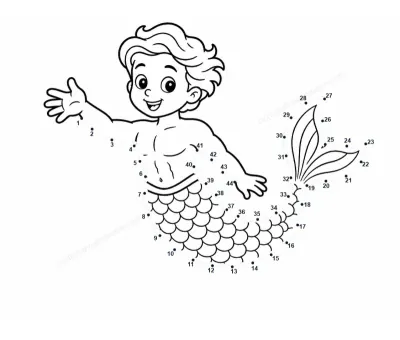
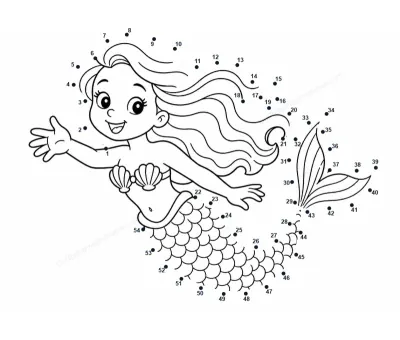
Connect the dots to reveal a beautiful mermaid gliding through the ocean. This 54-dot puzzle suits children practising number sequencing while enjoying a touch of underwater magic.
Difficulty
Medium
Fun fact: Mermaids appear in folklore from ancient Syria — over 3,000 years ago!
Downloaded60+timesYou’ve made a great choice!
Downloads now start from the button below. Tap it to get this puzzle's PDF.
Free for home and classroom use.
No sign-up needed. Opens as a PDF. Print on US Letter (8.5 × 11 inch) or A4 paper. Free for home and classroom use.
Ocean
You might also like
Ages 5–8 — Medium
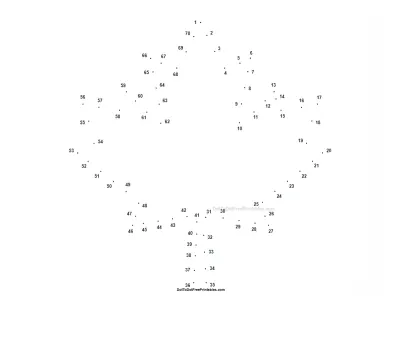
How to Solve the Mermaid Dot-to-Dot Puzzle
Mermaids have captured children's imaginations for thousands of years — from the ancient seas of Syria to the fairy tales of Hans Christian Andersen. This beautiful 54-dot puzzle traces the graceful outline of a mermaid gliding through the deep. It is a wonderful puzzle for quiet, focused time — perfect for a rainy afternoon or a calm classroom activity for kids. Find dot 1 and let the magic begin!
1–9 — The Face and Hair
Start at dot 1 and connect through to dot 9 to trace the mermaid's face and the flowing lines of her hair. Faces involve gentle, rounded curves — a lovely warm-up that builds pencil confidence before the bigger shapes ahead. Encourage children to lift their wrist slightly and let the pencil glide.
Fun fact!
Mermaid legends have appeared independently in cultures all around the world — from West African water spirits to the Japanese Ningyo and the ancient Greek sea-nymph Nereids. The idea of half-human, half-fish beings seems to be something the human imagination keeps arriving at, no matter the ocean.
Mermaid legends have appeared independently in cultures all around the world — from West African water spirits to the Japanese Ningyo and the ancient Greek sea-nymph Nereids. The idea of half-human, half-fish beings seems to be something the human imagination keeps arriving at, no matter the ocean.
10–22 — The Arms and Upper Body
Continue from dot 10 to dot 22 to draw the arms and torso. Children practise symmetry and the natural curve of a human figure here — a section that works especially well for discussing body proportions in a fun, low-pressure way. A light, flowing touch gives the most elegant result.
Fun fact!
The most famous mermaid story in English-speaking culture — The Little Mermaid — was written by Hans Christian Andersen in 1837. The original tale is quite different from the animated film: much sadder, and it is about a mermaid who longs to have a human soul.
The most famous mermaid story in English-speaking culture — The Little Mermaid — was written by Hans Christian Andersen in 1837. The original tale is quite different from the animated film: much sadder, and it is about a mermaid who longs to have a human soul.
23–36 — The Waist and Scales
Trace dots 23 through 36 for the midsection where the human form transitions into the fish tail — the most distinctively mermaid part of the whole drawing. Children learn to follow a shape that narrows and then sweeps outward again. This middle section rewards patience and careful dot-finding.
Fun fact!
Scientists believe the mermaid myth may have partly originated from sailors spotting manatees or dugongs at sea. At a distance, a manatee surfacing to breathe — with its rounded body and paddle-like tail — can look surprisingly humanoid. It is a generous interpretation, but from far away, it is easy to imagine a mermaid.
Scientists believe the mermaid myth may have partly originated from sailors spotting manatees or dugongs at sea. At a distance, a manatee surfacing to breathe — with its rounded body and paddle-like tail — can look surprisingly humanoid. It is a generous interpretation, but from far away, it is easy to imagine a mermaid.
37–46 — The Fish Tail
Connect dots 37 to 46 to sweep the long, graceful fish tail downward. This is the most satisfying section of the puzzle — children feel the mermaid taking her final, recognisable shape. Long, flowing strokes work beautifully here. Encourage children to draw from the shoulder rather than just the wrist.
Fun fact!
In most mermaid folklore, the tail is described as iridescent — shimmering with multiple colours like a soap bubble or a fish scale in sunlight. When it comes to colouring this puzzle, there is no wrong answer: silver, ocean blue, emerald green, or all three at once are all equally valid!
In most mermaid folklore, the tail is described as iridescent — shimmering with multiple colours like a soap bubble or a fish scale in sunlight. When it comes to colouring this puzzle, there is no wrong answer: silver, ocean blue, emerald green, or all three at once are all equally valid!
47–54 — The Tail Fins
Finish by connecting dots 47 through 54 to add the broad, sweeping tail fins that complete the mermaid's silhouette. Just eight dots to the finish line — encourage children to make each one count and end with a confident, graceful flourish. The tail fin is the mermaid's full stop!
Fun fact!
Fish tails move side-to-side, but whale and dolphin tails — called flukes — move up and down. Which kind of tail would a mermaid have? That is up to your imagination!
Fish tails move side-to-side, but whale and dolphin tails — called flukes — move up and down. Which kind of tail would a mermaid have? That is up to your imagination!
Wonderful — your mermaid is ready to dive! Now give her tail the most spectacular colour combination you can imagine. Display it proudly or give it as a gift — either way, you have created something genuinely lovely. Ready for another? Explore more ocean dot to dot printables to keep the fun going.
Coloring Guide
Mermaid: Classic Real-Life Colors
Mermaids only live in stories, so this palette borrows the greens and blues of the shallow sea they are always pictured swimming through.
- 1–9 (The Face and Hair): Crayola Sea Green — Mermaids are imaginary, so a soft sea-green ties her face and flowing hair to the green shallows she is said to swim in.
- 10–22 (The Arms and Upper Body): Crayola Sky Blue — Her upper body is human in the old tales, and this pale sky-blue keeps it cool, as if seen through clear water.
- 23–36 (The Waist and Scales): Crayola Cornflower — This is where skin turns to scales, and a gentle cornflower blue marks that change without drawing a hard line.
- 37–46 (The Fish Tail): Crayola Sea Green — Folklore calls the tail iridescent, shifting like a fish scale in sunlight, so a shimmery sea-green stands in for that glow.
- 47–54 (The Tail Fins): Crayola Sky Blue — The broad fins fan out at the very end, and a light sky-blue lets them look thin enough to see the water through.
Mermaid: Soft Natural Colors
These pale silvers and whites show the mermaid as she might look near the surface, washed out by bright daylight on the water.
- 1–9 (The Face and Hair): Crayola Silver — A pale silver gives her face and hair a moonlit, faded look, the way pale things appear in strong surface light.
- 10–22 (The Arms and Upper Body): Crayola Gray — Soft grey keeps the arms quiet and shadowed, as a swimmer's skin looks under a bright overhead sun.
- 23–36 (The Waist and Scales): Crayola White — Near-white at the waist makes the first scales look wet and shiny where the light hits them directly.
- 37–46 (The Fish Tail): Crayola Silver — Silver on the tail catches the sun the way a real fish flank flashes when it rolls near the surface.
- 47–54 (The Tail Fins): Crayola Gray — Light grey lets the thin fin edges almost disappear, like fins held up against a bright sky.
Mermaid: Bold Real-Life Colors
Warm oranges and browns treat the mermaid like a bright painting or a carved ship's figurehead rather than a creature seen in real life.
- 1–9 (The Face and Hair): Crayola Orange — Storytellers often give mermaids bright red or golden hair, so a bold orange leans into that painted, picture-book look.
- 10–22 (The Arms and Upper Body): Crayola Red Orange — A strong red-orange makes the upper body glow like a figure lit by sunset, warmer than any real skin tone.
- 23–36 (The Waist and Scales): Crayola Brown — Deep brown at the scale line suggests older, weathered scales, like the darker armour along a real fish's back.
- 37–46 (The Fish Tail): Crayola Orange — A vivid orange tail imagines the tail's iridescent shimmer pushed all the way to its brightest, boldest setting.
- 47–54 (The Tail Fins): Crayola Red Orange — Red-orange fin tips finish the tail with a fiery edge, the kind of colour a painter picks over a photograph.
Why Is the Mermaid Dot to Dot Printable Rated Medium?
The Mermaid is rated medium. Its 54 dots split into 19 straight, 13 curved, 15 zigzag and 7 sharp-turn dots — the direction changes are what lift it above an easy outline. The stretches to slow down for are arms and upper body at dots 13–15 and waist and scales at dots 26–29. Follow the numbered order even when another dot looks nearer, and check the next number before each turn.
Straight
19 dots · 35%
Easiest — join two dots with one straight pencil stroke.
Curved
13 dots · 24%
26 29
Zigzag
15 dots · 28%
13 15
Sharp turns
7 dots · 13%
The hardest bits — tight corners where the line doubles back.
We traced all 54 dots on this exact worksheet by hand — the zigzag at dots 13–15 is where it got tricky, and you can check that against your own printout.
Key Sections to Know
Every notable stretch of the path, dot by dot.
| Dot Range | Pattern | Why It Matters |
|---|---|---|
| 13 15 | Zigzag | The line saw-tooths along arms and upper body from dot 13 to dot 15; check every number as you go. |
| 26 29 | Curved | Around waist and scales, the line eases through a smooth bend at dots 26–29; keep the pencil moving slowly. |
| 32 33 | Curved | Dots 32–33 round off waist and scales — connect them one at a time so the arc stays even. |
| 40 41 | Curved | The outline swings around fish tail here; take dots 40 to 41 in short strokes. |
Bottom line: The Mermaid dot to dot is medium rated — 59% smooth lines with just 1 short section to watch for.