Canada
Maple Leaf Dot to Dot — Free 70-Dot Printable for Ages 5–8
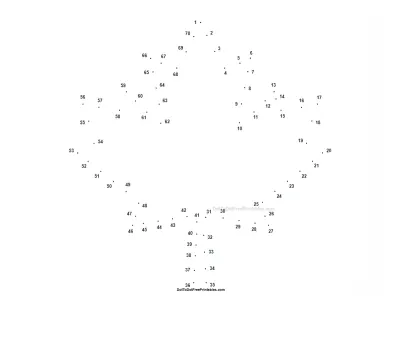
Connect 70 dots to reveal a maple leaf, one of Canada's best-known symbols. This medium puzzle helps kids practise number order and careful pencil control while learning why the leaf appears on Canada's flag.
Difficulty
Medium
Fun fact: The maple leaf has appeared at the centre of Canada's national flag since 1965.
Downloaded5+timesYou’ve made a great choice!
Free for home and classroom use.
No sign-up needed. Opens as a PDF. Print on US Letter (8.5 × 11 inch) or A4 paper. Free for home and classroom use.
Canada
You might also like
Ages 5–8 — Medium

How to Solve the Maple Leaf Dot-to-Dot Puzzle
Maple trees brighten Canadian forests with fiery red, orange, and gold leaves each autumn. The maple leaf has represented Canada for generations and sits proudly in the middle of the country's red-and-white flag. This 70-dot puzzle follows the leaf's pointed edges and sturdy stem. Find dot 1, keep your pencil moving in number order, and watch a Canadian symbol take shape!
1–14 — The Top Point
Begin at dot 1 and connect through dot 14 to form the tall point at the top of the leaf. Follow each small turn carefully—the sharp corners give a maple leaf its recognisable shape.
Fun fact!
Canada's flag features one stylised red maple leaf with 11 points. Learn about the flag's design and history from Canadian Heritage.
Canada's flag features one stylised red maple leaf with 11 points. Learn about the flag's design and history from Canadian Heritage.
15–28 — The Right-Hand Points
Continue from dot 15 to dot 28, moving down the leaf's right side. Slow down at every corner and check the next number before changing direction.
Fun fact!
Canada has 10 native maple species. The sugar maple is especially famous because its sap can be made into maple syrup.
Canada has 10 native maple species. The sugar maple is especially famous because its sap can be made into maple syrup.
29–42 — The Stem
Connect dots 29 through 42 to draw the lower edge and narrow stem. Use shorter strokes around the tight turns so your line stays close to the dots.
Fun fact!
People collect maple sap in early spring, when freezing nights and warmer days help the sap flow inside the tree.
People collect maple sap in early spring, when freezing nights and warmer days help the sap flow inside the tree.
43–56 — The Left-Hand Points
Trace dots 43 to 56 back up the left side. These points echo the shapes on the right, so compare both sides as you draw.
Fun fact!
Long before Canada's modern flag was adopted, maple leaves appeared on Canadian badges, coats of arms, coins, and military emblems.
Long before Canada's modern flag was adopted, maple leaves appeared on Canadian badges, coats of arms, coins, and military emblems.
57–70 — Closing the Leaf
Finish with dots 57 through 70, returning to the top of the leaf. Count slowly to the final dot, then check that every point and corner is connected.
Fun fact!
Maple leaves make food for the tree using sunlight. In autumn, their green pigment breaks down and other colours become easier to see.
Maple leaves make food for the tree using sunlight. In autumn, their green pigment breaks down and other colours become easier to see.
Terrific—your maple leaf is complete! Colour it bright red like the Canadian flag, or use yellow and orange for an autumn leaf. Discover more about Canada's national symbols on the Government of Canada website, then try another Canada dot to dot puzzle.
Coloring Guide
Maple Leaf: Classic Real-Life Colors
This palette follows a maple leaf caught between seasons: flag-red blades, a golden stem, and the cool sky showing through the deep gaps.
- 1–14 (The Top Point): Crayola Scarlet — On Canada's flag the whole leaf is one bright red, and the tall top point is the part people picture first.
- 15–28 (The Right-Hand Points): Crayola Sky Blue — A maple leaf's sharp right edge is often seen against open sky, and young spring leaves show a cool bluish-green along their teeth.
- 29–42 (The Stem): Crayola Goldenrod — The slim stem, or petiole, is usually yellow-green and turns fully golden in autumn while the blade is still colouring.
- 43–56 (The Left-Hand Points): Crayola Scarlet — A maple leaf colours evenly from side to side, so the left points turn the same flag red as the right.
- 57–70 (Closing the Leaf): Crayola Sky Blue — Where the lobes cut deep toward the centre you can see straight through to the sky, a band of cool blue against the leaf.
Maple Leaf: Soft Natural Colors
A dry, sunlit maple leaf on the ground pales toward tan and silver at the edges while the stem stays green, and these softer shades match that fading.
- 1–14 (The Top Point): Crayola Silver — Backlit by bright sun, the thin tip of the top point looks almost see-through and silvery.
- 15–28 (The Right-Hand Points): Crayola Tan — As a fallen maple leaf dries its edges curl and pale to a papery tan, starting at the points.
- 29–42 (The Stem): Crayola Sea Green — A living stem holds its pale colour longest, a soft sea-green line even after the blade has changed.
- 43–56 (The Left-Hand Points): Crayola Silver — Sun glare on the waxy upper surface washes the left points to a pale silvery sheen.
- 57–70 (Closing the Leaf): Crayola Tan — Near the base a maple leaf browns first, fading to light tan as it closes toward the stem.
Maple Leaf: Bold Real-Life Colors
Deep in autumn a sugar maple burns from forest green to russet to orange, and this stronger set uses those full turning-leaf colours.
- 1–14 (The Top Point): Crayola Forest Green — In late summer a sugar maple leaf is deep forest green, richest across the broad top lobe that gets the most sun.
- 15–28 (The Right-Hand Points): Crayola Brown — By late autumn the green pigment breaks down and the right points dry to a deep russet brown.
- 29–42 (The Stem): Crayola Orange — When freezing nights and warm days start the sap flowing, the stem often flushes bright orange.
- 43–56 (The Left-Hand Points): Crayola Forest Green — Shaded lower lobes on the left hold their dark forest green after the tip has already turned.
- 57–70 (Closing the Leaf): Crayola Brown — The thick base and midrib are the last part to change and the darkest, a strong brown where blade meets stem.
Why Is the Maple Leaf Dot to Dot Printable Rated Medium?
The Maple Leaf is rated medium. Of its 70 dots, 45 run in straight lines, with 2 curved, 8 zigzag and 15 sharp-turn dots. The stretch to slow down for is stem at dots 35–36. Follow the numbered order even when another dot looks nearer, and check the next number before each turn.
Straight
45 dots · 64%
Easiest — join two dots with one straight pencil stroke.
Curved
2 dots · 3%
A gentle bend, so the pencil has to slow down and steer.
Zigzag
8 dots · 11%
Quick in-and-out changes of direction. Good counting practice.
Sharp turns
15 dots · 21%
3536
We traced all 70 dots on this exact worksheet by hand — the sharp turns at dots 35–36 is where it got tricky, and you can check that against your own printout.
Key Sections to Know
Every notable stretch of the path, dot by dot.
| Dot Range | Pattern | Why It Matters |
|---|---|---|
| 3536 | Sharp turns | Expect an abrupt turn on stem between dots 35 and 36, so pause before joining them. |
Bottom line: The Maple Leaf dot to dot is medium rated — 67% smooth lines with just 1 short section to watch for.