Canada
Moose Dot to Dot — Free 89-Dot Printable for Ages 6–9
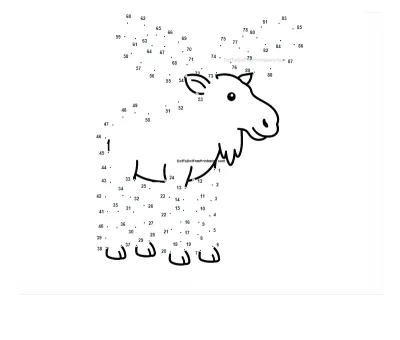
Connect 89 dots to complete a magnificent moose with broad antlers. This detailed puzzle builds counting focus and pencil control while kids discover one of Canada's most recognisable wild animals.
Difficulty
Hard
Fun fact: Moose are the largest members of the deer family, and males can grow enormous antlers.
Downloaded12+timesYou’ve made a great choice!
Free for home and classroom use.
No sign-up needed. Opens as a PDF. Print on US Letter (8.5 × 11 inch) or A4 paper. Free for home and classroom use.
Canada
You might also like
Ages 6–9 — Hard
How to Solve the Moose Dot-to-Dot Puzzle
A moose can look almost prehistoric when it steps from a Canadian forest: long legs, a heavy muzzle, and wide antlers rising above its head. Moose are strong swimmers and feel at home around lakes, wetlands, and wooded country. This 89-dot puzzle has plenty of turns, especially around the antlers, so sharpen your pencil, find dot 1, and count carefully.
1–18 — The Muzzle and Face
Begin at dot 1 and connect through dot 18 to draw the moose's long muzzle and face. Use neat, short strokes around the nose and eye area.
Fun fact!
A moose's broad muzzle helps it gather twigs, leaves, and water plants. Moose are herbivores, which means they eat plants.
A moose's broad muzzle helps it gather twigs, leaves, and water plants. Moose are herbivores, which means they eat plants.
19–36 — The Broad Antlers
Continue from dot 19 to dot 36 around the branching antlers. This is the trickiest section, so find the next number before drawing each line.
Fun fact!
Only male moose normally grow antlers. They shed them after the autumn breeding season and grow a new set the following year.
Only male moose normally grow antlers. They shed them after the autumn breeding season and grow a new set the following year.
37–54 — The Neck and Back
Trace dots 37 through 54 down the neck and across the back. Let your pencil follow the long curve smoothly as the animal's body appears.
Fun fact!
The flap of skin hanging beneath a moose's throat is called a bell or dewlap.
The flap of skin hanging beneath a moose's throat is called a bell or dewlap.
55–72 — The Long Legs
Connect dots 55 to 72 around the hind legs and belly. The long, narrow leg shapes need patient counting and controlled direction changes.
Fun fact!
Long legs help moose step through deep snow and wade into ponds to reach aquatic plants.
Long legs help moose step through deep snow and wade into ponds to reach aquatic plants.
73–89 — The Chest and Final Hoof
Finish by joining dots 73 through 89 around the front legs and chest. Keep going carefully right to the final hoof.
Fun fact!
Moose are capable swimmers and can travel through water to feed or escape danger. Find more Canadian wildlife information on Parks Canada's mammal guide.
Moose are capable swimmers and can travel through water to feed or escape danger. Find more Canadian wildlife information on Parks Canada's mammal guide.
Wonderful—your moose is ready for the Canadian wilderness! Use deep brown for the body, lighter brown for the antlers, and add spruce trees or a blue lake behind it. Keep exploring with another Canadian animal dot to dot printable.
Coloring Guide
Moose: Classic Real-Life Colors
This palette matches a moose fresh from a wetland: mud-reddened legs, a sun-gilded back, and hard antlers pale against the open sky.
- 1–18 (The Muzzle and Face): Crayola Scarlet — A moose's big rubbery muzzle darkens and reddens with blood as it feeds on twigs and water plants in the cold.
- 19–36 (The Broad Antlers): Crayola Sky Blue — Hard, polished antlers held up against open sky often catch a cool blue-grey light along their broad flat blades.
- 37–54 (The Neck and Back): Crayola Goldenrod — Sun on the coarse guard hairs of the neck and back brings out the yellow-brown, almost golden, tips of a moose's winter coat.
- 55–72 (The Long Legs): Crayola Scarlet — Wading through bogs to reach pond plants, a moose coats its lower legs in iron-red mud that dries onto the hair.
- 73–89 (The Chest and Final Hoof): Crayola Sky Blue — The dark chest and the split hoof, still wet from the pond a moose just swam, pick up the blue of the water.
Moose: Soft Natural Colors
A moose in summer daylight shows velvet-tan antlers, pale leg stockings, and a dusty, washed-out coat, and these lighter shades follow that.
- 1–18 (The Muzzle and Face): Crayola Silver — The short hair on an old bull's face greys with age, turning a pale silver around the muzzle.
- 19–36 (The Broad Antlers): Crayola Tan — While antlers are still growing in summer they are covered in soft tan skin and fine hair called velvet.
- 37–54 (The Neck and Back): Crayola Sea Green — A moose that has been feeding underwater surfaces with pondweed and a faint green sheen across its back.
- 55–72 (The Long Legs): Crayola Silver — The pale stockings of lighter hair on a moose's lower legs look almost silver-grey when the sun is high.
- 73–89 (The Chest and Final Hoof): Crayola Tan — Dust and dried mud lighten the chest and hoof to a washed tan on a moose resting away from water.
Moose: Bold Real-Life Colors
A bull in low autumn light is all deep browns and burnt orange, with sap-stained antlers, and this stronger set leans into that.
- 1–18 (The Muzzle and Face): Crayola Forest Green — Chewed spruce tips and water plants can smear a feeding moose's muzzle dark green while it browses.
- 19–36 (The Broad Antlers): Crayola Brown — Fresh out of velvet, a bull's antlers are stained deep brown by the sap and bark he rubs them against.
- 37–54 (The Neck and Back): Crayola Orange — In low autumn sun the rich brown neck and back of a bull in the rut can glow a burnt orange.
- 55–72 (The Long Legs): Crayola Forest Green — Long legs that stand in wetland all day take on a dark greenish film of algae and pond mud.
- 73–89 (The Chest and Final Hoof): Crayola Brown — The chest is the darkest part of the coat, and with the black hoof it reads as a deep near-black brown.
Why Is the Moose Dot to Dot Printable Rated Hard?
The Moose is rated hard. Its 89 dots are 41 straight, 15 curved, 5 zigzag and 28 sharp-turn dots. The stretches to slow down for are muzzle and face at dots 6–7 and broad antlers at dots 19–20. Follow the numbered order even when another dot looks nearer, and check the next number before each turn.
Straight
41 dots · 46%
Easiest — join two dots with one straight pencil stroke.
Curved
15 dots · 17%
4647
Zigzag
5 dots · 6%
Quick in-and-out changes of direction. Good counting practice.
Sharp turns
28 dots · 31%
6062
We traced all 89 dots on this exact worksheet by hand — the sharp turns at dots 6–7 is where it got tricky, and you can check that against your own printout.
Key Sections to Know
Every notable stretch of the path, dot by dot.
| Dot Range | Pattern | Why It Matters |
|---|---|---|
| 67 | Sharp turns | Dots 6–7 cut a sharp corner at muzzle and face; lift your eyes to dot 7 before drawing it. |
| 1920 | Sharp turns | Expect an abrupt turn on broad antlers between dots 19 and 20, so pause before joining them. |
| 2829 | Sharp turns | There is a tight angle at broad antlers here; treat dots 28 and 29 as two separate short lines. |
| 3738 | Sharp turns | The line changes direction hard at dots 37–38, on neck and back — stop at 37, find 38, then turn. |
| 4647 | Curved | A gentle curve shapes neck and back across dots 46–47. Spot dot 47 before you commit to the line. |
| 6062 | Sharp turns | Expect an abrupt turn on long legs between dots 60 and 62, so pause before joining them. |
Bottom line: The Moose dot to dot is hard rated — 63% smooth lines with just 5 short sections to watch for.