5 puzzles
Canada Dot to Dot Worksheets for Kids
Canoes, maple leaves, and Canadian wildlife — free dot to dot printables to connect and color.
Everything You Need to Know About the Canada Dot to Dot Printables
Two Sides of Canada: A Symbol and Three Animals
This collection splits neatly into two groups. The Canadian Canoe and Maple Leaf are the country's best-known symbols — the leaf sits at the centre of the flag, and the canoe is tied to how people moved across the land before roads existed. The Polar Bear, Moose, and Raccoon are the wildlife side, three animals a child is likely to meet in a book about Canada long before they ever meet one in person.
That split is also a useful way to choose. A child who is more interested in flags, maps, and national symbols will probably reach for the Canoe or Maple Leaf first. A child who wants animals has three to pick from, each a different size and a different kind of creature — an Arctic bear, a forest giant, and a small, curious mammal that turns up in backyards as easily as in woods.
Choosing by Dot Count
The five puzzles in this set run from 69 to 90 dots, a narrower range than some of the other collections on the site, so there is no puzzle here for a child who is just starting to count. All five suit a child who is already comfortable with numbers into the 60s or higher.
Within that range there is still a clear order. The 69-dot Canadian Canoe is the shortest and is described as a medium printable, a good entry point into the set. The 70-dot Maple Leaf comes next and is also rated medium — its difficulty comes less from length and more from the number of sharp turns around each pointed lobe of the leaf. The 74-dot Polar Bear is actually rated easy despite having more dots than the leaf, because its outline is mostly long, smooth curves rather than sharp corners.
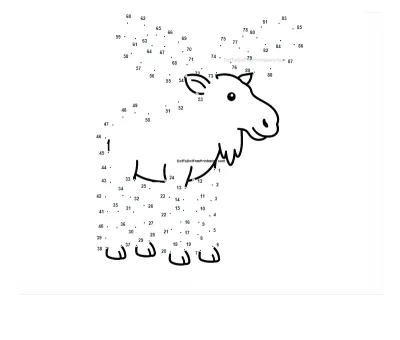
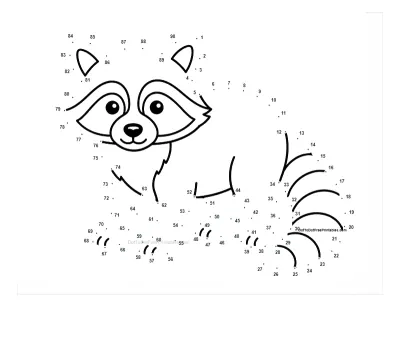
The two longest are also the two hardest. The 89-dot Moose is rated hard, mostly because of the antlers, which the puzzle itself flags as 'the trickiest section' with dots that change direction constantly. The 90-dot Raccoon is rated medium and is the longest trail in the collection by one dot, with its own tricky stretch around the ringed tail.
What Each Puzzle Connects to in Real Canadian Life
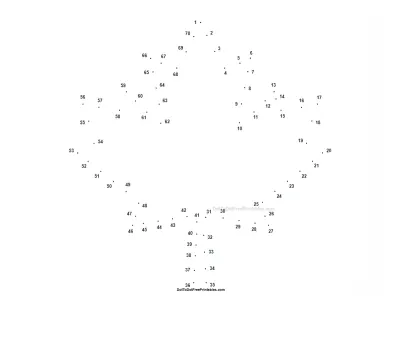
None of these puzzles are generic outlines — each one ties to something a child might already be learning about Canada. The Maple Leaf puzzle explains that the leaf has sat at the centre of Canada's flag since 1965, and that the country actually has ten native maple species, with the sugar maple the most famous because its sap becomes maple syrup.
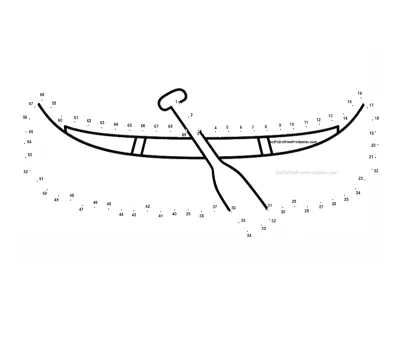
The Canadian Canoe puzzle notes that canoes carried people and goods across interconnected lakes and rivers long before roads existed, and that Indigenous Peoples developed canoe designs suited to local waters using materials such as birchbark, cedar, and animal hides. It's a good jumping-off point for a conversation about geography and travel before cars.
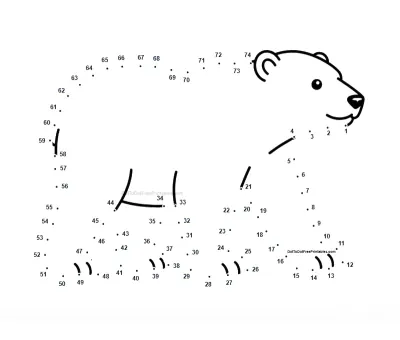
The wildlife puzzles carry their own real details. The Polar Bear puzzle points out that about two-thirds of the world's polar bears live in Canada, and that their fur only looks white — the skin underneath is black. The Moose puzzle notes that only males normally grow antlers, and that moose shed them every year after the autumn breeding season. The Raccoon puzzle explains that raccoons are mostly nocturnal and use their sensitive front paws to investigate food and objects, which is part of why the dark mask and the tail rings are the two features kids usually remember.
Coloring Tips for Each Puzzle
Once the dots are joined, each of these five rewards a slightly different coloring approach. The Polar Bear is the trickiest to get looking right with a plain white crayon, since a flat white page can leave the shape hard to see — using a very pale blue or grey for the shadowed parts of the fur, and saving pure white for the sunlit back and head, gives the bear some depth without losing the 'white bear' look.
The Maple Leaf is the most straightforward: flag red is the classic choice, but going with autumn colors — orange through the middle points and a deeper red or brown near the stem — turns it into more of a fall scene. The Moose and Raccoon both benefit from layering rather than one flat brown, since real moose coats run from a golden-brown neck to darker legs, and a raccoon's grey body fur needs a much darker mask and tail rings to read clearly against it. The Canoe is the simplest to color realistically — wood tones for the hull, with the paddle and rim in a contrasting color, mirror how real canoes are usually painted or varnished.
Printing and Using This Set at Home or in Class
At home, the dot count on each puzzle card is the quickest way to match a worksheet to your child — pick the number they can count to comfortably, not necessarily the animal or symbol they like best, since a picture they love but can't finish is more frustrating than motivating.
In a classroom or homeschool group focused on Canada, this set works well alongside a broader unit: the Maple Leaf and Canoe pair naturally with a lesson on national symbols, while the Polar Bear, Moose, and Raccoon fit a wildlife or biome discussion. Because the dot counts spread from 69 to 90, a teacher can hand the easier Canoe to one child and the harder Moose to another during the same lesson, so the group works at different levels without anyone doing a different topic.
Every worksheet here is a free printable PDF with no sign-up required, and each individual puzzle page includes a step-by-step dot guide that breaks the full trail into shorter numbered ranges — useful for a child who loses their place partway through a longer sequence like the Moose or Raccoon.
Common questions
Frequently asked questions
What free Canada dot-to-dot printables for kids are available here?
This Canada collection includes five connect-the-dots puzzles based on Canadian symbols and wildlife: a Canadian Canoe with 69 dots, Maple Leaf with 70 dots, Polar Bear with 74 dots, Moose with 89 dots, and Raccoon with 90 dots.
Which Canada connect the dots worksheets are easiest for kids?
The Canadian Canoe is the shortest puzzle in this collection with 69 numbered dots, followed closely by the 70-dot Maple Leaf and 74-dot Polar Bear. These are good starting choices before moving to the longer Moose and Raccoon puzzles.
Is there a Canadian maple leaf dot-to-dot printable?
Yes. The Maple Leaf puzzle contains 70 numbered dots. Kids connect the dots to reveal Canada’s famous maple leaf, making it one of the most recognizable Canadian-symbol worksheets in this collection.
Is there a Canadian canoe connect the dots worksheet?
Yes. The Canadian Canoe puzzle contains 69 numbered dots and is the shortest puzzle on the Canada page. Children follow the number sequence to reveal a canoe and paddle inspired by Canada’s lakes and rivers.
Do you have a polar bear dot-to-dot printable for kids?
Yes. The Polar Bear puzzle has 74 numbered dots. Connecting the sequence reveals a polar bear inspired by Canada’s Arctic wildlife, making it a good animal-themed choice within the Canada collection.
Is there a moose connect the dots printable?
Yes. The Moose puzzle contains 89 numbered dots. Children connect the sequence to reveal a broad-antlered moose, one of the more detailed Canadian wildlife puzzles on this page.
Do you have a raccoon dot-to-dot worksheet?
Yes. The Raccoon puzzle has 90 numbered dots and is the longest current puzzle in the Canada collection. Kids connect the dots to reveal the raccoon’s masked face and striped tail.
Which Canada dot-to-dot puzzles are under 75 dots?
Three puzzles stay below 75 dots: the Canadian Canoe with 69 dots, Maple Leaf with 70 dots, and Polar Bear with 74 dots. These provide shorter number sequences than the 89-dot Moose and 90-dot Raccoon.
Which Canada connect the dots worksheets are close to 1–100?
All five Canada puzzles fit within the 1–100 range. The Canadian Canoe has 69 dots, Maple Leaf 70, Polar Bear 74, Moose 89, and Raccoon 90, giving children several options for practising longer number sequences below 100.
What is the easiest Canada dot-to-dot puzzle on this page?
The Canadian Canoe is the easiest by dot count, with 69 numbered dots. It is slightly shorter than the 70-dot Maple Leaf and provides a good first choice for children starting with this Canada collection.
What is the hardest Canada connect the dots puzzle?
The Raccoon is the longest puzzle on the page, with 90 numbered dots. It is followed closely by the Moose with 89 dots, so both are good choices for children who want a more detailed Canadian wildlife challenge.
Are there Canadian animal connect the dots worksheets?
Yes. The collection includes three wildlife-themed puzzles: a 74-dot Polar Bear, 89-dot Moose, and 90-dot Raccoon. These let children practise number sequencing while revealing animals strongly associated with Canadian landscapes and wildlife.
Are there Canadian symbol dot-to-dot printables?
Yes. The collection includes a 70-dot Maple Leaf and a 69-dot Canadian Canoe. These puzzles focus on recognizable Canadian imagery rather than only animals, helping distinguish this category from other wildlife collections.
Which Canada dot-to-dot puzzle should kids try first?
A good starting point is the 69-dot Canadian Canoe, followed by the 70-dot Maple Leaf and 74-dot Polar Bear. Children ready for longer puzzles can then move to the 89-dot Moose and finally the 90-dot Raccoon.
How can I choose the right Canada dot-to-dot puzzle for my child?
Choose based on the number range your child can comfortably follow. Start with the 69-dot Canadian Canoe or 70-dot Maple Leaf, move to the 74-dot Polar Bear for a slightly longer challenge, and choose the 89-dot Moose or 90-dot Raccoon for the most detailed puzzles in this Canada collection.