Dinosaurs
Triceratops Dot to Dot — Free 70-Dot Printable for Kids
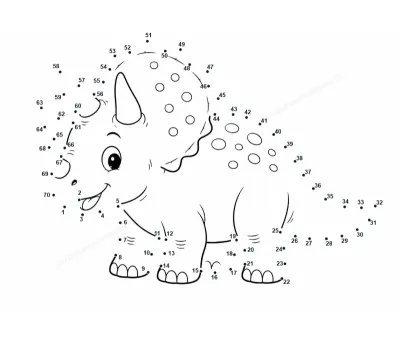
Follow the dots to draw the most iconic horned dinosaur of all time. Triceratops had three facial horns and a giant bony frill — and it lived right alongside T-Rex! This connect the dots by numbers sheet is perfect for kindergarten and 1st grade.
Difficulty
Medium
Fun fact: Triceratops horns could grow up to 3 feet long — longer than a baseball bat!
Downloaded29+timesYou’ve made a great choice!
Downloads now start from the button below. Tap it to get this puzzle's PDF.
Free for home and classroom use.
No sign-up needed. Opens as a PDF. Print on US Letter (8.5 × 11 inch) or A4 paper. Free for home and classroom use.
Dinosaurs
You might also like
Ages 5–8 — Medium
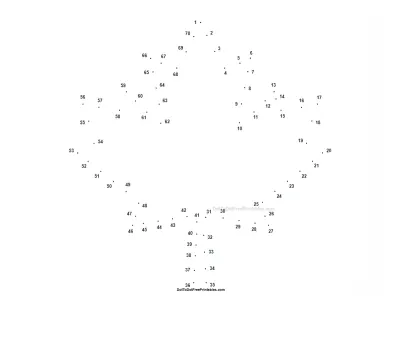
How to Solve the Triceratops Dot-to-Dot Puzzle
With three horns, a magnificent bony frill, and the courage to stand up to a T-Rex, Triceratops is one of the most recognisable dinosaurs that ever lived. This puzzle has 70 dots — a proper challenge that rewards patience and careful counting. Work through it section by section and a truly spectacular dinosaur will emerge. Ready? Let's go!
1–12 — The Three Horns and Snout
Begin at dot 1 and trace through to dot 12 to draw Triceratops's most famous feature — the two long brow horns and the shorter nose horn. This section involves several direction changes, which is fantastic for developing pencil control and spatial awareness in children aged 5 and up.
Fun fact!
The two brow horns could grow up to three feet long — longer than a baseball bat! Scientists believe Triceratops used them both for defence against predators and for sparring with other Triceratops during competition for territory and mates.
The two brow horns could grow up to three feet long — longer than a baseball bat! Scientists believe Triceratops used them both for defence against predators and for sparring with other Triceratops during competition for territory and mates.
13–26 — The Frill
Connect dots 13 through 26 to sweep out the large, semicircular frill that frames the back of the head. Children practise a wide, arcing motion here — a great exercise in keeping the pencil moving confidently across the page. Encourage them to lift their wrist and draw from the shoulder.
Fun fact!
The frill was not solid bone — it had two large openings covered in skin, which kept it lighter than it looks. Some scientists think the frill was brightly coloured in life, used to communicate mood and health, a bit like a living display board.
The frill was not solid bone — it had two large openings covered in skin, which kept it lighter than it looks. Some scientists think the frill was brightly coloured in life, used to communicate mood and health, a bit like a living display board.
27–42 — The Body
Trace dots 27 to 42 for the broad, sturdy body. Triceratops was built low and wide, and children begin to see how the shape differs from the taller sauropods. This is the longest run of dots in the puzzle — a brilliant opportunity to practise sustained focus.
Fun fact!
Triceratops was about 30 feet long and weighed up to 12 tonnes — roughly the same as two African elephants! Despite that bulk, it was agile enough to move at speed. Imagine seeing one of those magnificent horns coming toward you — quite a sight, even for a T-Rex!
Triceratops was about 30 feet long and weighed up to 12 tonnes — roughly the same as two African elephants! Despite that bulk, it was agile enough to move at speed. Imagine seeing one of those magnificent horns coming toward you — quite a sight, even for a T-Rex!
43–58 — The Four Legs
Connect dots 43 to 58 to add the four powerful, slightly sprawling legs. Unlike the straight, pillar-like legs of the sauropods, Triceratops legs spread out a little at the elbows. Children notice this difference if you point it out — building lovely observational skills alongside fine motor practice.
Fun fact!
Triceratops had hooves rather than claws — a surprising fact that often delights children! The front legs could pivot outward to help it lower its head and charge forward like a bulldozer, using those three magnificent horns to lead the way.
Triceratops had hooves rather than claws — a surprising fact that often delights children! The front legs could pivot outward to help it lower its head and charge forward like a bulldozer, using those three magnificent horns to lead the way.
59–70 — The Tail
Finish the puzzle by connecting dots 59 through 70 to draw the short, thick tail. Compared to the sweeping tails of plant-eating sauropods, the Triceratops tail is broad and sturdy. Children practise a shorter, more controlled finish — a satisfying end to a bigger challenge.
Fun fact!
Fossil evidence shows that T-Rex and Triceratops lived in the same time and place — the western United States around 68 million years ago. Scientists think Triceratops used its three impressive horns to defend itself, and there is evidence that the two met more than once. It was a very busy neighbourhood!
Fossil evidence shows that T-Rex and Triceratops lived in the same time and place — the western United States around 68 million years ago. Scientists think Triceratops used its three impressive horns to defend itself, and there is evidence that the two met more than once. It was a very busy neighbourhood!
Excellent concentration — 70 dots is no small achievement! Your Triceratops is complete. Ask your child which part they found trickiest and why. That kind of reflection is just as valuable as the drawing itself. Ready for a bigger test? Explore more dinosaur dot to dot printables to keep the fun going.
Coloring Guide
Triceratops: Classic Real-Life Colors
Reconstructions usually give Triceratops a plain green body so the real showpiece — the horned face and the frill — is what draws the eye.
- 1–12 (The Three Horns and Snout): Crayola Olive Green — Olive green over the snout and the two three-foot brow horns keeps the face natural, the horns a paler bone shade for fighting predators and sparring rivals.
- 13–26 (The Frill): Crayola Forest Green — Forest green on the great bony frill fits the plain version, though the skin-covered openings in it may really have flushed with colour to signal mood.
- 27–42 (The Body): Crayola Brown — Brown fills the low, wide thirty-foot body, the shaded ground colour a heavy browser would carry along its flanks.
- 43–58 (The Four Legs): Crayola Olive Green — Olive green on the four slightly sprawling legs matches the body, with the hoofed toes left a lighter shade.
- 59–70 (The Tail): Crayola Forest Green — Forest green on the short, thick tail keeps it the same steady green as the rest of the animal.
Triceratops: Soft Natural Colors
In full sun a Triceratops hide would look dusty and pale, the frill thin enough that bright light might even glow through its skin-covered windows.
- 1–12 (The Three Horns and Snout): Crayola Gray — Pale grey shows the snout and brow horns bleached in glare, the nose horn a stub of lighter bone.
- 13–26 (The Frill): Crayola Silver — Silver-grey on the frill catches the light on a sheet of skin and bone kept lighter than it looks by two large openings.
- 27–42 (The Body): Crayola Tan — Warm tan across the broad body is how sun-baked, dust-covered skin reads on a twelve-tonne browser.
- 43–58 (The Four Legs): Crayola Gray — Grey on the four legs matches weathered skin, the hooves rather than claws a paler grey below.
- 59–70 (The Tail): Crayola Silver — Silver-grey on the stubby tail keeps the whole back end in the same pale midday tone.
Triceratops: Bold Real-Life Colors
Many artists now paint Triceratops with a vividly coloured frill and face, guessing it used bold patterns the way birds and lizards do today.
- 1–12 (The Three Horns and Snout): Crayola Raw Sienna — Raw sienna warms the snout and the long brow horns, the bright face an animal that stood up to T-Rex might well have shown off.
- 13–26 (The Frill): Crayola Mahogany — Deep mahogany on the frill leans into the idea that this billboard of skin and bone was brightly coloured for display.
- 27–42 (The Body): Crayola Goldenrod — Goldenrod on the body flashes a lighter band along the flank beneath the darker back.
- 43–58 (The Four Legs): Crayola Raw Sienna — Raw sienna on the powerful legs makes the charging limbs the boldest colour on the animal.
- 59–70 (The Tail): Crayola Mahogany — Mahogany on the short tail carries the strong colour cleanly to the end.
Why Is the Triceratops Dot to Dot Printable Rated Medium?
The Triceratops is rated medium. Of its 70 dots, 35 run in straight lines, with 5 curved, 13 zigzag and 17 sharp-turn dots. The stretches to slow down for are three horns and snout at dots 2–3 and tail at dots 67–68. Follow the numbered order even when another dot looks nearer, and check the next number before each turn.
Straight
35 dots · 50%
Easiest — join two dots with one straight pencil stroke.
Curved
5 dots · 7%
A gentle bend, so the pencil has to slow down and steer.
Zigzag
13 dots · 19%
45 51
Sharp turns
17 dots · 24%
2 3
We traced all 70 dots on this exact worksheet by hand — the sharp turns at dots 2–3 is where it got tricky, and you can check that against your own printout.
Key Sections to Know
Every notable stretch of the path, dot by dot.
| Dot Range | Pattern | Why It Matters |
|---|---|---|
| 2 3 | Sharp turns | Expect an abrupt turn on three horns and snout between dots 2 and 3, so pause before joining them. |
| 45 51 | Zigzag | Between dots 45 and 51 the outline of four legs keeps reversing; slow right down here. |
| 67 68 | Sharp turns | The line changes direction hard at dots 67–68, on tail — stop at 67, find 68, then turn. |
Bottom line: The Triceratops dot to dot is medium rated — 57% smooth lines with just 3 short sections to watch for.