UAE
UAE Camel Dot to Dot — Free 105-Dot Printable for Ages 5–8
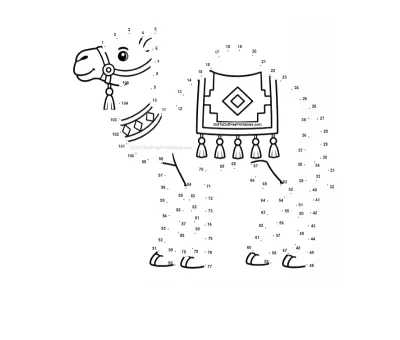
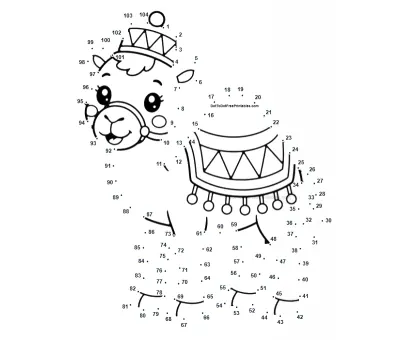
Connect 105 dots to reveal a camel striding across the sand, one of the most enduring symbols of life in the UAE and the wider Arabian Peninsula. With more dots than our other UAE puzzles, this one is a step up in challenge — great for kids ready to move past the easiest sheets while still learning something real about desert life.
Difficulty
Medium
Fun fact: A camel's hump doesn't store water at all — it stores fat, which the camel's body can convert into both energy and water when food is scarce.
Downloaded0+timesYou’ve made a great choice!
Downloads now start from the button below. Tap it to get this puzzle's PDF.
Number Version
Connect the numbered dots from 1 to the end to reveal the picture.
Free for home and classroom use.
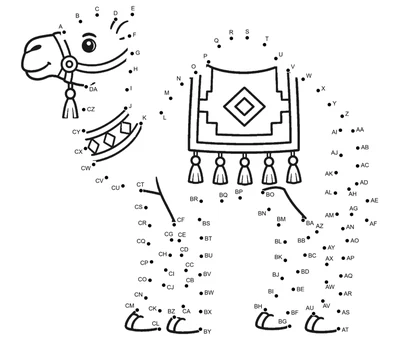
Alphabet Version
Includes alphabet-themed design for easy learning.
No sign-up needed. Opens as a PDF. Print on US Letter (8.5 × 11 inch) or A4 paper. Free for home and classroom use.
UAE
You might also like
Ages 5–8 — Medium
How to Solve the UAE Camel Dot-to-Dot Puzzle
For thousands of years, the camel made life in the desert possible — carrying goods across dunes no wheeled cart could cross, providing milk, wool, and transport to Bedouin communities long before roads and air conditioning changed everything. Camels are still bred and raced across the UAE today, and camel milk shows up in everything from lattes to chocolate bars. This 105-dot puzzle is longer than most of our other sheets, so it's a nice next step once a child has a few easier puzzles under their belt. Find dot 1 and take it one hump at a time.
1–21 — The Head and Neck
Start at dot 1 and work through to dot 21 to draw the long, curving neck and alert head. Camels hold their necks in a distinctive S-curve, so encourage kids to let the line rise and fall naturally rather than forcing it straight. This is a big first stretch, so a short break afterward is fair.
Fun fact!
Camels have three eyelids and two rows of long eyelashes, all working together to keep sand out of their eyes during a storm. Camels can also close their nostrils to keep sand out.
Camels have three eyelids and two rows of long eyelashes, all working together to keep sand out of their eyes during a storm. Camels can also close their nostrils to keep sand out.
22–42 — The First Hump
Continue from dot 22 to dot 42 to shape the tall, rounded first hump. This is a satisfying curve to draw — encourage a single smooth stroke rather than several small ones, since choppy lines tend to flatten the hump's shape.
Fun fact!
The dromedary, or one-humped camel, is the type found throughout the UAE and the wider Arabian Peninsula. The two-humped Bactrian camel is a different species, native to Central Asia rather than the Gulf. Read more on San Diego Zoo's camel fact page.
The dromedary, or one-humped camel, is the type found throughout the UAE and the wider Arabian Peninsula. The two-humped Bactrian camel is a different species, native to Central Asia rather than the Gulf. Read more on San Diego Zoo's camel fact page.
43–63 — The Back Line
Trace dots 43 through 63 to complete the back line, including the dip after the hump. Getting the dip right — not too deep, not too flat — is what makes the silhouette read as a camel rather than just a lumpy line. Take this section slowly.
Fun fact!
A fully grown camel can drink around 30 gallons of water in just a few minutes once it finally reaches a water source — replacing in one sitting what it lost over days of travel.
A fully grown camel can drink around 30 gallons of water in just a few minutes once it finally reaches a water source — replacing in one sitting what it lost over days of travel.
64–84 — The Legs
Connect dots 64 to 84 to draw the four long, sturdy legs. This section has more direction changes than the earlier ones, so it's a good spot to slow down and double-check each dot number before drawing the next line.
Fun fact!
Camels walk by moving both legs on the same side of their body at once, a gait called pacing. It gives them a distinctive rocking motion, which is part of why an early nickname for the camel was 'ship of the desert.' Camel racing remains a major sport in the UAE — read more on the UAE Government's official page on sports and recreation.
Camels walk by moving both legs on the same side of their body at once, a gait called pacing. It gives them a distinctive rocking motion, which is part of why an early nickname for the camel was 'ship of the desert.' Camel racing remains a major sport in the UAE — read more on the UAE Government's official page on sports and recreation.
85–105 — The Feet and Tail
Finish the puzzle by connecting dots 85 through 105 to add the broad feet and the tail. Twenty-one dots left — a strong finish here really grounds the whole drawing, so encourage a steady hand right to the very last dot.
Fun fact!
A camel's feet spread out as it steps down, distributing its weight so it doesn't sink into soft sand — much like a snowshoe does on snow. It's one of several features that make the camel so well suited to desert travel.
A camel's feet spread out as it steps down, distributing its weight so it doesn't sink into soft sand — much like a snowshoe does on snow. It's one of several features that make the camel so well suited to desert travel.
Fantastic work — your camel is ready to cross the dunes! Try warm sandy browns and tans for a realistic look, or have fun with bold, unexpected colours instead. Ready for a different kind of challenge? Explore more UAE dot to dot printables to keep the fun going.
Coloring Guide
UAE Camel: Classic Real-Life Colors
Arabian camels are dromedaries in every shade of sandy brown, from pale cream to warm tan. This set uses a bright palette to tell each part apart, so swap in sandy browns if you want a realistic look.
| Dot Range | Part | Color | Why this color | |
|---|---|---|---|---|
| Numeric | Alphabet | |||
| 1–21 | A–U | The Head and Neck | Crayola Scarlet | The long neck holds a distinctive S-curve, and the face has three eyelids and closable nostrils for sandstorms. |
| 22–42 | V–AP | The First Hump | Crayola Sky Blue | The single hump stands tallest when the camel is well fed; draw it as one smooth curve. |
| 43–63 | AQ–BK | The Back Line | Crayola Goldenrod | The dip behind the hump is what makes the outline read as a camel rather than a lump. |
| 64–84 | BL–CF | The Legs | Crayola Scarlet | The long legs pace, moving both limbs on one side together, the gait behind the 'ship of the desert' nickname. |
| 85–105 | CG–DA | The Feet and Tail | Crayola Sky Blue | The broad two-toed feet spread on soft sand like snowshoes; the short tail finishes the shape. |
UAE Camel: Soft Natural Colors
Under the midday desert sun a camel's coat looks bleached almost to sand colour, blending into the dunes, the pale effect here.
| Dot Range | Part | Color | Why this color | |
|---|---|---|---|---|
| Numeric | Alphabet | |||
| 1–21 | A–U | The Head and Neck | Crayola Silver | Sun bleaches the neck and face to a pale sandy cream. |
| 22–42 | V–AP | The First Hump | Crayola Tan | The top of the hump catches the most light and fades nearly to dune colour. |
| 43–63 | AQ–BK | The Back Line | Crayola Sea Green | The sunlit back is the lightest stretch of the whole coat. |
| 64–84 | BL–CF | The Legs | Crayola Silver | The fine short hair on the legs looks dusty and pale in bright light. |
| 85–105 | CG–DA | The Feet and Tail | Crayola Tan | The feet are caked in pale sand and the tail tip lightens in the sun. |
UAE Camel: Bold Real-Life Colors
Some camels have a dark chocolate-brown coat, and racing camels are shown with bright trappings, so this set goes deeper and stronger.
| Dot Range | Part | Color | Why this color | |
|---|---|---|---|---|
| Numeric | Alphabet | |||
| 1–21 | A–U | The Head and Neck | Crayola Forest Green | On a dark camel the face and throat fur is a deep chocolate brown. |
| 22–42 | V–AP | The First Hump | Crayola Brown | The long guard hairs on the hump are the darkest, coarsest part of the coat. |
| 43–63 | AQ–BK | The Back Line | Crayola Orange | A rich brown along the back makes the hump-and-dip shape stand out hard. |
| 64–84 | BL–CF | The Legs | Crayola Forest Green | The lower legs often shade much darker than the body, almost black at the knee. |
| 85–105 | CG–DA | The Feet and Tail | Crayola Brown | The tail is tipped with a dark tuft, so finish with a strong tone. |
Why Is the UAE Camel Dot to Dot Printable Rated Medium?
The UAE Camel is rated medium. Of its 105 dots, 67 run in straight lines, with 10 curved, 13 zigzag and 15 sharp-turn dots. The stretches to slow down for are back line at dots 46–47 and legs at dots 77–78. Follow the numbered order even when another dot looks nearer, and check the next number before each turn.
Straight
67 dots · 64%
Easiest — join two dots with one straight pencil stroke.
Curved
10 dots · 10%
18 20
Zigzag
13 dots · 12%
Quick in-and-out changes of direction. Good counting practice.
Sharp turns
15 dots · 14%
46 47
We traced all 105 dots on this exact worksheet by hand — the sharp turns at dots 46–47 is where it got tricky, and you can check that against your own printout.
Key Sections to Know
Every notable stretch of the path, dot by dot.
| Dot Range | Pattern | Why It Matters | |
|---|---|---|---|
| Numeric | Alphabet | ||
| 11 12 | K L | Curved | Around head and neck, the line eases through a smooth bend at dots 11–12; keep the pencil moving slowly. |
| 18 20 | R T | Curved | Dots 18–20 round off head and neck — connect them one at a time so the arc stays even. |
| 46 47 | AT AU | Sharp turns | There is a tight angle at back line here; treat dots 46 and 47 as two separate short lines. |
| 59 60 | BG BH | Sharp turns | The line changes direction hard at dots 59–60, on back line — stop at 59, find 60, then turn. |
| 77 78 | BY BZ | Sharp turns | Dots 77–78 cut a sharp corner at legs; lift your eyes to dot 78 before drawing it. |
| 90 91 | CL CM | Sharp turns | Expect an abrupt turn on feet and tail between dots 90 and 91, so pause before joining them. |
Bottom line: The UAE Camel dot to dot is medium rated — 73% smooth lines with just 4 short sections to watch for.