Parques infantiles
Impresión de Conectar los Puntos de Montaña Rusa Extrema — 133 Puntos, Gratis
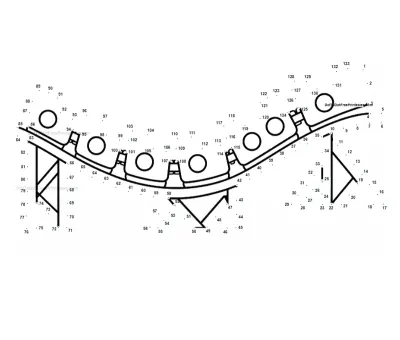
Conecta 133 puntos para revelar una montaña rusa completa de parque, con bucles y todo. Este es nuestro rompecabezas de parque más difícil hasta ahora, diseñado para niños que ya han trabajado en las hojas más fáciles y quieren una verdadera prueba de paciencia y control del lápiz
Dificultad
Duro
Dato curioso: La primera montaña rusa con bucle se inauguró en París en 1846. Los pasajeros se quejaron de que les dolía el cuello, y a los ingenieros les tomó casi 50 años diseñar un bucle que se sintiera suave en lugar de castigador.
Descargado11+veces¡Has hecho una gran elección!
Las descargas ahora comienzan desde el botón de abajo. Tócalo para obtener el PDF de este puzle.
Versión con números
Une los puntos numerados del 1 hasta el final para descubrir la imagen.
Gratis para uso doméstico y en el aula.
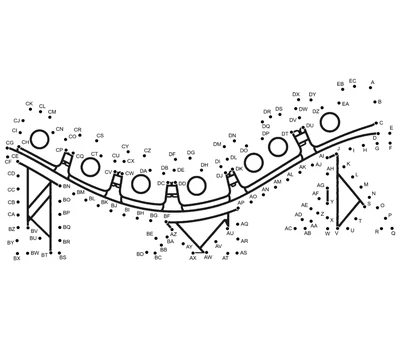
Versión del alfabeto
Incluye un diseño con temática del alfabeto para aprender fácilmente.
No es necesario registrarse. Se abre como PDF. Imprima en papel Carta estadounidense (8,5 × 11 pulgadas) o A4. Gratis para uso doméstico y en el aula.
Parques infantiles
También te puede gustar
Edades 7-10 — Duro
Cómo resolver el rompecabezas de unir puntos Montaña rusa del parque infantil
Seis secciones. Ciento treinta y tres puntos. Es el rompecabezas de parque infantil más grande de la colección, y no lo disimula: la vía sube, baja, gira en un looping y finalmente regresa rodando a la plataforma donde empezó. Los niños que ya hayan terminado las hojas del columpio, el tobogán o el balancín reconocerán el formato, pero la longitud cambia por completo la sensación. Aquí gana el trabajo lento y constante con el lápiz. Encuentra el punto 1 en la base de la primera cuesta, ¡y const…
1–22 — La cuesta de subida
Empieza en el punto 1 y avanza hasta el punto 22 para dibujar la larga y empinada subida que lleva el vagón hasta su punto más alto. Estas líneas siguen una misma dirección diagonal constante, lo que convierte este tramo en un buen calentamiento para coger ritmo antes de que el rompecabezas se complique.
¡Dato curioso!
La mayoría de las montañas rusas usan una cadena elevadora para subir el vagón por esa primera cuesta: suele ser la única parte de la atracción impulsada por un motor. Todo lo que ocurre después de la cima funciona solo con gravedad e impulso.
La mayoría de las montañas rusas usan una cadena elevadora para subir el vagón por esa primera cuesta: suele ser la única parte de la atracción impulsada por un motor. Todo lo que ocurre después de la cima funciona solo con gravedad e impulso.
23–44 — La primera bajada
Continúa del punto 23 al 44 para trazar el descenso en picado desde la cima. El ángulo aquí es más pronunciado que en cualquier otra parte de la hoja, así que anima a trazar con mano firme y decidida en lugar de temblorosa: una bajada rápida necesita una línea rápida y segura.
¡Dato curioso!
La primera bajada de una montaña rusa casi siempre es la más alta y empinada de todo el recorrido. Los diseñadores la colocan al principio a propósito, porque suele ser donde la vía alcanza su velocidad máxima.
La primera bajada de una montaña rusa casi siempre es la más alta y empinada de todo el recorrido. Los diseñadores la colocan al principio a propósito, porque suele ser donde la vía alcanza su velocidad máxima.
45–66 — El looping
Traza los puntos 45 a 66 para construir el gran looping, el corazón de la atracción. Esta sección se curva sobre sí misma, algo más complicado que una subida o bajada recta: ve despacio y localiza el siguiente punto antes de comprometerte con cada curva.
¡Dato curioso!
Los primeros loopings eran círculos perfectos, y los pasajeros se quejaban de tirones en el cuello por el cambio brusco de fuerza. Los loopings modernos tienen forma de lágrima, mucho más suave para el cuerpo a la misma velocidad.
Los primeros loopings eran círculos perfectos, y los pasajeros se quejaban de tirones en el cuello por el cambio brusco de fuerza. Los loopings modernos tienen forma de lágrima, mucho más suave para el cuerpo a la misma velocidad.
67–88 — Las colinas de camello
Une los puntos 67 a 88 para dibujar las pequeñas colinas onduladas que vienen después del looping. Estos montículos se suceden uno tras otro rápidamente, así que los niños practican trazos cortos y controlados en lugar de una sola línea larga.
¡Dato curioso!
A estas pequeñas subidas a veces se les llama colinas de 'lomo de camello', porque varias seguidas recuerdan a las jorobas de un camello. Al coronar cada una, los pasajeros sienten que se elevan un instante del asiento: un pequeño pero real momento de ingravidez.
A estas pequeñas subidas a veces se les llama colinas de 'lomo de camello', porque varias seguidas recuerdan a las jorobas de un camello. Al coronar cada una, los pasajeros sienten que se elevan un instante del asiento: un pequeño pero real momento de ingravidez.
89–110 — La curva final
Trabaja del punto 89 al 110 para dar forma a la amplia curva que devuelve la vía hacia la estación. Es un giro ancho y gradual, un agradable cambio de ritmo después del looping más cerrado de antes.
¡Dato curioso!
Los diseñadores llaman a este tramo el 'recorrido de retorno'. Se construye ancho y peraltado para que el vagón mantenga la velocidad en la curva sin necesidad de frenos, reservando la frenada para el final.
Los diseñadores llaman a este tramo el 'recorrido de retorno'. Se construye ancho y peraltado para que el vagón mantenga la velocidad en la curva sin necesidad de frenos, reservando la frenada para el final.
111–133 — La Estación y la Plataforma
Termina conectando los puntos del 111 al 133 para dibujar la plataforma de la estación donde comenzó y terminó el viaje. Veintitrés puntos por completar en el rompecabezas más grande del conjunto de parque — un final lento y cuidadoso aquí es la verdadera marca de la persistencia.
¡Dato curioso!
La sección de frenado al final de una montaña rusa real es una de sus partes más ingenierizadas. Tiene que llevar un carro lleno de pasajeros de velocidad completa a una parada completa lo suficientemente suave como para que nadie se sacuda.
La sección de frenado al final de una montaña rusa real es una de sus partes más ingenierizadas. Tiene que llevar un carro lleno de pasajeros de velocidad completa a una parada completa lo suficientemente suave como para que nadie se sacuda.
¡Ese es todo el viaje, de principio a fin! Colorea la pista con bucles llamativos y brillantes y dale al vagón de la montaña rusa el trabajo de pintura salvaje que quieras. Si 133 puntos te parecieron emocionantes y quieres un desafío aún mayor, consulta nuestros imprimibles punto a punto extremos a continuación.
Guía de coloreado
Montaña rusa del parque infantil: Colores reales clásicos
Esta paleta familiar usa colores que suelen verse en el motivo real.
- 1–22 (La cuesta de subida): Crayola Scarlet — Este color da a esta parte su aspecto real más conocido.
- 23–44 (La primera bajada): Crayola Sky Blue — Este color da a esta parte su aspecto real más conocido.
- 45–66 (El looping): Crayola Goldenrod — Este color da a esta parte su aspecto real más conocido.
- 67–88 (Las colinas de camello): Crayola Scarlet — Este color da a esta parte su aspecto real más conocido.
- 89–110 (La curva final): Crayola Sky Blue — Este color da a esta parte su aspecto real más conocido.
- 111–133 (La Estación y la Plataforma): Crayola Goldenrod — Este color da a esta parte su aspecto real más conocido.
Montaña rusa del parque infantil: Colores naturales suaves
Esta paleta clara refleja una versión real pálida o iluminada por el sol.
- 1–22 (La cuesta de subida): Crayola Silver — El tono claro muestra cómo puede verse esta parte a plena luz del día.
- 23–44 (La primera bajada): Crayola Tan — El tono claro muestra cómo puede verse esta parte a plena luz del día.
- 45–66 (El looping): Crayola Sea Green — El tono claro muestra cómo puede verse esta parte a plena luz del día.
- 67–88 (Las colinas de camello): Crayola Silver — El tono claro muestra cómo puede verse esta parte a plena luz del día.
- 89–110 (La curva final): Crayola Tan — El tono claro muestra cómo puede verse esta parte a plena luz del día.
- 111–133 (La Estación y la Plataforma): Crayola Sea Green — El tono claro muestra cómo puede verse esta parte a plena luz del día.
Montaña rusa del parque infantil: Colores reales intensos
Esta paleta intensa se inspira en materiales, marcas o acabados pintados reales.
- 1–22 (La cuesta de subida): Crayola Forest Green — Este color profundo refleja una marca, un material o un acabado pintado real.
- 23–44 (La primera bajada): Crayola Brown — Este color profundo refleja una marca, un material o un acabado pintado real.
- 45–66 (El looping): Crayola Orange — Este color profundo refleja una marca, un material o un acabado pintado real.
- 67–88 (Las colinas de camello): Crayola Forest Green — Este color profundo refleja una marca, un material o un acabado pintado real.
- 89–110 (La curva final): Crayola Brown — Este color profundo refleja una marca, un material o un acabado pintado real.
- 111–133 (La Estación y la Plataforma): Crayola Orange — Este color profundo refleja una marca, un material o un acabado pintado real.
¿Por qué el unir los puntos de Montaña rusa del parque infantil tiene dificultad Duro?
El nivel de dificultad de Montaña rusa del parque infantil es duro. Sus 133 puntos se reparten en 61 rectos, 14 curvos, 28 en zigzag y 30 de giro brusco. Los tramos en los que hay que ir más despacio son la subida de la montaña rusa en los puntos 4–6 y el bucle en los puntos 45–47. Sigue el orden numerado aunque otro punto parezca más cercano, y comprueba el número siguiente antes de cada giro.
Recto
61 puntos · 46 %
Lo más fácil: unir dos puntos con un solo trazo recto.
Curva
14 puntos · 11 %
Una curva suave: el lápiz tiene que ir más despacio y girar.
Zigzag
28 puntos · 21 %
92 94
Giros cerrados
30 puntos · 23 %
4 6
Trazamos a mano los 133 puntos de esta misma ficha: en los puntos 4–6 (giros cerrados) es donde se complica, y puedes comprobarlo en tu propia impresión.
Secciones clave que conviene conocer
Cada tramo destacado del recorrido, punto a punto.
| Rango de puntos | Trazo | Por qué importa | |
|---|---|---|---|
| Versión con números | Versión del alfabeto | ||
| 4 6 | D F | Giros cerrados | Los puntos 4–6 forman una esquina marcada en la subida de la montaña rusa; localiza primero el punto 6 antes de dibujarlo. |
| 45 47 | AS AU | Giros cerrados | Espera un giro brusco en el bucle entre los puntos 45 y 47, así que haz una pausa antes de unirlos. |
| 74 76 | BV BX | Giros cerrados | Hay un ángulo cerrado en las jorobas del camello aquí; trata los puntos 74 y 76 como dos líneas cortas independientes. |
| 92 94 | CN CP | Zigzag | Los puntos 92–94 forman un zigzag en el giro final; la dirección cambia en cada punto, así que únelos de dos en dos. |
| 95 96 | CQ CR | Giros cerrados | Los puntos 95–96 forman una esquina marcada en el giro final; localiza primero el punto 96 antes de dibujarlo. |
| 98 100 | CT CV | Zigzag | El trazo forma dientes de sierra a lo largo del giro final desde el punto 98 hasta el punto 100; comprueba cada número mientras avanzas. |
En resumen: El unir los puntos de Montaña rusa del parque infantil tiene dificultad duro: 56 % de líneas suaves, con solo 6 tramos cortos que vigilar.