Cute
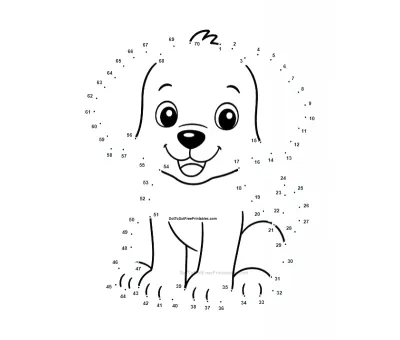
Cute Butterfly Dot to Dot — Free 67-Dot Printable for Ages 5–7
Connect 67 dots to reveal a beautiful butterfly. This easy printable puzzle helps young learners practise number sequencing, pencil control, and concentration.
Difficulty
Easy
Fun fact: Butterflies taste with their feet! The moment they land on a flower or leaf, tiny sensors on their feet tell them whether it's good to eat.
Downloaded13+timesYou’ve made a great choice!
Free for home and classroom use.
No sign-up needed. Opens as a PDF. Print on US Letter (8.5 × 11 inch) or A4 paper. Free for home and classroom use.
Cute
You might also like
Ages 5–7 — Easy
How to Solve the Cute Butterfly Dot-to-Dot Puzzle
Few things make children stop and stare like a butterfly floating past. With its symmetrical wings and graceful curves, a butterfly is one of the most beautiful subjects for a dot to dot puzzle. This 67-dot butterfly builds up wing by wing, so find a quiet spot, hold your pencil lightly, and let this delicate friend flutter onto the page!
1–17 — The Upper Wings
Start at dot 1 and work through to dot 17 to draw the large, sweeping upper wings. These long, graceful curves are wonderful for practising smooth, flowing pencil strokes — encourage children to keep their wrist relaxed and glide from dot to dot.
Fun fact!
A butterfly's wings are actually transparent! The colours come from thousands of tiny overlapping scales that reflect light — which is why butterfly wings shimmer as they move.
A butterfly's wings are actually transparent! The colours come from thousands of tiny overlapping scales that reflect light — which is why butterfly wings shimmer as they move.
18–34 — The Lower Wings
Continue from dot 18 to dot 34 to add the rounder lower wings. Notice how they mirror the upper wings — butterflies are nature's masters of symmetry, and spotting that pattern helps children predict where the next dot will be.
Fun fact!
Butterfly wings are symmetrical: the pattern on the left wing is a near-perfect mirror image of the right. Scientists use these unique patterns to tell individual butterflies apart, like fingerprints.
Butterfly wings are symmetrical: the pattern on the left wing is a near-perfect mirror image of the right. Scientists use these unique patterns to tell individual butterflies apart, like fingerprints.
35–50 — The Body and Head
Trace dots 35 through 50 to draw the butterfly's slender body and small round head. The dots sit closer together here, so it's a good spot to slow down and practise short, precise lines after the big sweeping wing curves.
Fun fact!
A butterfly's body has three parts — head, thorax, and abdomen — and all four wings are powered by muscles in the thorax. Some butterflies beat their wings 20 times every second!
A butterfly's body has three parts — head, thorax, and abdomen — and all four wings are powered by muscles in the thorax. Some butterflies beat their wings 20 times every second!
51–67 — The Antennae and Wing Patterns
Finish by connecting dots 51 through 67 to add the curling antennae and the decorative patterns inside the wings. These final details are what make a butterfly a butterfly — a careful finish here makes the whole picture flutter to life.
Fun fact!
Butterflies use their club-tipped antennae to smell, balance, and even tell the time of day. A monarch butterfly's antennae contain a tiny built-in compass that helps it migrate thousands of kilometres.
Butterflies use their club-tipped antennae to smell, balance, and even tell the time of day. A monarch butterfly's antennae contain a tiny built-in compass that helps it migrate thousands of kilometres.
Beautiful work — 67 dots, all connected! Your butterfly is ready for its true colours: try bright orange like a monarch, sky blue like a morpho, or a rainbow pattern all your own. Explore more cute dot to dot printables to keep the fun going.
Coloring Guide
Monarch Orange and Black Butterfly
The monarch butterfly’s bright orange wings with black borders and white spots warn predators that it is unpleasant to eat.
- 1–17 (Upper wings): Crayola Orange — Bright orange is the signature colour of the monarch butterfly.
- 18–34 (Lower wings): Crayola Orange — The lower wings continue the same warning orange colour.
- 35–50 (Body and head): Crayola Black — A monarch’s body is dark, almost black, with small white dots.
- 51–67 (Antennae and wing patterns): Crayola Black — Bold black veins and borders trace across every monarch wing.
Blue Morpho Butterfly
The blue morpho is famous for its brilliant, shimmering blue wings, one of the most dazzling colours found in nature.
- 1–17 (Upper wings): Crayola Cerulean — The blue morpho’s iridescent blue comes from tiny light-reflecting scales.
- 18–34 (Lower wings): Crayola Cerulean — The vivid blue continues across the lower wings.
- 35–50 (Body and head): Crayola Black — Like most butterflies, the blue morpho has a slim, dark body.
- 51–67 (Antennae and wing patterns): Crayola Black — Black wing borders frame the brilliant blue in every real morpho.
Why Is the Cute Butterfly Dot to Dot Printable Rated Easy?
The Cute Butterfly is rated easy. Of its 67 dots, 50 run in straight lines, with 8 curved, 4 zigzag and 5 sharp-turn dots. The stretches to slow down for are upper wings at dots 7–8 and body and head at dots 41–42. Follow the numbered order even when another dot looks nearer, and check the next number before each curve.
Straight
50 dots · 75%
Easiest — join two dots with one straight pencil stroke.
Curved
8 dots · 12%
78
Zigzag
4 dots · 6%
Quick in-and-out changes of direction. Good counting practice.
Sharp turns
5 dots · 7%
The hardest bits — tight corners where the line doubles back.
We traced all 67 dots on this exact worksheet by hand to write this — not a generic guess.
Key Sections to Know
Every notable stretch of the path, dot by dot.
| Dot Range | Pattern | Why It Matters |
|---|---|---|
| 78 | Curved | The outline swings around upper wings here; take dots 7 to 8 in short strokes. |
| 4142 | Curved | A gentle curve shapes body and head across dots 41–42. Spot dot 42 before you commit to the line. |
Bottom line: The Cute Butterfly dot to dot is easy rated — 87% smooth lines with no tricky spots to watch for.