Flowers
Rose Dot to Dot: Classic 66-Dot Printable PDF Free
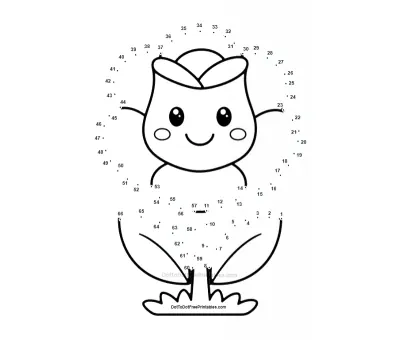
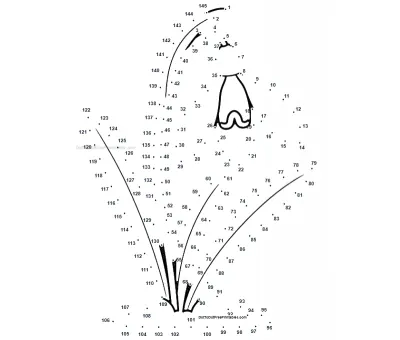
Connect 66 dots to reveal an elegant rose flower. This easy printable helps children practice number sequencing, pencil control, patience, and concentration.
Difficulty
Easy
Fun fact: Roses have been grown for thousands of years, and wild rose species naturally grow in many parts of the Northern Hemisphere.
Free for home and classroom use.
No sign-up needed. Opens as a PDF. Print on US Letter (8.5 × 11 inch) or A4 paper. Free for home and classroom use.
Flowers
You might also like
Ages 5–7 — Easy
How to Solve the Rose Flower Dot-to-Dot Puzzle
Long before roses filled flower shops, they grew wild across much of the Northern Hemisphere, and people have been cultivating them for thousands of years for their beauty and fragrance alike. This 66-dot puzzle builds a rose one careful line at a time, starting at the tightly curled center and working outward through its layered petals. Find dot 1 at the rose's center and let the bloom slowly unfurl across five stages.
1–13 — The Rose Center
Connect dots 1 through 13 slowly to form the tightly curled petals in the middle of the flower. Keep each line neat so the spiral-like center stays easy to see, since it sets the pattern for every layer that follows.
Fun fact!
The center petals of many roses remain curled closely together while the outer petals begin to open, creating the flower's classic layered look.
The center petals of many roses remain curled closely together while the outer petals begin to open, creating the flower's classic layered look.
14–26 — The Inner Petals
Continue from dot 14 to dot 26, adding the next layer of overlapping petals. Notice how each new curve makes the blossom look fuller than the last.
Fun fact!
Rose petals overlap in layers, helping protect the flower's inner parts while the bud is still closed and developing.
Rose petals overlap in layers, helping protect the flower's inner parts while the bud is still closed and developing.
27–40 — The Outer Bloom
Trace dots 27 through 40 around the broad outer petals. Use smooth strokes around the rounded edges and pause whenever you need to find the next number.
Fun fact!
Different rose varieties can have very different numbers of petals, from simple flowers with just five petals to very full blooms with dozens of layers.
Different rose varieties can have very different numbers of petals, from simple flowers with just five petals to very full blooms with dozens of layers.
41–53 — The Stem
Follow dots 41 through 53 down from the flower to draw its sturdy stem. These longer lines are good practice for keeping the pencil steady across a bigger stretch.
Fun fact!
The sharp points on rose stems are technically called prickles rather than thorns, because they grow from the stem's outer layer rather than from deeper inside it.
The sharp points on rose stems are technically called prickles rather than thorns, because they grow from the stem's outer layer rather than from deeper inside it.
54–66 — The Leaves
Finish with dots 54 through 66 to shape the leaves and complete the rose. Check that every number is connected before adding color to your finished flower.
Fun fact!
Rose leaves often have toothed edges, meaning their margins look like a row of tiny, even teeth.
Rose leaves often have toothed edges, meaning their margins look like a row of tiny, even teeth.
Your rose is in full bloom! Color the petals red, pink, yellow, white, or invent a rainbow rose of your own. Explore more free flower dot-to-dot printables to keep the fun going.
Coloring Guide
Classic Red Rose
Red is the most iconic rose color, the most common variety found in gardens and long associated with romance.
- 1–13 (Rose center): Crayola Scarlet — A tightly coiled scarlet center is where a rose bloom begins to unfurl.
- 14–26 (Inner petals): Crayola Scarlet — The inner petals share the same bold scarlet as the center.
- 27–40 (Outer bloom): Crayola Red — The outer petals are often a slightly deeper red as they open wider.
- 41–53 (Stem): Crayola Forest Green — Rose stems are woody and green, often lined with thorns.
- 54–66 (Leaves): Crayola Green — Rose leaves are glossy with small toothed edges.
Friendship Yellow Rose
Yellow roses are a real, popular variety traditionally associated with friendship and joy rather than romance.
- 1–13 (Rose center): Crayola Dandelion — A warm golden center marks the start of a yellow rose's unfurling petals.
- 14–26 (Inner petals): Crayola Dandelion — Deep golden yellow covers the inner petals.
- 27–40 (Outer bloom): Crayola Yellow — The outer petals often lighten slightly as the bloom opens.
- 41–53 (Stem): Crayola Forest Green — Yellow roses share the same thorny green stem as any other rose.
- 54–66 (Leaves): Crayola Green — Glossy green leaves finish this cheerful variety.
Sincere Peach Rose
Peach roses are a real, softer variety often given to express sincerity, gratitude, and gentle admiration.
- 1–13 (Rose center): Crayola Peach — A soft peach center gives this variety its gentle, warm look.
- 14–26 (Inner petals): Crayola Peach — The inner petals carry the same soft peach tone throughout.
- 27–40 (Outer bloom): Crayola Salmon — The outer petals often shift toward a warmer salmon shade.
- 41–53 (Stem): Crayola Forest Green — A green, thorny stem supports every rose color.
- 54–66 (Leaves): Crayola Green — Glossy green leaves complete this soft, warm-toned rose.
Why Is the Rose Flower Dot to Dot Printable Rated Easy?
The Rose Flower is rated easy. Of its 66 dots, 40 run in straight lines, with 9 curved, 15 zigzag and 2 sharp-turn dots. The stretches to slow down for are rose center at dots 13–15 and leaves at dots 64–65. Follow the numbered order even when another dot looks nearer, and check the next number before each turn.
Straight
40 dots · 61%
Easiest — join two dots with one straight pencil stroke.
Curved
9 dots · 14%
6465
Zigzag
15 dots · 23%
1315
Sharp turns
2 dots · 3%
The hardest bits — tight corners where the line doubles back.
We traced all 66 dots on this exact worksheet by hand — the zigzag at dots 13–15 is where it got tricky, and you can check that against your own printout.
Key Sections to Know
Every notable stretch of the path, dot by dot.
| Dot Range | Pattern | Why It Matters |
|---|---|---|
| 1315 | Zigzag | The line saw-tooths along rose center from dot 13 to dot 15; check every number as you go. |
| 6465 | Curved | The outline swings around leaves here; take dots 64 to 65 in short strokes. |
Bottom line: The Rose Flower dot to dot is easy rated — 74% smooth lines with just 1 short section to watch for.