Flowers
Six-Petal Lily Dot to Dot — Free 62-Dot Printable for Ages 5–7
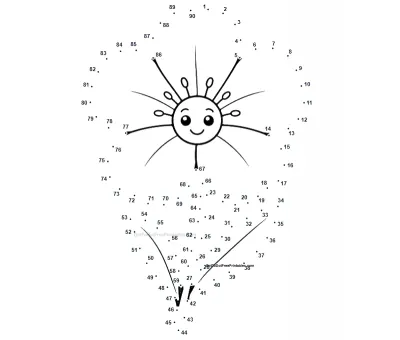
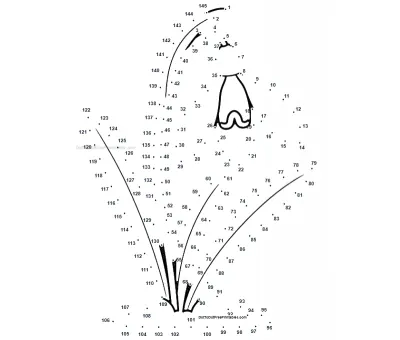
Connect 62 dots to reveal an elegant six-petal lily. This easy printable helps children practice number sequencing, pencil control, visual tracking, patience, and concentration.
Difficulty
Easy
Fun fact: A lily flower usually appears to have six petals, but botanically three are petals and three are similar-looking sepals.
Free for home and classroom use.
No sign-up needed. Opens as a PDF. Print on US Letter (8.5 × 11 inch) or A4 paper. Free for home and classroom use.
Flowers
You might also like
Ages 5–7 — Easy
How to Solve the Six-Petal Lily Dot-to-Dot Puzzle
A lily's flower plays a small trick on the eye — it looks like it has six identical petals, but botanically only three of them are true petals, while the other three are lookalike sepals doing the same job. This 62-dot puzzle opens one graceful petal at a time before following the stem down to the leaves, across five manageable stages. Find dot 1 at the upper petals and watch the six-pointed bloom come together.
1–12 — The Upper Petals
Connect dots 1 through 12 to shape the lily's upper petals. Follow each long curve slowly and look carefully for the next number, since these sweeping petal lines are longer than they first appear.
Fun fact!
Many lilies hold their flowers upward or outward so visiting insects can easily land and reach their pollen.
Many lilies hold their flowers upward or outward so visiting insects can easily land and reach their pollen.
13–25 — The Flower Center
Continue from dot 13 to dot 25 around the center of the bloom. Careful pencil turns will keep the flower's detailed middle clear, since several small parts overlap here.
Fun fact!
The long structures in a lily's center are called stamens, and their tips carry the powdery pollen that dusts onto anything that brushes past.
The long structures in a lily's center are called stamens, and their tips carry the powdery pollen that dusts onto anything that brushes past.
26–38 — The Lower Petals
Follow dots 26 through 38 to complete the remaining petals. Notice how the six pointed shapes spread out evenly to form a balanced, star-like flower.
Fun fact!
Some lily petals have spots or stripes that act as visual guides, helping pollinating insects find their way to the nectar.
Some lily petals have spots or stripes that act as visual guides, helping pollinating insects find their way to the nectar.
39–50 — The Tall Stem
Trace dots 39 through 50 down the lily's tall stem. Use steady strokes on these longer connections and check each number as you go, since a straight stem keeps the whole flower balanced.
Fun fact!
Lilies grow from underground bulbs that store energy through the winter, allowing the plant to bloom again the next growing season.
Lilies grow from underground bulbs that store energy through the winter, allowing the plant to bloom again the next growing season.
51–62 — The Leaves and Finish
Connect dots 51 through 62 to add the narrow leaves and complete your lily. Check the whole number trail before coloring, since this final section completes the plant.
Fun fact!
Lily leaves are often long and narrow, helping them fit neatly and efficiently around the upright stem.
Lily leaves are often long and narrow, helping them fit neatly and efficiently around the upright stem.
Your six-petal lily is blooming! Color it white, orange, pink, yellow, or add colorful spots like many real lilies have. Explore more free flower dot-to-dot printables to keep the fun going.
Coloring Guide
Stargazer Pink Lily
The Stargazer is a real, hugely popular hybrid lily, white at the petal edges and deepening to vivid pink toward the center, with small red freckles.
- 1–12 (Upper petals): Crayola Carnation Pink — Stargazer petals deepen from white edges into rich pink toward the center.
- 13–25 (Flower center): Crayola Razzmatazz — The deepest pink color and red freckles concentrate near the throat of the flower.
- 26–38 (Lower petals): Crayola Carnation Pink — All six petals share the same pink-to-white blending.
- 39–50 (Tall stem): Crayola Forest Green — Lilies grow on a single tall, sturdy stem.
- 51–62 (Leaves and finish): Crayola Green — Long, narrow leaves grow up the length of the stem.
Tiger Lily Orange
The tiger lily is a real wild lily with bold orange, downward-facing petals covered in dark freckles, like a tiger's coat.
- 1–12 (Upper petals): Crayola Orange — Bright orange is the signature color of the classic tiger lily.
- 13–25 (Flower center): Crayola Red Orange — The center stamens are typically a deeper orange-red, dusted with pollen.
- 26–38 (Lower petals): Crayola Orange — Tiger lily petals curl backward, showing off their solid orange color.
- 39–50 (Tall stem): Crayola Forest Green — Like most true lilies, tiger lilies grow on one tall stem.
- 51–62 (Leaves and finish): Crayola Green — Narrow green leaves line the stem beneath the nodding blooms.
Gold Band White Lily
This real lily variety has huge white blooms marked with a bold golden stripe down each petal and light red freckling.
- 1–12 (Upper petals): Crayola Silver (outline only) — This variety petals are mostly white, needing an outline to stay visible.
- 13–25 (Flower center): Crayola Goldenrod — A bold golden stripe runs down the center of each petal in this named variety.
- 26–38 (Lower petals): Crayola Silver (outline only) — White petals with a golden band are this lily's defining feature.
- 39–50 (Tall stem): Crayola Forest Green — A single tall green stem supports the huge blooms.
- 51–62 (Leaves and finish): Crayola Green — Long green leaves complete this dramatic white lily.
Why Is the Six-Petal Lily Dot to Dot Printable Rated Easy?
The Six-Petal Lily is rated easy. Of its 62 dots, 50 run in straight lines, with 1 curved, 5 zigzag, and 6 twisted dots. The line stays gentle from start to finish, so there isn't one stretch that needs extra care — just keep an even pace through the upper petals, the flower center, the lower petals, the tall stem, and the leaves, and check each number before you draw.
Straight
50 dots · 81%
162
Curved
1 dots · 2%
A gentle bend, so the pencil has to slow down and steer.
Zigzag
5 dots · 8%
Quick in-and-out changes of direction. Good counting practice.
Sharp turns
6 dots · 10%
The hardest bits — tight corners where the line doubles back.
We traced all 62 dots on this exact worksheet by hand to write this — not a generic guess.
Key Sections to Know
Every notable stretch of the path, dot by dot.
| Dot Range | Pattern | Why It Matters |
|---|---|---|
| 162 | Straight | Nearly every segment here is a short, evenly spaced line, from the upper petals through the flower center and lower petals, up the tall stem, to the leaves and finish — a smooth, steady puzzle to solve start to end. |
Bottom line: The Six-Petal Lily dot to dot is easy rated — 82% smooth lines with no tricky spots to watch for.