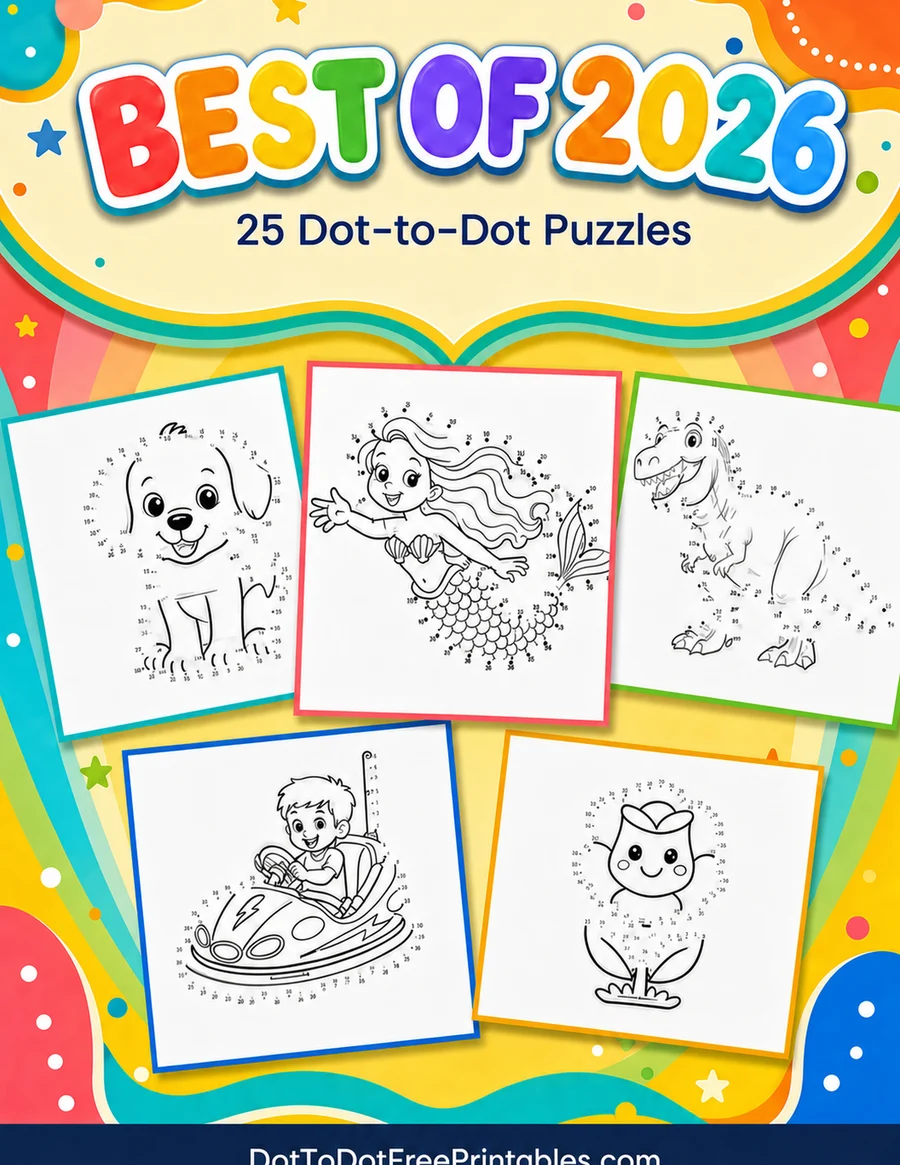
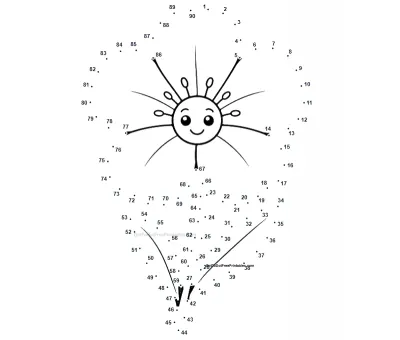
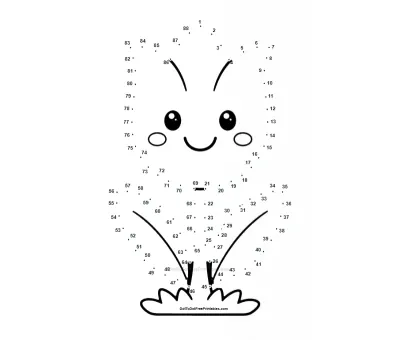
Flowers
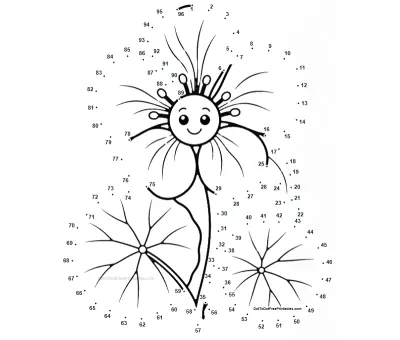
Tulip Flower Dot to Dot — Free 88-Dot Printable for Ages 5–7
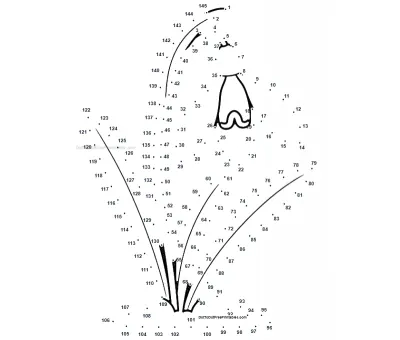
Connect 88 dots to reveal a graceful tulip flower. This easy printable gives children rewarding practice with number sequencing, pencil control, patience, and concentration.
Difficulty
Easy
Fun fact: Tulips grow from underground bulbs that store food for the plant and help it return when the growing season begins.
Free for home and classroom use.
No sign-up needed. Opens as a PDF. Print on US Letter (8.5 × 11 inch) or A4 paper. Free for home and classroom use.
Flowers
You might also like
Ages 5–7 — Easy
How to Solve the Tulip Flower Dot-to-Dot Puzzle
Tulips have a small daily habit that surprises many people — their flowers actually close up on cool nights and reopen again once daylight brings warmer temperatures, opening and closing like a slow-motion clock. This 88-dot puzzle begins at the top of the bloom and grows all the way down to the leaves across five stages. Find dot 1 at the top of the flower cup and follow the tulip's shape downward.
1–18 — The Flower Cup
Connect dots 1 through 18 around the top of the tulip. Use smooth strokes to form the curved cup shape and its pointed upper edge, since this opening section sets the whole flower's outline.
Fun fact!
Many tulip flowers close during cool nights and open again when daylight brings warmer temperatures.
Many tulip flowers close during cool nights and open again when daylight brings warmer temperatures.
19–35 — The Petal Points
Continue from dot 19 to dot 35 to shape the pointed petals. Follow each change in direction carefully so the blossom keeps its distinctive tulip outline.
Fun fact!
A typical tulip flower has three petals and three similar-looking sepals, so it often appears to have six petals altogether.
A typical tulip flower has three petals and three similar-looking sepals, so it often appears to have six petals altogether.
36–53 — The Lower Bloom
Trace dots 36 through 53 around the lower edge of the flower and connect it to the stem. These curves complete the tulip's full bloom before the stem begins.
Fun fact!
Tulips come in thousands of cultivated varieties, with flowers in nearly every color except a true, natural blue.
Tulips come in thousands of cultivated varieties, with flowers in nearly every color except a true, natural blue.
54–70 — The Tall Stem
Follow dots 54 through 70 down the long stem. Keep the pencil steady on the longer lines and check each number before moving ahead.
Fun fact!
Tulip stems bend gradually toward light as the plant grows, a response that helps the leaves and flower catch more sunlight.
Tulip stems bend gradually toward light as the plant grows, a response that helps the leaves and flower catch more sunlight.
71–88 — The Long Leaves
Finish by connecting dots 71 through 88 to draw the tulip's long, curved leaves. Check the full outline, then add your favorite spring colors.
Fun fact!
Tulip leaves are usually broad, smooth, and slightly waxy, which helps reduce water loss from their surface.
Tulip leaves are usually broad, smooth, and slightly waxy, which helps reduce water loss from their surface.
Your tulip is ready for spring! Color it red, yellow, pink, purple, orange, or invent a striped variety of your own. Explore more free flower dot-to-dot printables to keep the fun going.
Coloring Guide
Classic Red Tulip
Red is the most classic tulip color, exemplified by the Darwin Hybrid 'Apeldoorn', one of the most widely grown tulip varieties.
- 1–18 (Flower cup): Crayola Scarlet — A rich scarlet cup is the hallmark of classic red tulip varieties.
- 19–35 (Petal points): Crayola Red — The pointed petal tips often deepen to a slightly darker red.
- 36–53 (Lower bloom): Crayola Scarlet — The lower petals match the scarlet of the cup for one bold, even bloom.
- 54–70 (Tall stem): Crayola Forest Green — Tulips grow on a single tall, smooth stem.
- 71–88 (Long leaves): Crayola Sea Green — Tulip leaves have a distinctive waxy, blue-green surface.
Cheerful Yellow Tulip
Yellow tulips are a real, classic color associated with cheerfulness and friendship.
- 1–18 (Flower cup): Crayola Yellow — A bright yellow cup gives this tulip its cheerful look.
- 19–35 (Petal points): Crayola Dandelion — The petal tips deepen slightly for natural shading.
- 36–53 (Lower bloom): Crayola Yellow — The lower petals match the sunny yellow of the cup.
- 54–70 (Tall stem): Crayola Forest Green — Every tulip color grows from the same smooth green stem.
- 71–88 (Long leaves): Crayola Sea Green — Waxy blue-green leaves are shared across tulip varieties.
Regal Purple Tulip
Purple tulips are a real but relatively rare color, long linked with royalty, luxury, and refinement.
- 1–18 (Flower cup): Crayola Purple Heart — Deep purple is a real, prized tulip color associated with royalty.
- 19–35 (Petal points): Crayola Purple Heart — The petal points carry the same rich purple tone.
- 36–53 (Lower bloom): Crayola Purple Heart — A single deep purple covers the whole lower bloom.
- 54–70 (Tall stem): Crayola Forest Green — A tall green stem supports this regal color form.
- 71–88 (Long leaves): Crayola Sea Green — Blue-green leaves finish this striking purple variety.
Why Is the Tulip Flower Dot to Dot Printable Rated Easy?
The Tulip Flower is rated easy. Of its 88 dots, 73 run in straight lines, with 5 curved, 2 zigzag and 8 sharp-turn dots. The stretch to slow down for is lower bloom at dots 45–46. Follow the numbered order even when another dot looks nearer, and check the next number before each curve.
Straight
73 dots · 83%
Easiest — join two dots with one straight pencil stroke.
Curved
5 dots · 6%
4546
Zigzag
2 dots · 2%
Quick in-and-out changes of direction. Good counting practice.
Sharp turns
8 dots · 9%
The hardest bits — tight corners where the line doubles back.
We traced all 88 dots on this exact worksheet by hand to write this — not a generic guess.
Key Sections to Know
Every notable stretch of the path, dot by dot.
| Dot Range | Pattern | Why It Matters |
|---|---|---|
| 4546 | Curved | A gentle curve shapes lower bloom across dots 45–46. Spot dot 46 before you commit to the line. |
Bottom line: The Tulip Flower dot to dot is easy rated — 89% smooth lines with no tricky spots to watch for.