Ocean
Electric Eel Dot to Dot — Free 81-Dot Printable for Ages 5–7
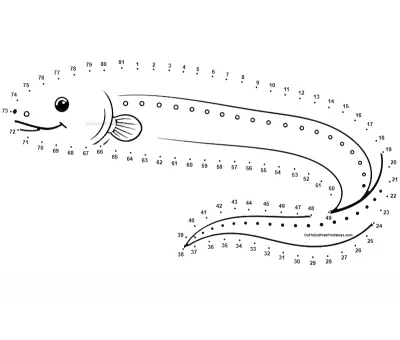
Connect 81 numbered dots to reveal a long, curving electric eel. This easy printable helps children practise number sequencing, concentration, and pencil control while discovering one of South America's most remarkable fish.
Difficulty
Easy
Fun fact: Electric eels can produce powerful electrical pulses to find prey, defend themselves, and sense their surroundings in murky water.
Downloaded4+timesYou’ve made a great choice!
Downloads now start from the button below. Tap it to get this puzzle's PDF.
Number Version
Connect the numbered dots from 1 to the end to reveal the picture.
Free for home and classroom use.
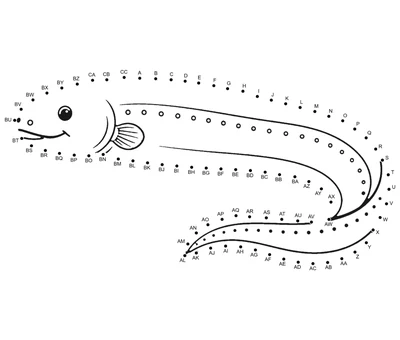
Alphabet Version
Includes alphabet-themed design for easy learning.
No sign-up needed. Opens as a PDF. Print on US Letter (8.5 × 11 inch) or A4 paper. Free for home and classroom use.
Ocean
You might also like
Ages 5–7 — Easy
How to Complete the Electric Eel Dot to Dot
Electric eels live in slow-moving freshwater rivers and flooded forests in South America. Although their name says eel, they are actually a type of knifefish. Begin at dot 1 near the top of the head, then follow the numbers carefully as the body curves across the page.
1–18 — Across the Upper Body
Start at dot 1 and connect through dot 18 to trace the smooth upper edge of the eel. The wide spacing encourages steady, controlled strokes while children practise finding two-digit numbers in order.
Fun fact!
Electric eels breathe air at the water's surface because their oxygen-poor river habitats do not provide enough oxygen through the gills alone.
Electric eels breathe air at the water's surface because their oxygen-poor river habitats do not provide enough oxygen through the gills alone.
19–38 — Around the Tail
Continue from dot 19 through dot 38 around the narrow tail and lower curve. Watch each turn closely and keep the line moving from one numbered point to the next.
Fun fact!
Most of an electric eel's long body contains specialized organs that generate and control electrical pulses.
Most of an electric eel's long body contains specialized organs that generate and control electrical pulses.
39–54 — Along the Lower Body
Connect dots 39 to 54 along the underside of the eel. This section combines gentle curves with shorter steps, building pencil control and visual tracking.
Fun fact!
An electric eel swims by rippling a long fin along the underside of its body, allowing it to move forward or backward with surprising precision.
An electric eel swims by rippling a long fin along the underside of its body, allowing it to move forward or backward with surprising precision.
55–70 — Back Toward the Head
Follow dots 55 through 70 as the line travels back toward the head. Check each number before drawing so the eel's rounded body stays smooth and recognizable.
Fun fact!
Weak electrical pulses help electric eels navigate and detect nearby objects in dark, muddy water, working a little like an electric sense.
Weak electrical pulses help electric eels navigate and detect nearby objects in dark, muddy water, working a little like an electric sense.
71–81 — Complete the Face
Finish with dots 71 through 81 to close the outline around the face and forehead. These final eleven dots reward careful counting and complete the eel's expressive profile.
Fun fact!
Electric eels have poor eyesight, so their electrical sensing system is especially useful for understanding what is around them.
Electric eels have poor eyesight, so their electrical sensing system is especially useful for understanding what is around them.
Excellent work — your electric eel is complete! Add deep olive, golden brown, or charcoal colors, then draw ripples around its long body to create a muddy Amazon river habitat. Explore more ocean and water-animal dot to dot printables for another challenge.
Coloring Guide
Electric Eel: Natural River Colors
Earthy greens and browns reflect an electric eel's natural freshwater coloring.
| Dot Range | Part | Color | Why this color | |
|---|---|---|---|---|
| Numeric | Alphabet | |||
| 1–18 | A–R | Upper Body | Crayola Olive Green | Olive tones suit the eel's muted upper body. |
| 19–38 | S–AL | Tail | Crayola Raw Umber | Deep brown gives the tail a natural river-water shade. |
| 39–54 | AM–BB | Lower Body | Crayola Golden Yellow | A warmer underside adds realistic contrast. |
| 55–70 | BC–BR | Body Details | Crayola Gray | Soft gray blends the body sections together. |
| 71–81 | BS–CC | Head | Crayola Black | A dark head makes the eye and mouth stand out. |
Electric Eel: Electric Glow
Bright colors imagine the electrical energy moving through the eel.
| Dot Range | Part | Color | Why this color | |
|---|---|---|---|---|
| Numeric | Alphabet | |||
| 1–18 | A–R | Upper Body | Crayola Electric Lime | Neon green suggests a vivid electrical charge. |
| 19–38 | S–AL | Tail | Crayola Yellow | Bright yellow carries the energy around the tail. |
| 39–54 | AM–BB | Lower Body | Crayola Sky Blue | Cool blue provides a watery contrast. |
| 55–70 | BC–BR | Body Details | Crayola Purple Heart | Purple adds a bold fantasy accent. |
| 71–81 | BS–CC | Head | Crayola Orange | Orange gives the face a bright finishing spark. |
Electric Eel: Deep Water Colors
Dark blues and greens create a dramatic underwater palette.
| Dot Range | Part | Color | Why this color | |
|---|---|---|---|---|
| Numeric | Alphabet | |||
| 1–18 | A–R | Upper Body | Crayola Navy Blue | Navy suggests shadowy river water. |
| 19–38 | S–AL | Tail | Crayola Pine Green | Deep green fits the eel's freshwater habitat. |
| 39–54 | AM–BB | Lower Body | Crayola Cadet Blue | A pale blue-gray separates the underside. |
| 55–70 | BC–BR | Body Details | Crayola Blue Green | Blue green adds depth without losing contrast. |
| 71–81 | BS–CC | Head | Crayola Outer Space | Charcoal completes the deep-water look. |
Why Is the Electric Eel Dot to Dot Printable Rated Easy?
The Electric Eel is rated easy. Of its 81 dots, 71 run in straight lines, with 7 curved, 2 zigzag and 1 sharp-turn dots. The stretches to slow down for are along the lower body at dots 50–51 and complete the face at dots 73–74. Follow the numbered order even when another dot looks nearer, and check the next number before each curve.
Straight
71 dots · 88%
Easiest — join two dots with one straight pencil stroke.
Curved
7 dots · 9%
50 51
Zigzag
2 dots · 2%
Quick in-and-out changes of direction. Good counting practice.
Sharp turns
1 dots · 1%
The hardest bits — tight corners where the line doubles back.
We traced all 81 dots on this exact worksheet by hand to write this — not a generic guess.
Key Sections to Know
Every notable stretch of the path, dot by dot.
| Dot Range | Pattern | Why It Matters | |
|---|---|---|---|
| Numeric | Alphabet | ||
| 50 51 | AX AY | Curved | Dots 50–51 round off along the lower body — connect them one at a time so the arc stays even. |
| 73 74 | BU BV | Curved | The outline swings around complete the face here; take dots 73 to 74 in short strokes. |
Bottom line: The Electric Eel dot to dot is easy rated — 96% smooth lines with no tricky spots to watch for.