Space
Crescent Moon Dot to Dot — 60 Easy Dots of Night-Sky Fun
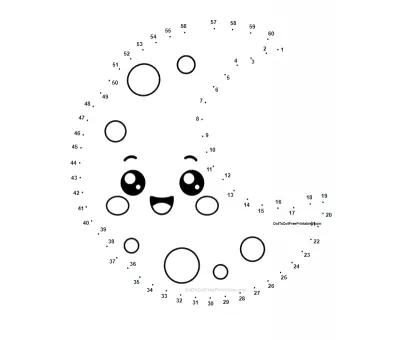
Connect 60 easy dots to reveal a beautiful crescent moon glowing in the night sky. This free printable helps children practise number sequencing, visual tracking, concentration, and smooth pencil control.
Difficulty
Easy
Fun fact: A crescent moon appears when sunlight illuminates only a thin curved part of the Moon that we can see from Earth.
Downloaded5+timesYou’ve made a great choice!
Downloads now start from the button below. Tap it to get this puzzle's PDF.
Number Version
Connect the numbered dots from 1 to the end to reveal the picture.
Free for home and classroom use.
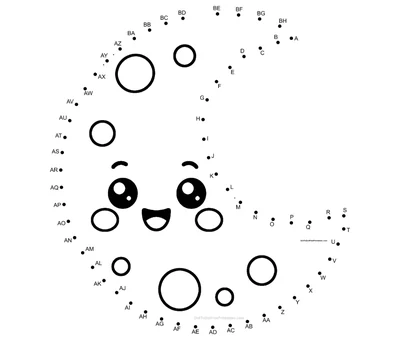
Alphabet Version
Includes alphabet-themed design for easy learning.
No sign-up needed. Opens as a PDF. Print on US Letter (8.5 × 11 inch) or A4 paper. Free for home and classroom use.
Space
You might also like
Ages 5–7 — Easy
How to Solve the Crescent Moon Dot-to-Dot Puzzle
A slim crescent moon is one of the most recognisable shapes in the night sky, yet it's really just half a story — the Moon is always a full sphere, and what changes from night to night is simply how much of its sunlit half we can see from Earth. This friendly 60-dot puzzle builds that shape's outer curve, pointed tips, and inner arc across five manageable stages. Find dot 1 at the upper tip and let your moon begin to glow.
1–12 — The Upper Moon Tip
Connect dots 1 through 12 to shape the crescent's narrow upper point. This tip comes to a fine curve, so slow, careful strokes work better than quick ones for keeping the point sharp.
Fun fact!
The Moon does not make its own light — it shines only by reflecting sunlight, which is why its brightness changes as its angle to the Sun changes.
The Moon does not make its own light — it shines only by reflecting sunlight, which is why its brightness changes as its angle to the Sun changes.
13–24 — The Outer Curve
Continue from dot 13 to dot 24 along the broad outside curve of the Moon. This is the longest single curve in the puzzle, so a smooth, unhurried arc gives the cleanest result.
Fun fact!
Gravity pulled the Moon into a nearly round shape billions of years ago, the same force that shapes every large planet and moon in the solar system.
Gravity pulled the Moon into a nearly round shape billions of years ago, the same force that shapes every large planet and moon in the solar system.
25–36 — The Lower Moon Tip
Follow dots 25 through 36 to form the lower point and turn toward the inside curve. Watch closely where the direction changes, since the tip curls back on itself here.
Fun fact!
The Moon's surface is covered with craters formed by rocks and debris striking it over billions of years, since it has no atmosphere to burn most of them up.
The Moon's surface is covered with craters formed by rocks and debris striking it over billions of years, since it has no atmosphere to burn most of them up.
37–48 — The Inner Crescent
Trace dots 37 through 48 up the inner arc, keeping your pencil line smooth. This inner curve is what actually creates the crescent shape, so a steady hand here matters more than anywhere else.
Fun fact!
The Moon takes about 29.5 days to move through a complete cycle of phases, from new moon to full moon and back again.
The Moon takes about 29.5 days to move through a complete cycle of phases, from new moon to full moon and back again.
49–60 — The Glow and Finish
Finish with dots 49 through 60 to close the crescent and add its final details. Just twelve dots remain — take care connecting back to where the shape began.
Fun fact!
People all around the world see the same Moon, although its crescent can appear tilted at a different angle depending on where you're standing on Earth.
People all around the world see the same Moon, although its crescent can appear tilted at a different angle depending on where you're standing on Earth.
Beautiful work — your crescent moon is shining! Explore more space dot to dot puzzles to keep the fun going.
Coloring Guide
Crescent Moon: Classic Real-Life Colors
The colours the Moon really shows at night — pale grey rock along the sunlit rim, fading into the black of space.
| Dot Range | Part | Color | Why this color | |
|---|---|---|---|---|
| Numeric | Alphabet | |||
| 1–12 | A–L | The Upper Moon Tip | Crayola Silver | The Moon's surface is pale grey rock, so a silvery tone fits the thin sunlit sliver at the crescent's upper point. |
| 13–24 | M–X | The Outer Curve | Crayola Scarlet | Low on the horizon the Moon can look reddish as its light passes through thick air, giving this broad outer edge a warm tint. |
| 25–36 | Y–AJ | The Lower Moon Tip | Crayola Black | The unlit part of the Moon fades straight into the black of space, so the lower tip sits against near-total darkness. |
| 37–48 | AK–AV | The Inner Crescent | Crayola Silver | The inner arc is where sunlight dies away along the curve, matched here by the same soft grey as the Moon's rocky ground. |
| 49–60 | AW–BH | The Glow and Finish | Crayola Scarlet | A warm outer glow hints at the coppery colour the whole Moon takes on during a total lunar eclipse. |
Crescent Moon: Soft Natural Colors
A pale version for the Moon seen by day — a faint white shape against a bright blue sky, not a glowing night-time crescent.
| Dot Range | Part | Color | Why this color | |
|---|---|---|---|---|
| Numeric | Alphabet | |||
| 1–12 | A–L | The Upper Moon Tip | Crayola White | By daylight the crescent shows up as a faint chalk-white curve, palest of all at its narrow tip. |
| 13–24 | M–X | The Outer Curve | Crayola Cornflower | Seen in the morning sky, the Moon's outer edge almost blends into the pale blue around it. |
| 25–36 | Y–AJ | The Lower Moon Tip | Crayola Gray | In daylight the shadowed lower tip looks soft grey rather than black, with no dark sky behind it. |
| 37–48 | AK–AV | The Inner Crescent | Crayola White | The inner curve stays bright white where the thin daytime sunlight still catches it. |
| 49–60 | AW–BH | The Glow and Finish | Crayola Cornflower | There is no night-time halo by day, so the finishing edge just fades gently into the blue. |
Crescent Moon: Bold Real-Life Colors
A warm, high-contrast palette for the Moon low on the horizon, when it glows orange and gold through the thick air near the ground.
| Dot Range | Part | Color | Why this color | |
|---|---|---|---|---|
| Numeric | Alphabet | |||
| 1–12 | A–L | The Upper Moon Tip | Crayola Orange | A rising or setting Moon often glows orange as its light travels through the thickest part of Earth's air, and the tip catches that colour first. |
| 13–24 | M–X | The Outer Curve | Crayola Goldenrod | Higher in the sky the Moon shifts toward a golden yellow, seen here along its long outer curve. |
| 25–36 | Y–AJ | The Lower Moon Tip | Crayola Mahogany | During a total lunar eclipse the Moon turns a deep red-brown, darkest around its edges like this lower tip. |
| 37–48 | AK–AV | The Inner Crescent | Crayola Orange | The same warm horizon-orange returns along the inner arc where the sunlight thins out. |
| 49–60 | AW–BH | The Glow and Finish | Crayola Goldenrod | A last band of harvest-gold finishes the glow, the colour of a full Moon just clearing the horizon. |
Why Is the Crescent Moon Dot to Dot Printable Rated Easy?
The Crescent Moon is rated easy. Of its 60 dots, 58 run in straight lines, with 1 curved and 1 twisted dot and 0 zigzag. The line stays gentle from start to finish, so there isn't one stretch that needs extra care — just keep an even pace around the outer curve and the inner crescent and check each number before you draw.
Straight
58 dots · 97%
1 60
Curved
1 dots · 2%
A gentle bend, so the pencil has to slow down and steer.
Sharp turns
1 dots · 2%
The hardest bits — tight corners where the line doubles back.
We traced all 60 dots on this exact worksheet by hand to write this — not a generic guess.
Key Sections to Know
Every notable stretch of the path, dot by dot.
| Dot Range | Pattern | Why It Matters | |
|---|---|---|---|
| Numeric | Alphabet | ||
| 1 60 | A BH | Straight | Nearly every segment here is a short, evenly spaced straight line, from the upper moon tip all the way around through the outer curve, the lower moon tip, and the inner crescent to the glow and finish — a smooth, steady puzzle to solve start to end. |
Bottom line: The Crescent Moon dot to dot is easy rated — 98% smooth lines with no tricky spots to watch for.