Dinosaurs
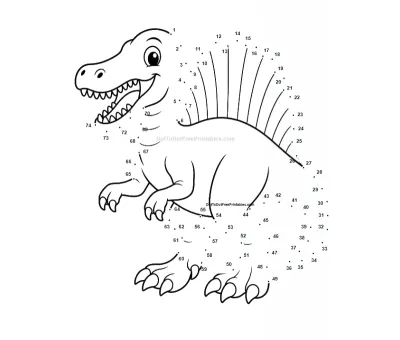
Spinosaurus Dot to Dot — 74 Dots, Bigger Than T-Rex
Connect the dots to reveal one of the largest carnivorous dinosaurs ever discovered — bigger than even T-Rex! Spinosaurus had a giant sail on its back and hunted fish in rivers. Great for 1st and 2nd graders who love big dinosaurs.
Difficulty
Medium
Fun fact: Spinosaurus could be up to 59 feet long — longer than a school bus!
Downloaded21+timesYou’ve made a great choice!
Downloads now start from the button below. Tap it to get this puzzle's PDF.
Number Version
Connect the numbered dots from 1 to the end to reveal the picture.
Free for home and classroom use.
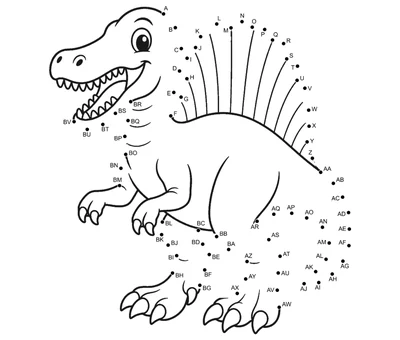
Alphabet Version
Includes alphabet-themed design for easy learning.
No sign-up needed. Opens as a PDF. Print on US Letter (8.5 × 11 inch) or A4 paper. Free for home and classroom use.
Dinosaurs
You might also like
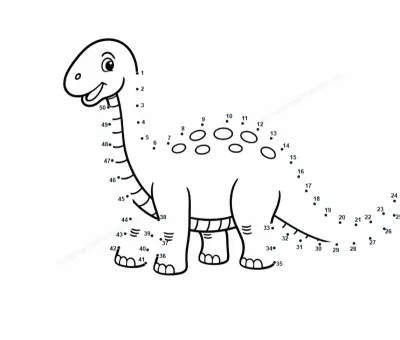
Ages 5–8 — Medium
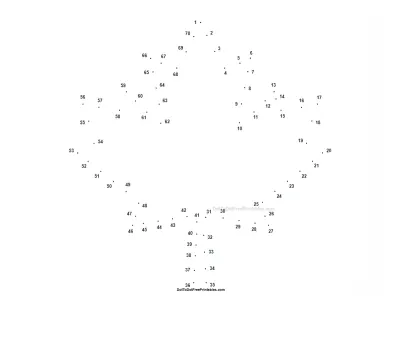
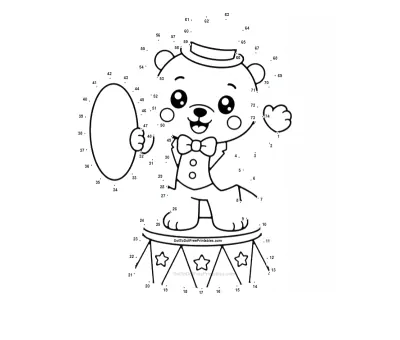
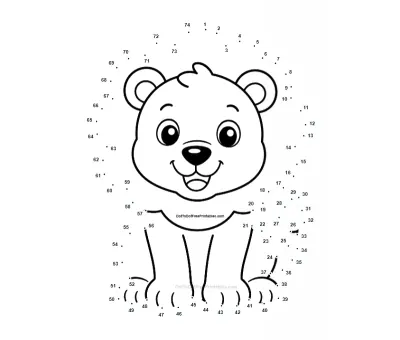
How to Solve the Spinosaurus Dot-to-Dot Puzzle
Move over, T-Rex — meet the Spinosaurus, one of the largest meat-eating dinosaurs known! Longer than a school bus and at home in the water as well as on land, Spinosaurus was a truly extraordinary animal. Its giant back sail makes it one of the most dramatic dinosaurs to draw. Grab a pencil and let this prehistoric giant rise from the page!
1–15 — The Head and Crocodile Jaws
Start at dot 1 and work through to dot 15 to sketch the long, narrow skull that looks more like a crocodile than a typical dinosaur. Children immediately notice how different this head shape is from T-Rex, which is a fantastic observation to encourage. The elongated snout rewards a steady, patient hand.
Fun fact!
Spinosaurus had cone-shaped teeth ideal for catching slippery fish — very different from the blade-like teeth of T-Rex. Its nostrils were positioned high on the skull, like a crocodile's, allowing it to keep most of its head submerged while still breathing. A brilliant piece of natural engineering.
Spinosaurus had cone-shaped teeth ideal for catching slippery fish — very different from the blade-like teeth of T-Rex. Its nostrils were positioned high on the skull, like a crocodile's, allowing it to keep most of its head submerged while still breathing. A brilliant piece of natural engineering.
16–30 — The Giant Sail
Continue from dot 16 to dot 30 to draw the towering sail that rises dramatically from the spine. This is the most thrilling section of the puzzle — the sail can reach more than five feet tall, and children get to trace its full impressive height. Long, upward strokes build great arm confidence.
Fun fact!
The sail was supported by spines extending from the vertebrae, some stretching over five feet tall. Scientists still debate its purpose — it may have regulated temperature, stored fat like a camel's hump, or been a spectacular display structure for attracting mates or intimidating rivals.
The sail was supported by spines extending from the vertebrae, some stretching over five feet tall. Scientists still debate its purpose — it may have regulated temperature, stored fat like a camel's hump, or been a spectacular display structure for attracting mates or intimidating rivals.
31–45 — The Body
Trace dots 31 through 45 for the long, muscular body. Spinosaurus had a relatively low body profile compared to other large carnivores — adapted for swimming and wading in rivers. Children practise a flatter, more horizontal body shape here, which is a refreshing contrast to the upright stance of T-Rex.
Fun fact!
New fossil discoveries show Spinosaurus had short, dense bones — the opposite of what most dinosaurs had — which made it less buoyant and better suited to life underwater, much like modern diving birds. It is one of the few dinosaurs scientists think spent a lot of time in the water.
New fossil discoveries show Spinosaurus had short, dense bones — the opposite of what most dinosaurs had — which made it less buoyant and better suited to life underwater, much like modern diving birds. It is one of the few dinosaurs scientists think spent a lot of time in the water.
46–60 — The Sturdy Legs
Connect dots 46 to 60 to build the stocky hind legs that carried this giant along riverbanks. Spinosaurus may have walked on all fours when wading, unlike the two-legged stance of T-Rex, so children get to practise a wider, more grounded stance here.
Fun fact!
Recent skeletal studies suggest Spinosaurus may have moved on four legs, at least while wading, making it very different from most large meat-eating dinosaurs — most of which walked upright on two legs.
Recent skeletal studies suggest Spinosaurus may have moved on four legs, at least while wading, making it very different from most large meat-eating dinosaurs — most of which walked upright on two legs.
61–74 — The Paddle-Shaped Tail
Finish with dots 61 through 74 to complete the long, broad, paddle-shaped tail. The tail was another recent discovery that shocked palaeontologists, making it an effective swimming tool. Children practise the wide, flat tail shape in this final section.
Fun fact!
Spinosaurus was likely a slow, clumsy walker on land but a strong swimmer in rivers. Its paddle-like tail was confirmed only in 2020 from newly found fossil specimens in Morocco — proving that even the most studied dinosaurs can still surprise us.
Spinosaurus was likely a slow, clumsy walker on land but a strong swimmer in rivers. Its paddle-like tail was confirmed only in 2020 from newly found fossil specimens in Morocco — proving that even the most studied dinosaurs can still surprise us.
Outstanding effort on a 74-dot challenge! Your Spinosaurus is ready to wade into the river. This is a wonderful puzzle to pair with a trip to the library — there are brilliant books written specifically for children about Spinosaurus's extraordinary story. Explore more dinosaur dot to dot printables to keep the fun going.
Coloring Guide
Spinosaurus: Classic Real-Life Colors
As a fish-eater that waded in rivers, Spinosaurus is usually painted in dark greens and browns like a crocodile, colours that vanish against muddy water.
| Dot Range | Part | Color | Why this color | |
|---|---|---|---|---|
| Numeric | Alphabet | |||
| 1–15 | A–O | The Head and Crocodile Jaws | Crayola Olive Green | Olive green on the long crocodile-like snout suits a head that caught fish with cone-shaped teeth and had nostrils set high to breathe while half-submerged. |
| 16–30 | P–AD | The Giant Sail | Crayola Forest Green | Forest green over the towering sail, held up by spines more than five feet tall, gives it the plain skin most reconstructions choose. |
| 31–45 | AE–AS | The Body | Crayola Brown | Brown fills the long, low body built more for swimming than for towering over the land like other big hunters. |
| 46–60 | AT–BH | The Sturdy Legs | Crayola Olive Green | Olive green on the sturdy legs matches the body of an animal that often dropped onto all fours to wade. |
| 61–74 | BI–BV | The Paddle-Shaped Tail | Crayola Forest Green | Forest green along the deep, paddle-shaped tail, only confirmed from fossils in 2020, the fin that drove it through the water. |
Spinosaurus: Soft Natural Colors
Half in and half out of a sunlit river, Spinosaurus would look pale and wet-shined, its huge sail almost see-through against a bright sky.
| Dot Range | Part | Color | Why this color | |
|---|---|---|---|---|
| Numeric | Alphabet | |||
| 1–15 | A–O | The Head and Crocodile Jaws | Crayola Gray | Pale grey shows the crocodile snout gleaming with water, the high nostrils catching the light. |
| 16–30 | P–AD | The Giant Sail | Crayola Silver | Silver-grey on the giant sail is how a thin sheet of skin over tall bony spines would glow in the sun. |
| 31–45 | AE–AS | The Body | Crayola Tan | Warm tan across the low body suggests the paler underside that rode near the waterline. |
| 46–60 | AT–BH | The Sturdy Legs | Crayola Gray | Grey on the sturdy legs matches wet, sun-struck skin on limbs planted in the shallows. |
| 61–74 | BI–BV | The Paddle-Shaped Tail | Crayola Silver | Silver-grey down the paddle tail lets the swimming fin fade into the bright water. |
Spinosaurus: Bold Real-Life Colors
Some artists give Spinosaurus a boldly striped sail in reds and golds, arguing that a structure that large only makes sense as a showy signal.
| Dot Range | Part | Color | Why this color | |
|---|---|---|---|---|
| Numeric | Alphabet | |||
| 1–15 | A–O | The Head and Crocodile Jaws | Crayola Raw Sienna | Raw sienna warms the long jaws, a bright face held above the water for rivals to see. |
| 16–30 | P–AD | The Giant Sail | Crayola Mahogany | Deep mahogany on the sail leans into the idea that this five-foot billboard of skin was built to be seen and to impress. |
| 31–45 | AE–AS | The Body | Crayola Goldenrod | Goldenrod on the body flashes a light band along the flank beneath the darker back. |
| 46–60 | AT–BH | The Sturdy Legs | Crayola Raw Sienna | Raw sienna on the wading legs makes the limbs that pushed through mud the boldest colour here. |
| 61–74 | BI–BV | The Paddle-Shaped Tail | Crayola Mahogany | Mahogany along the paddle tail turns the swimming fin into part of a striking pattern. |
Why Is the Spinosaurus Dot to Dot Printable Rated Medium?
The Spinosaurus is rated medium. Its 74 dots split into 33 straight, 12 curved, 21 zigzag and 8 sharp-turn dots — the direction changes are what lift it above an easy outline. The stretches to slow down for are sturdy legs at dots 49–50 and giant sail at dots 17–22. Follow the numbered order even when another dot looks nearer, and check the next number before each turn.
Straight
33 dots · 45%
Easiest — join two dots with one straight pencil stroke.
Curved
12 dots · 16%
2 3
Zigzag
21 dots · 28%
17 22
Sharp turns
8 dots · 11%
49 50
We traced all 74 dots on this exact worksheet by hand — the sharp turns at dots 49–50 is where it got tricky, and you can check that against your own printout.
Key Sections to Know
Every notable stretch of the path, dot by dot.
| Dot Range | Pattern | Why It Matters | |
|---|---|---|---|
| Numeric | Alphabet | ||
| 2 3 | B C | Curved | Follow head and crocodile jaws as it curls from dot 2 to dot 3, easing the line rather than snapping it. |
| 11 12 | K L | Curved | Around head and crocodile jaws, the line eases through a smooth bend at dots 11–12; keep the pencil moving slowly. |
| 17 22 | Q V | Zigzag | Dots 17–22 zigzag across giant sail; the direction flips each dot, so join one pair at a time. |
| 39 40 | AM AN | Curved | The outline swings around body here; take dots 39 to 40 in short strokes. |
| 49 50 | AW AX | Sharp turns | Expect an abrupt turn on sturdy legs between dots 49 and 50, so pause before joining them. |
| 63 65 | BK BM | Zigzag | Between dots 63 and 65 the outline of paddle-shaped tail keeps reversing; slow right down here. |
Bottom line: The Spinosaurus dot to dot is medium rated — 61% smooth lines with just 3 short sections to watch for.