35 puzzles
Odd Numbers Dot to Dot Printables
Free odd numbers dot to dot PDFs: connect 1, 3, 5, 7… to reveal 35 pictures with 39 to 145 dots. Print in A4 or US Letter.
Browse all 35 Odd Numbers dot to dot puzzles
Flowers
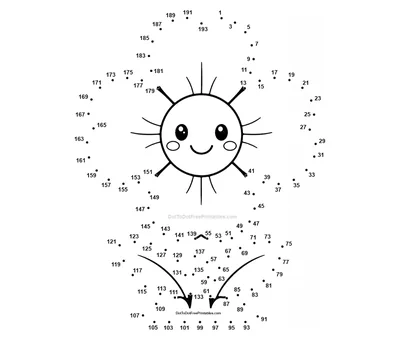
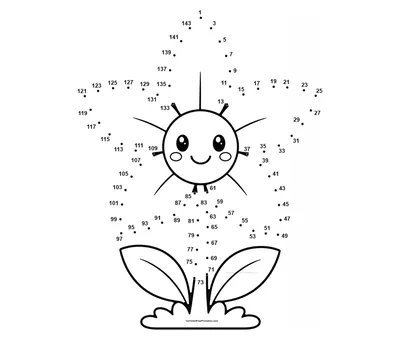
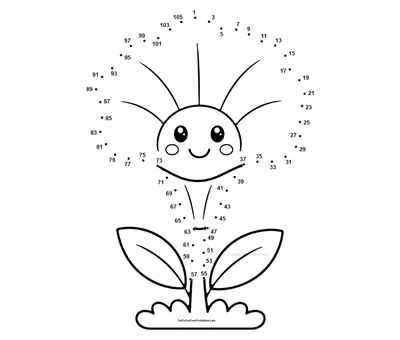
Circus

Odd Numbers
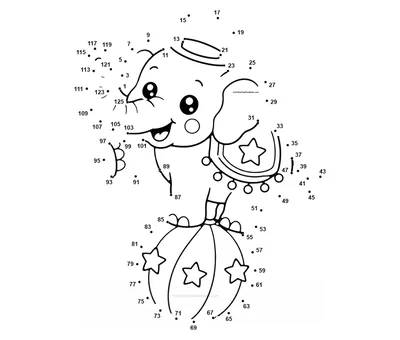
Circus Elephant Balancing on a Ball
Balance a Big-Top Star One Dot at a Time
View & Download
Cute
Halloween
Ocean
Playgrounds
Space

Vehicle Dot to Dots
America 250 Years
Odd Numbers
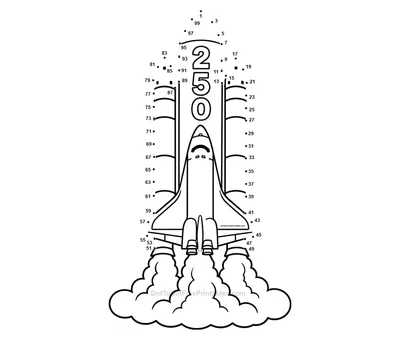
America 250 Space Shuttle
Launch into America's 250th with the Space Shuttle!
View & Download
Canada
Garden
Planes
UAE
Odd Numbers dot to dot: a guide for parents and teachers
Follow the Pattern to Reveal a Picture
Odd Numbers dot to dot printables are picture puzzles in which each dot carries a number from one pattern instead of 1, 2, 3. Start at 1, then 3, 5, 7 and on in steps of two. Each correct connection adds part of the drawing, and the finished outline is ready to colour.
This page gathers the Odd Numbers versions of 35 pictures. Open a card and choose its Odd Numbers Version.
The Pattern and How to Check It
An odd number leaves one left over when you share it into two equal groups. The labels are 1, 3, 5, 7, 9, 11 and so on: the first dot is 1, the second is 3, and dot number n is labelled 2n − 1.
Every odd number ends in 1, 3, 5, 7 or 9, so the last digit is a quick check. A label ending in 0, 2, 4, 6 or 8 is even and does not belong here.
What the Sheets Practise
These sheets give practice in counting on by twos from 1, recognising odd numbers and telling them apart from even ones.
The sheets do not teach calculation or replace a lesson. Explain the idea first, then let the dots give the practice. England's National Curriculum links odd and even numbers to the 2, 5 and 10 times tables in Year 2.
Choosing a Picture
Pictures in this collection run from 39 to 145 dots, so there is a sheet for a short sitting and one for a long one.
Shorter trails include Garden Trowel (39 dots, ending at 77) and Ringed Planet (43 dots, ending at 85).
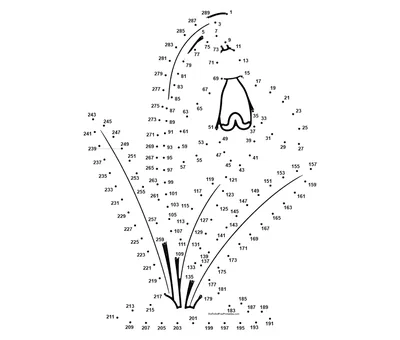
For a long sitting, try Forget-Me-Not Flower (107 dots, ending at 213) and Snowdrop Flower (145 dots, ending at 289).
How to Start
Say the beat aloud, "1, 3, 5, 7", while pointing at each dot. Ask the learner to say what is missing if you cover one label.
Write the first labels on a strip of paper and keep it beside the page. Make the first few connections together, and when the learner stops, ask what comes next before helping.
A Walk Through the Pictures
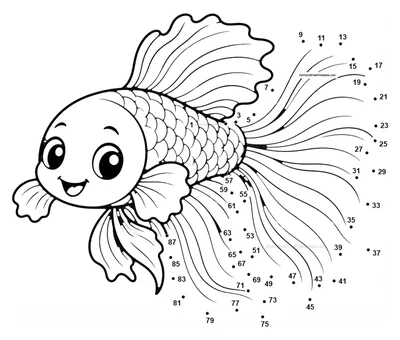
On an odd sheet the last label is double the dot count, minus one. The shortest trail is the Garden Trowel, with 39 dots ending at 77, a friendly first sheet that stays below 100. The Ringed Planet ends at 85 and the Betta Fish at 87.
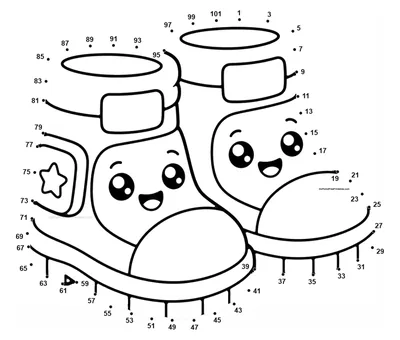
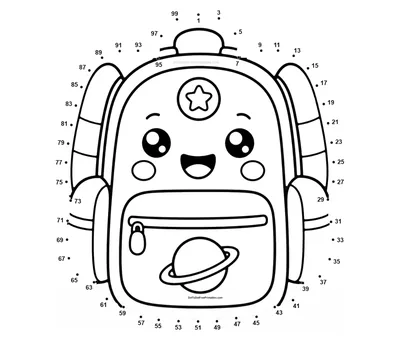
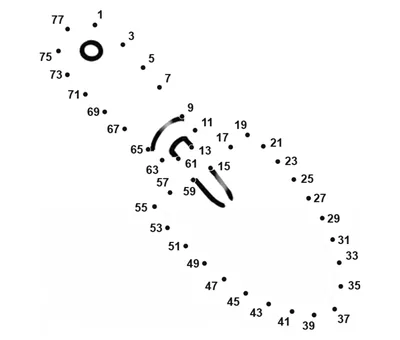
Space fans can try a little mission. The Astronaut Backpack and the America 250 Space Shuttle both have 50 dots and stop at 99, one short of a hundred. The Astronaut Boots has just one more dot, and that single dot carries the trail over the line to 101. Doing the three in a row shows how the numbers climb.
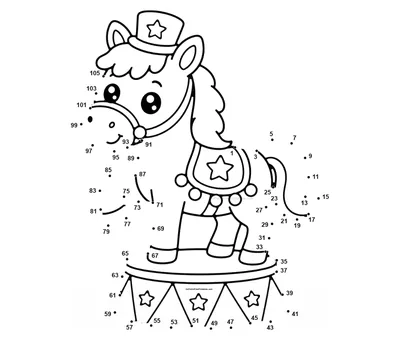
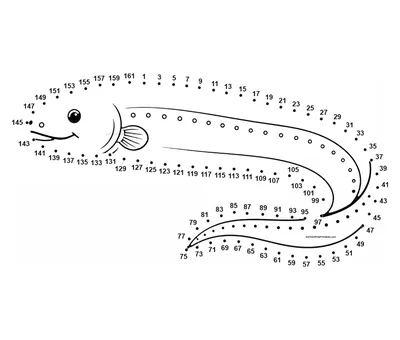
The circus pictures make a good middle stage. The Circus Penguin and the Circus Horse both end at 105, the Circus Giraffe at 119, and the Circus Elephant Balancing on a Ball at 125. Later, the Electric Eel reaches 161, and the Snowdrop Flower is the long challenge: 145 dots and a final label of 289.
One Picture, Two Number Families
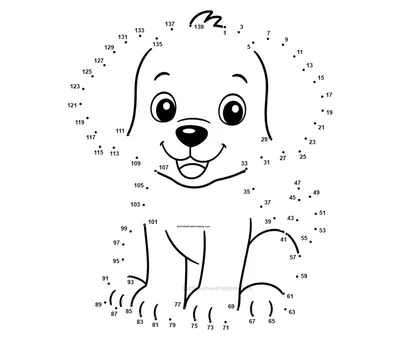
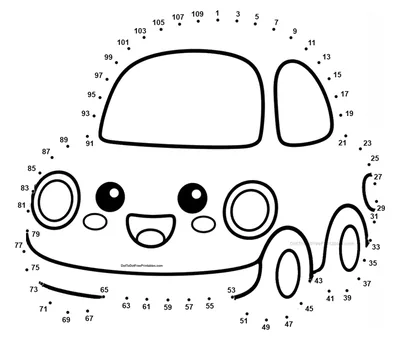
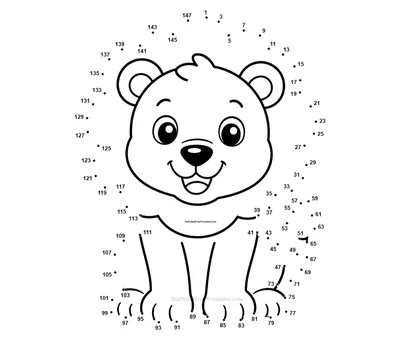
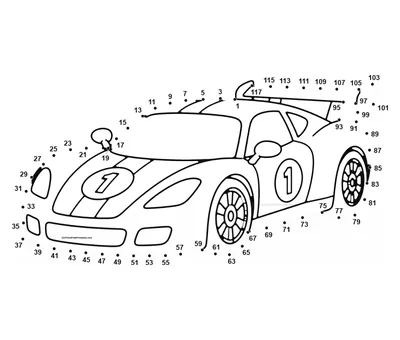
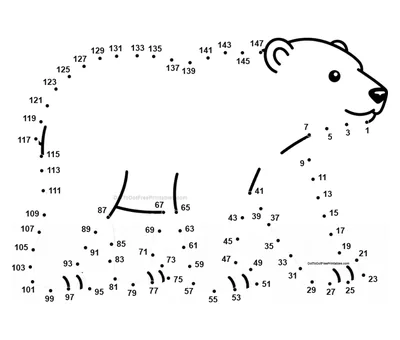
Several pictures appear in both the odd and the even collections, among them the Cute Puppy, the Cute Little Car, the Race Car and the Polar Bear. Print both versions of one picture and lay them side by side. Every odd label is exactly one less than the even label on the same dot: the puppy ends at 139 here and at 140 on the even sheet.
That comparison makes a quiet but powerful point. Odd and even numbers take turns along the number line, and between them they cover every whole number. A child who completes both versions has, in effect, drawn the number line twice, once on each set of stepping stones.
The Secret Inside the Odd Numbers
Here is a pattern older learners love. Add up the odd labels from the start: 1 = 1, 1 + 3 = 4, 1 + 3 + 5 = 9, 1 + 3 + 5 + 7 = 16. The totals are 1, 4, 9 and 16, the square numbers. Keep going to dot 10 and the running total is 100, which is 10 × 10.
You can show why with counters. Place one counter, then add three around it to make a 2 × 2 square, then five more to make a 3 × 3 square. Each new odd number is exactly the "L" shape needed to grow the square by one row and one column. It is a small piece of real mathematics hidden in a colouring sheet.
Five Games for an Odd Sheet
Sock sort. Before drawing, pair up a pile of socks or blocks. Whenever one is left without a partner, the total is odd. Then point out that every label on the sheet is a number that would leave one sock alone.
Hundred hop. On the Astronaut Boots, ask the learner to predict which dot will carry the first three-digit label. (It is dot 51, labelled 101.) Then draw to check.
Two-player relay. Give one player the odd version and the other the even version of the Race Car. They take turns calling their next label aloud, so the numbers run 1, 2, 3, 4… across both pages.
Five spotter. Odd labels ending in 5 (5, 15, 25…) arrive every five dots. Ask the learner to circle them before starting; they make handy checkpoints.
Running total. For older learners, keep a running sum of the labels for the first ten dots and watch the square numbers appear one by one.
Common Slips and Gentle Fixes
Writing 2 after 1. The habit of ordinary dot to dots is strong. Remind the learner that the first step is a hop to 3, and keep the first labels on a strip of paper.
Crossing the tens. After 19 comes 21, and after 99 comes 101. These are the moments when learners hesitate, so be ready to say the last two labels aloud together.
Grabbing an even number. If a label ends in 0, 2, 4, 6 or 8, it is not on the trail. A quick look at the last digit settles it.
Odd Numbers Around Us
In many towns, houses on one side of a street carry odd numbers and houses on the other side carry even ones. Walking to school becomes a counting game: 1, 3, 5 on one side, 2, 4, 6 on the other. Ask a learner which side their own home is on.
Odd numbers also turn up whenever something cannot be shared fairly between two. Seven sweets between two friends leaves one over; a team of five players cannot split into two equal halves. Children understand this immediately when it is about fairness, and the dot labels give that idea a picture.
Older learners can test three little rules with labels from a finished sheet. Odd plus odd is always even (7 + 9 = 16). Odd plus even is always odd (7 + 10 = 17). Odd times odd is always odd (3 × 5 = 15), but multiply by any even number and the answer turns even. Ask them to pick ten pairs of labels, try each rule, and decide whether they believe it. Then ask the harder question: why does it work? Thinking about pairs of counters with one left over usually cracks it, because two leftover counters can always pair up with each other.
Odd counts are everywhere once you look: a flower with five petals, a star with five points, a row of three windows. Spotting them in the world gives learners another reason to recognise the numbers on the page.
A Five-Day Odd Numbers Plan
Day 1: the first hops. Start with the Garden Trowel, which ends at 77. Say each label aloud and notice that every number ends in 1, 3, 5, 7 or 9.
Day 2: almost one hundred. Draw the Astronaut Backpack, ending at 99. Ask why it does not reach 100.
Day 3: over the line. The Astronaut Boots has one extra dot and ends at 101. Talk about how one more dot means two more on the label.
Day 4: odd beside even. Print both versions of the Cute Little Car and compare the labels dot by dot.
Day 5: a long trail. Try the Jasmine Flower, ending at 193, or let the learner choose any picture and predict its final label first.
Using Odd Sheets in the Classroom
Odd sheets pair naturally with even sheets, so they suit partner work. Give each pair the same picture in both versions and ask them to work at the same pace, calling labels in turn. When the two drawings are finished, they can check that every odd label on one page is one less than the even label on the other.
For a quick assessment, ask learners to write the last label of their picture before drawing, using "double the dots, take away one". It shows at a glance who has grasped the rule. Shorter pictures such as the Betta Fish suit younger learners, while the Geranium Flower or the Monkey Bars Playground give confident counters a longer climb into three-digit numbers.
A simple exit question works well at the end of the lesson: "Your friend says 54 is odd because it has a 5 in it. Are they right?" Learners who answer by looking at the last digit, and explain that only the ones digit decides (54 ends in 4, so it is even), have understood the idea that the whole collection practises. Those who hesitate can return to a short sheet the next day.
How These Sheets Were Checked
Every odd sheet keeps the original picture and its tested connection order; only the labels change. The label on dot n is 2n − 1, so every end number on this page is worked out from the picture's dot count. If any label breaks the pattern, please use the report link below.
Printing the Free PDF
Open the chosen puzzle, select Odd Numbers Version and download the PDF for A4 or US Letter. Print at actual size (100%) rather than from a screenshot.
About This Guide and Reporting a Problem
The Odd Numbers Version keeps each picture and its connection order, replacing the numbers 1, 2, 3 with the labels of this pattern. The end label on this page is calculated from the pattern and each puzzle's dot count.
This guide was prepared with AI-assisted drafting and editing. Read about the project on our About page and see our editorial policy.
If a label or download looks wrong, report the problem with the puzzle URL and the version name, Odd Numbers Version.
FAQ
Odd Numbers worksheet FAQs
Is 1 an odd number?
Yes. Share 1 into two equal groups and one is left over, which is exactly what odd means. That is why every odd trail starts at 1.
Why does the last label not match the dot count?
Dot number n is labelled 2n − 1. A 50-dot picture therefore ends at 99, not 50, and a 100-dot picture ends at 199.
How do I explain odd numbers to a young child?
Use pairs. Put socks, buttons or blocks into pairs: if one is left without a partner, the number is odd. Then show that the dot labels follow the same idea.
What happens when you add two odd numbers?
You always get an even number: 3 + 5 = 8, 11 + 13 = 24. Ask learners to add two neighbouring labels on the sheet and see whether it ever fails.
Should we do odd or even numbers first?
Either works. Many children find even numbers easier because they match the 2 times table, but a learner who counts confidently can start with odd.