58 puzzles
Tamil Alphabet Dot to Dot Printables
Free Tamil dot to dot PDFs using 31 labels: vowels, ஃ and consonant bases without pulli. Check the worksheet sequence; A4 and US Letter downloads.
Browse all 58 Tamil Alphabet dot to dot puzzles
Flowers
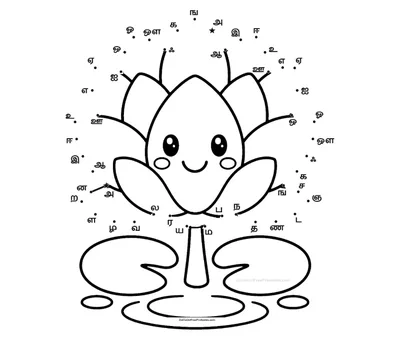
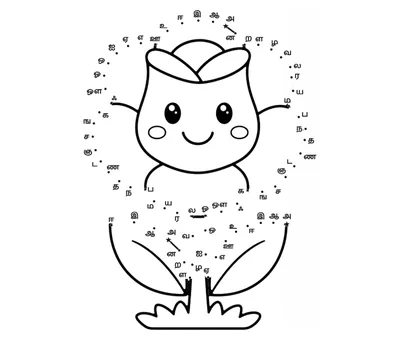
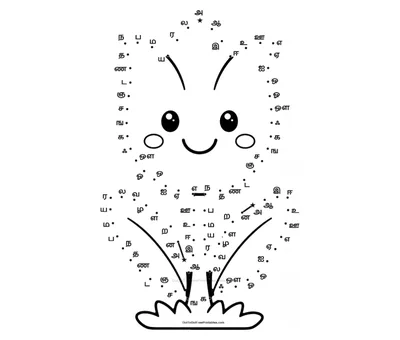
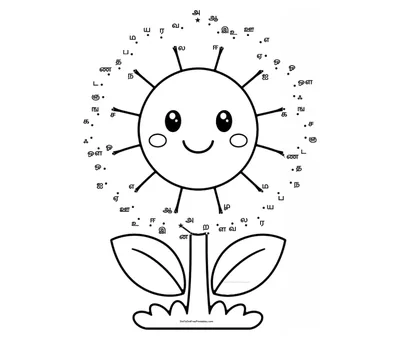
Cute
Space
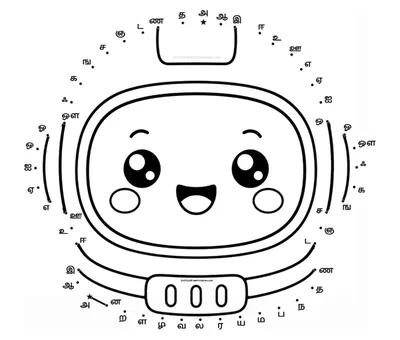
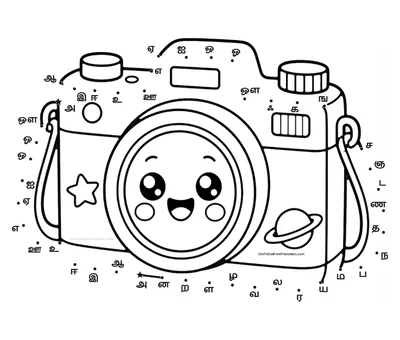
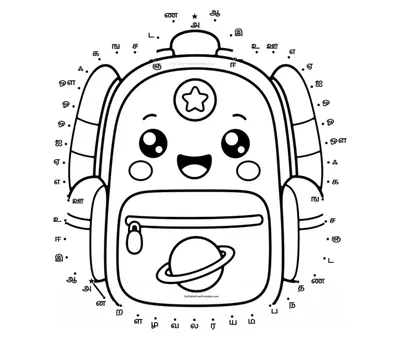
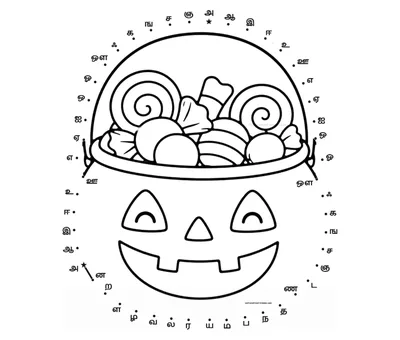
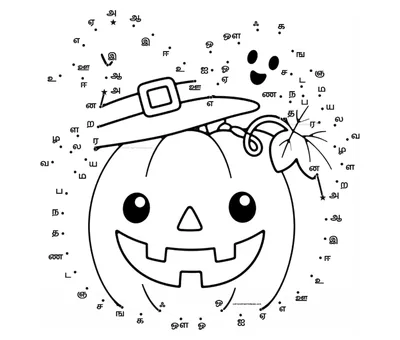
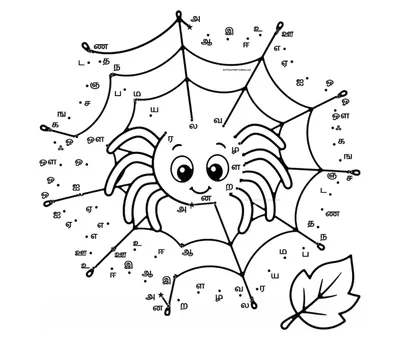
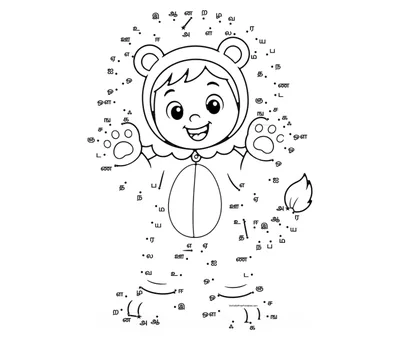
Halloween
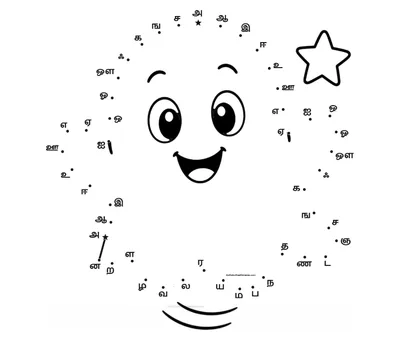
Ocean
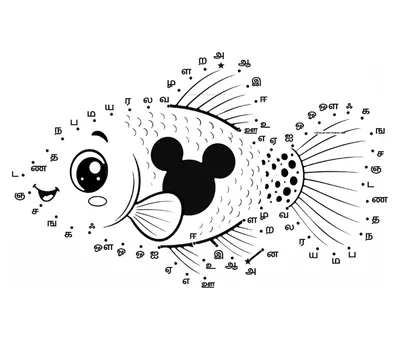
Circus
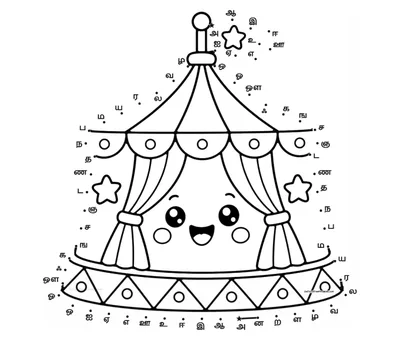
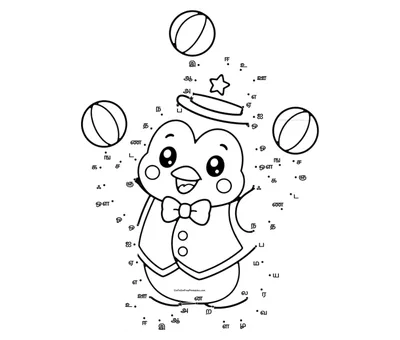
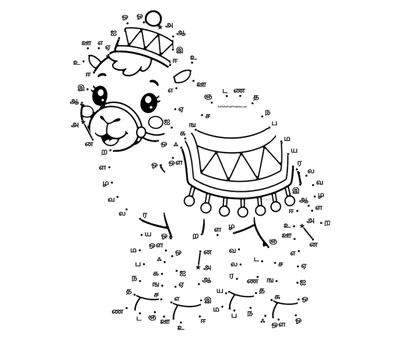
Playgrounds
UAE

Planes
Vehicle Dot to Dots

Canada
Dinosaurs
Tamil Alphabet dot to dot: a guide for parents and teachers
What Are Tamil Alphabet Dot to Dot Printables?
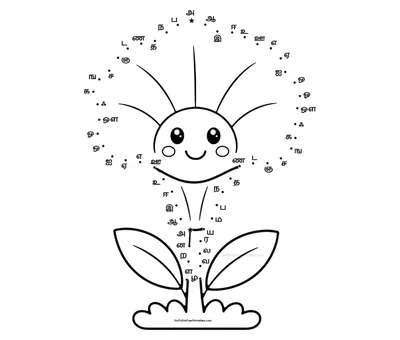
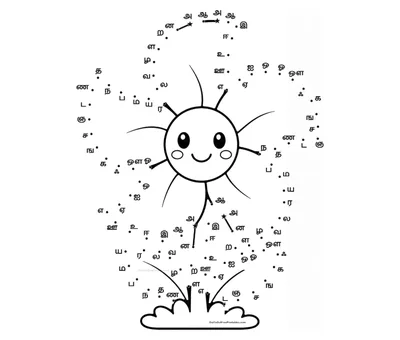
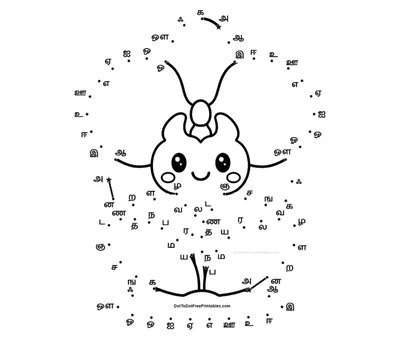
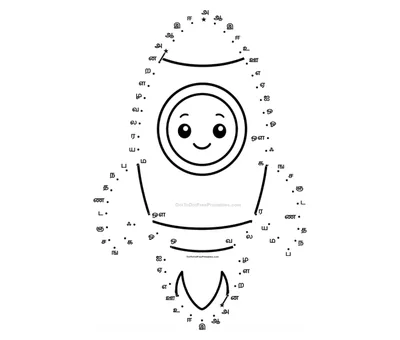
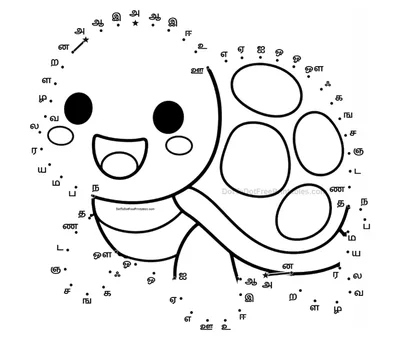
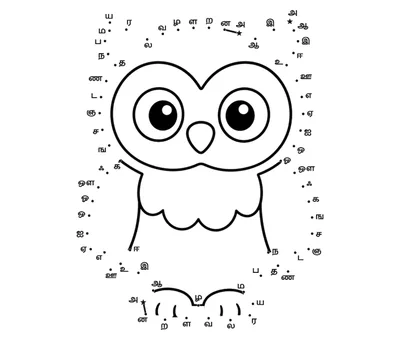
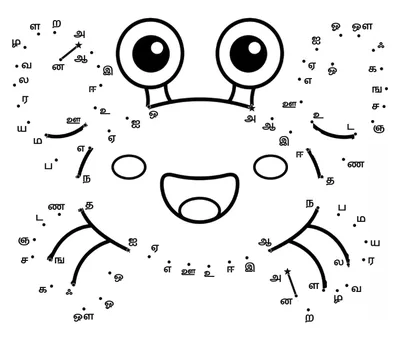
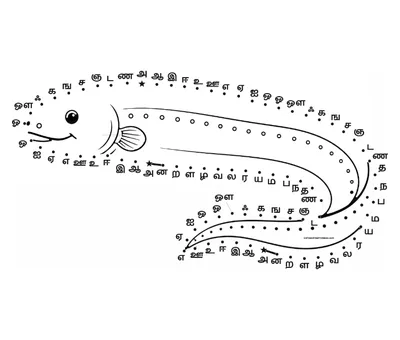
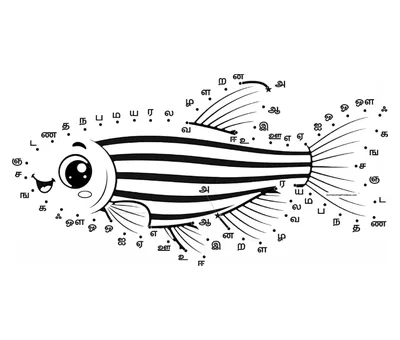
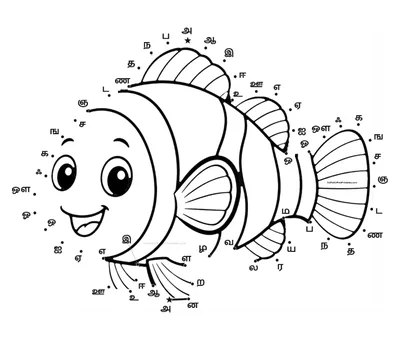
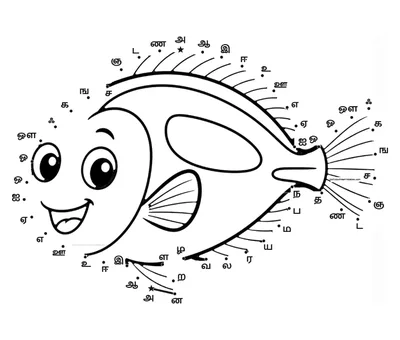
These are connect-the-dots pictures where every dot carries a Tamil letter instead of a number. The child starts at அ, draws to ஆ, then இ, and follows the Tamil alphabet order until a picture appears that is ready to color.
The picture turns reciting the alphabet into a search. Each letter found adds a line, and a shape slowly emerges: a planet, a fish, a puppy. Children who lose interest in letter charts often stay with a sheet because they want to see the result.
Each sheet is a version of a puzzle already on our site. The picture, the dot positions and the order are identical to the numbers version; only the labels change. This English page gathers the Tamil-letter versions so you can compare pictures before choosing one.
The Exact Letter Order on These Worksheets
The labels follow the order most Tamil alphabet charts start with. First come the 12 uyir ezhuthukal, the vowels: அ ஆ இ ஈ உ ஊ எ ஏ ஐ ஒ ஓ ஔ. Next is the āytham, ஃ. Then come 18 consonant-base labels, printed without the pulli: க ங ச ஞ ட ண த ந ப ம ய ர ல வ ழ ள ற ன. That makes 31 labels in one round.
Tamil charts usually show the pure consonants with a dot above, called the pulli, such as க். On these sheets the consonant labels are printed as the base letters க, ங, ச and so on, without the pulli. Mention this if a child has learned the mei letters with the dot, so the labels do not look unfamiliar.
You can check every character in the Unicode Tamil chart. Make a small order card with the 31 letters and keep it beside the page.
The Unicode description of Tamil explains how pulli removes the inherent vowel. Use that distinction when comparing the worksheet with a school chart.
A 31-Label Worksheet Sequence, Not a Complete Tamil Chart
The Tamil alphabet is often described as having 247 letters: the 12 vowels, the 18 consonants, the āytham, and 216 uyirmei letters that combine each consonant with each vowel. These worksheets use a 31-label sequence. Its consonant bases, such as க, include the inherent vowel; they are not the pure consonant forms such as க். Other consonant-vowel forms, such as கா and கி, are not included.
Grantha letters used for some borrowed words, such as ஜ, ஷ, ஸ and ஹ, are also not part of this sequence. That keeps each round short enough to repeat on one picture.
This is a limited worksheet sequence, not a complete Tamil reading course. Use the school’s chart and reading materials for the other forms; do not assume that finishing a puzzle covers them.
After ன, Begin a New Round at அ
When a picture has more than 31 dots, the sequence starts again at அ, and the restart dot is marked with a small star. The new அ belongs to the next part of the drawing; do not connect back to the அ where the picture began.
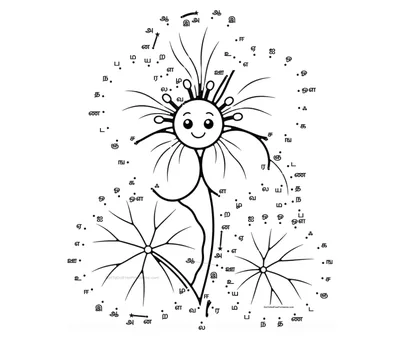
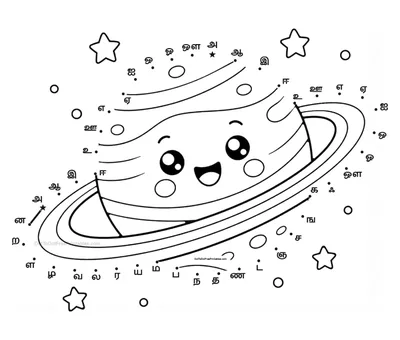
The 62-dot Buttercup Flower contains exactly two complete rounds and ends at ன. The 43-dot Ringed Planet contains one round plus 12 more labels, finishing at ஔ, the last vowel.
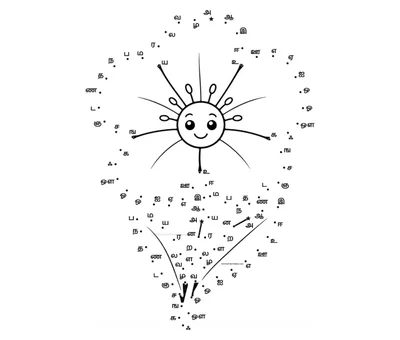
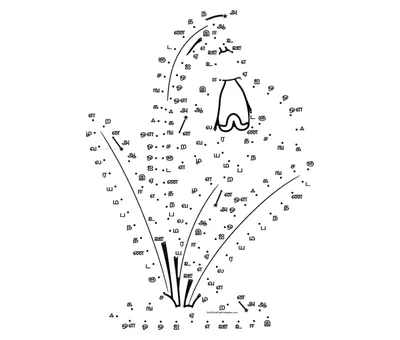
For a long trail, Snowdrop Flower has 145 dots. Four full rounds cover 124 positions and 21 more labels follow, so it ends at ந. Keep track of the current round, because the same letter appears several times on a long sheet.
Letters That Look Alike
Some Tamil letters share shapes and are easy to mix up when they sit close together on a busy page. Pairs and groups worth pointing out include ல, ள and ழ; ர and ற; and ண, ந and ன. All of them appear in every complete round.
Before starting, find one example of each letter in a group on the sheet and compare them side by side. Ask the learner what is different. When they come to that part of the trail, they will be looking for the specific letter rather than a general shape.
If a mistake happens, it is usually a confusion between these letters rather than a skipped step. Erase the line, check the order card and carry on. The correction is itself useful practice.
Pick a Picture That Makes the Letter Hunt Worthwhile
Each card shows the dot count, suggested age and difficulty, calculated from the geometry of the drawing. Choose a subject the child wants to finish, then check whether the length suits them.
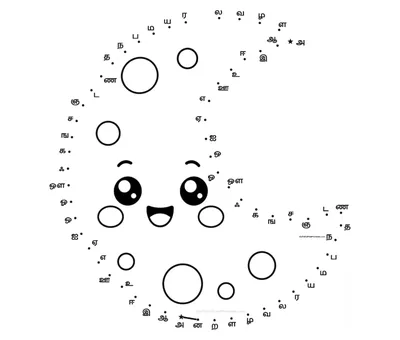
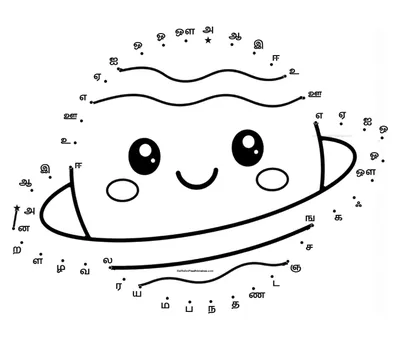
For a short first sheet, Saturn and Space Camera each have 43 dots, and Camellia Flower has 45. They all complete one round and start a second, so the child meets the restart star early.
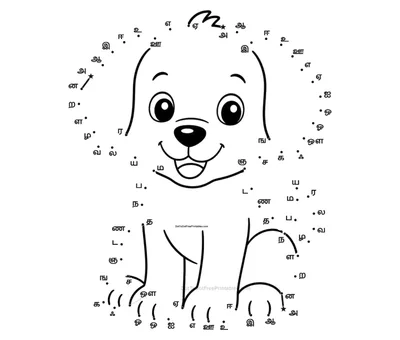
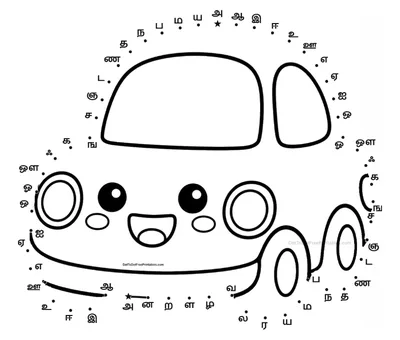
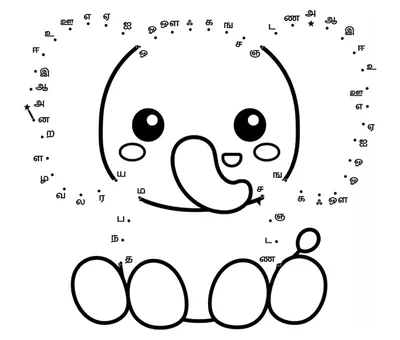
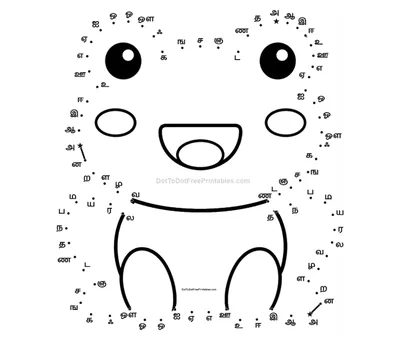
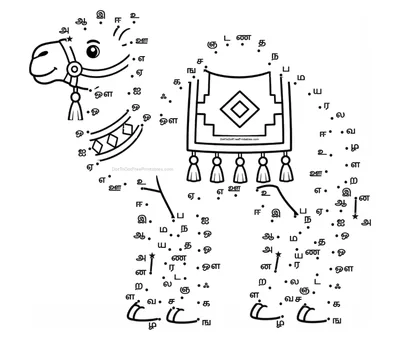
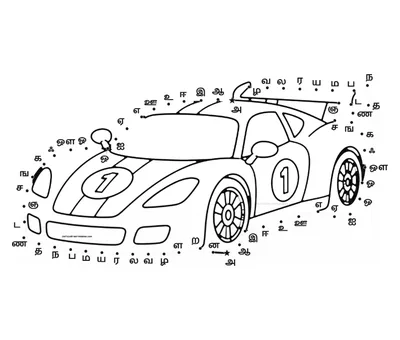
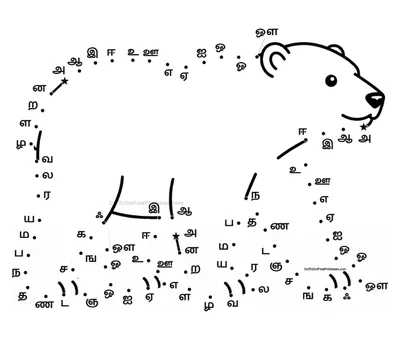
Vehicle fans can compare Race Car at 59 dots with Jeep at 67. Animal lovers might pick Cute Baby Elephant at 50 or Cute Puppy at 70. Longer trails such as Circus Camel at 104 dots suit children who already know the order well.
How to Start a Tamil Alphabet Connect the Dots Activity
Look at the page together before drawing. Find அ, the starting dot, and the last label, then talk about how far the trail goes. Point out any star, because it marks the start of a new round. A pencil and eraser are useful while the letters are new.
Ask the learner to point to the next letter before drawing the line. That splits the task in two: knowing what comes next, and finding where it sits. The next dot may be anywhere on the page, so follow the letter order rather than a fixed direction across the paper.
When the learner stops, ask “Which letter comes next?” before pointing. If they know it but cannot find it, search a smaller area together. If the letter itself is the problem, check the order card. Finish by checking the last connections, then color.
Small Games for Tamil Letter Recognition
Letter hunt. Before connecting anything, choose three letters from the order card and find every place they appear on the sheet. On longer pictures the same letter appears more than once, which makes a good conversation about rounds.
What comes next? Cover the order card, read a letter on the page and ask which one follows. Check the answer by finding it. Keep the game short and switch back to drawing while the child still wants to continue.
Picture guess. After a short stretch of lines, ask what the drawing might become and write the guess on the back. Continue and let the child change their mind. The aim is curiosity, not a score.
Finder and drawer. One person reads the next label aloud, the other draws the line, then swap. This works well for siblings, or for a child who knows the letters but wants help with careful lines.
Round counter. On a long picture, make a tally mark each time the trail passes ன and starts again at அ. At the end, compare the tally with the dot count and work out how many full rounds the picture contained.
At Home or in a Tamil Class
At home, give each sheet one small goal: learn the vowels, practice the āytham, or tell ர from ற. Keep the order card nearby and let the child decide when they no longer need it.
In a Tamil class or weekend school, read the 31 letters together before handing out the sheets. Many heritage-language learners can recite the uyir ezhuthukal but are less sure of the mei order; the trail shows quickly where they hesitate.
A long picture can be finished over two sessions. These sheets practice letter recognition, sequencing and pencil control. They support, but do not replace, direct teaching of reading and writing.
Other Label Versions of the Same Picture
Every Tamil Alphabet puzzle is a label version of an existing number puzzle. The dot positions and connection order do not change. On each puzzle page you can also download the 1, 2, 3 version, which is useful for checking where the trail goes if a letter is hard to find.
Print the numbers version alongside the Tamil sheet for a learner who is unsure. The fifth dot on one page is the fifth dot on the other, so an adult can quickly check the position without reading the script. For English letter practice instead, see the English alphabet dot to dot printables.
What These Worksheets Practice, and What Needs Another Activity
The sheets practice recognizing individual Tamil letters, remembering their order and finding them on a busy page. They do not teach how to write a letter, its stroke order, or how letters combine with vowel signs to make syllables and words.
If writing is the goal, add a separate tracing or copying task. If reading words is the goal, use a reader or word cards. Keeping each activity’s purpose clear makes it easier to see what the learner already knows and what still needs teaching.
We do not give pronunciation guidance on this page. Say the letter names the way your family, teacher or school does.
Printing the Free PDF in A4 or US Letter
Open a puzzle and check that Tamil Alphabet Version is selected, then download A4 or US Letter to match your paper. Look at the orientation options on the puzzle page before downloading.
Print the PDF rather than a screenshot. Start at actual size or 100% and check the preview for clipped edges. Letters with small marks or loops need to be printed clearly, so shrink only as much as your printer’s margins require.
For a class set, print one sample first and check that similar letters are easy to tell apart. Plain white paper and a sharp pencil keep the first pass simple; save the coloring for when the outline is done.
Match the Worksheet Before Following the Trail
Make a reference card using the labels exactly as this page prints them. If a school chart shows க் while the worksheet shows க, place the two side by side and explain that they are different written forms. Do not add or erase marks on the printable to make it look like another chart; that would change the labels the guide describes.
For a creative finish, let the child design a picture postcard using the completed drawing. They can tell you where the flower grows or where the animal is going, in any language. Add Tamil words only from a trusted model as a separate task. The postcard gives the picture a purpose, while keeping letter recognition distinct from forming Tamil words. For another session, choose one label that needed help and look for it on a new picture.
About This Guide and Reporting a Problem
The Tamil Alphabet version replaces each number with the letter at the same position in the sequence described above, starting a new round when the letters run out. The round calculations on this page use that sequence and the listed dot counts. The sequence is a worksheet convention; it does not cover every letter used in Tamil writing.
This guide was prepared with AI-assisted drafting and editing. Its puzzle examples and final labels were checked against the site’s puzzle data and label settings. Read about the project and its creator on our About page, and see our editorial policy for production, automation and correction standards.
If a letter or download looks wrong, report the problem with the puzzle URL and the version name, Tamil Alphabet Version. For a printing issue, include the paper size and what was clipped or unclear. See our terms of use for printing and sharing permissions.
The activity ideas are suggestions for home and classroom use, not results from a classroom trial. This guide has not been reviewed by a specialist teacher.
FAQ
Tamil Alphabet worksheet FAQs
Are these Tamil alphabet worksheets free?
Yes. Every puzzle has free printable PDFs for home and classroom use. Open a card, select Tamil Alphabet Version and download A4 or US Letter.
Which Tamil letters appear on the sheets?
The 12 vowels அ to ஔ, the āytham ஃ, and 18 consonant bases க to ன: 31 labels in that order. The consonant bases are printed without pulli, so they are not the pure mei forms such as க்.
Are the 216 uyirmei letters included?
No. The sheets use the 31-label sequence described above. The bases such as க include an inherent vowel, but the full set of consonant-vowel forms is not included. Forms such as கா and கி and Grantha letters such as ஜ are outside this worksheet sequence.
Why do the consonants have no dot on top?
The worksheet uses consonant bases such as க, ங and ச without pulli. These forms include an inherent vowel; they are different from pure consonants such as க். Follow the printed 31-label sequence and compare it with the forms on your teaching chart before starting.
What happens after ன?
The sequence starts again at அ, and that restart dot has a small star. Do not connect back to the first அ; continue the new round in the same order.
What age are these worksheets for?
Each card shows the suggested age range and difficulty for that picture, mostly ages 5–7 or 5–8. Choose by the child’s letter knowledge and interest.
Is there a numbers version of the same picture?
Yes. Every puzzle page also offers the 1, 2, 3 version, with identical dots and order, and many offer an English A, B, C version too.
Will these sheets teach my child to write Tamil?
Not on their own. They practice recognizing letters and their order. Writing letters and reading uyirmei syllables need tracing, copying and reading activities as well.
Can a beginner use these without knowing every letter?
Yes, with a reference letter strip and help for a short section. Choose a picture the learner likes, then pause or finish together. The card’s suggested age describes the drawing challenge, not mastery of Tamil. Completing a picture is not a reading assessment.
Should I add pulli marks to make the Tamil labels match my chart?
Keep the printed labels as they are for this activity. The set deliberately uses consonant bases such as க rather than pure consonants such as க். Adding or removing pulli changes what the form represents. Compare the two on separate paper with your learning chart, then follow the printed worksheet order.