66 puzzles
Arabic Alphabet Dot to Dot Printables
Free Arabic alphabet dot to dot PDFs using 28 standalone letters from ا to ي. Follow the marked restarts on longer pictures; print in A4 or US Letter.
Browse all 66 Arabic alphabet dot to dot puzzles
Flowers
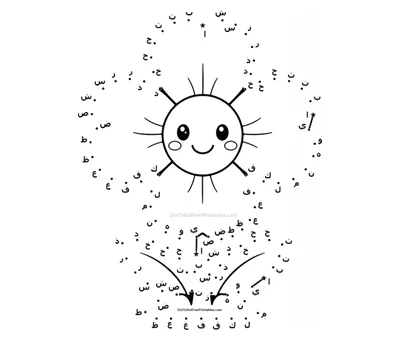
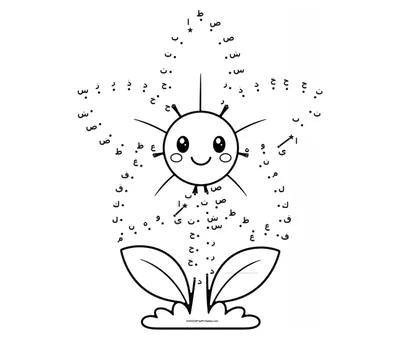
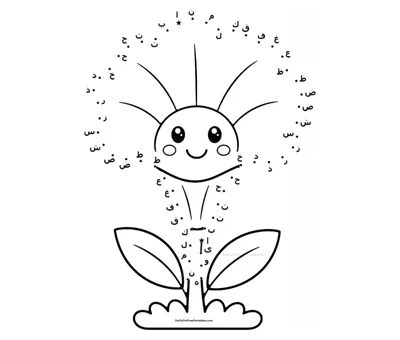
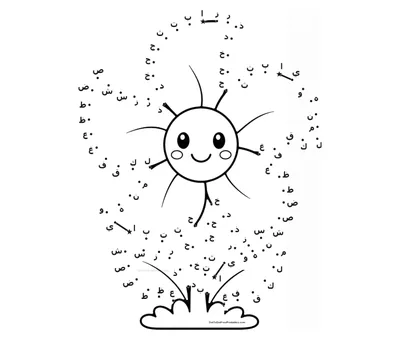
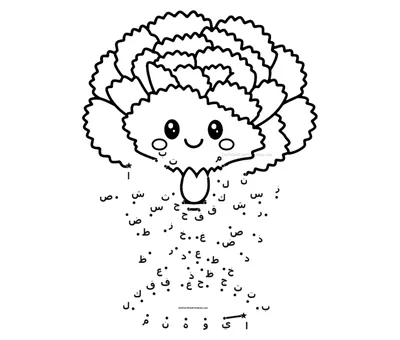
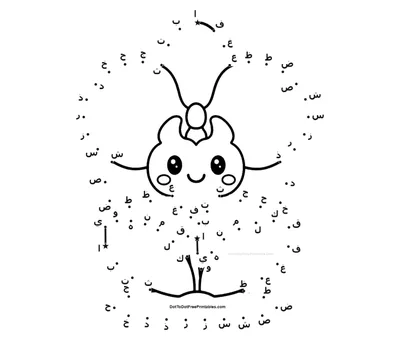
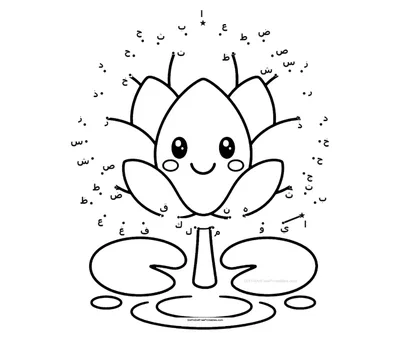
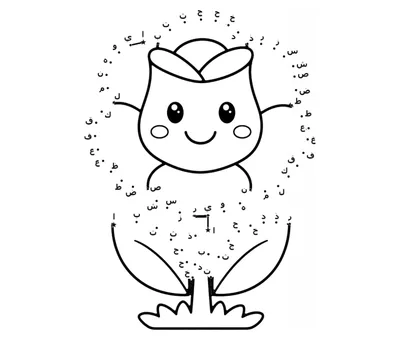
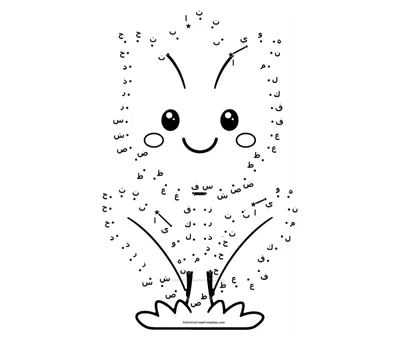
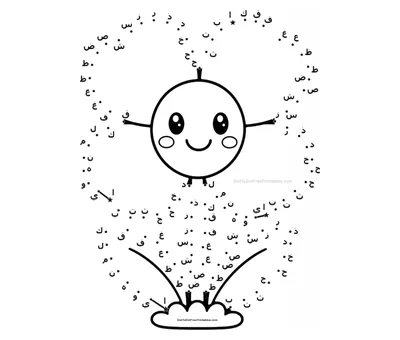
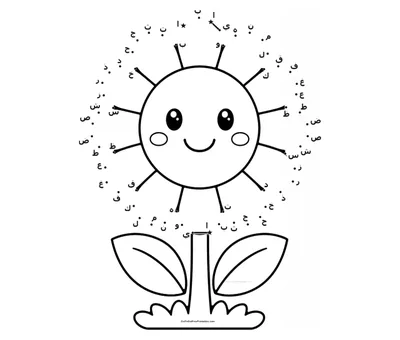
Cute
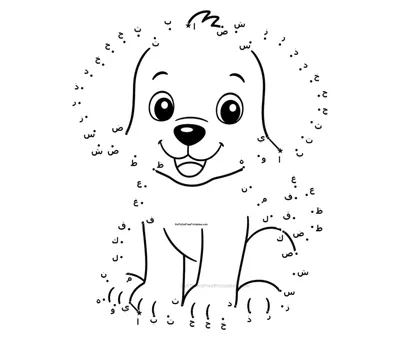
Space
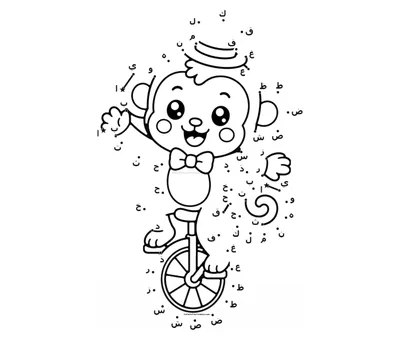
Circus
Arabic Alphabet
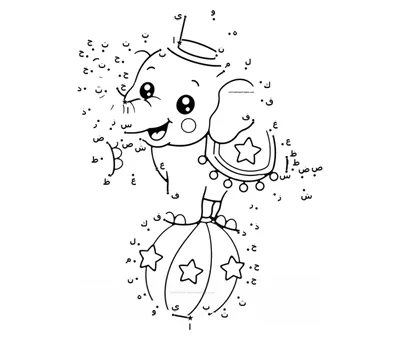
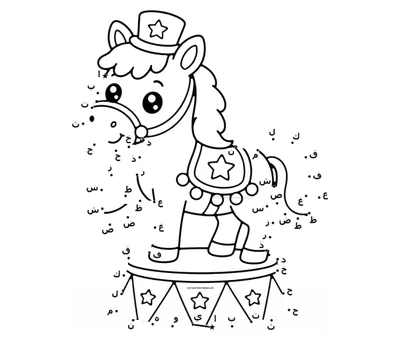
Circus Elephant Balancing on a Ball
Balance a Big-Top Star One Dot at a Time
View & Download
Halloween
Ocean
UAE
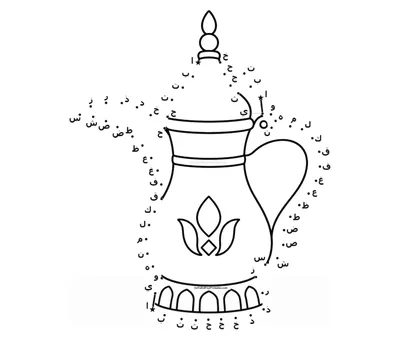
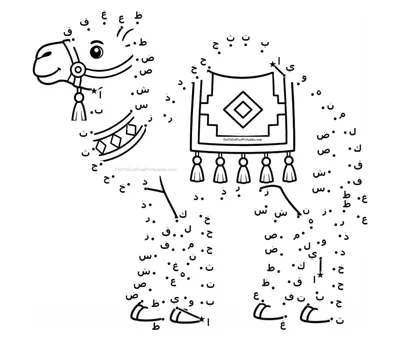
Playgrounds
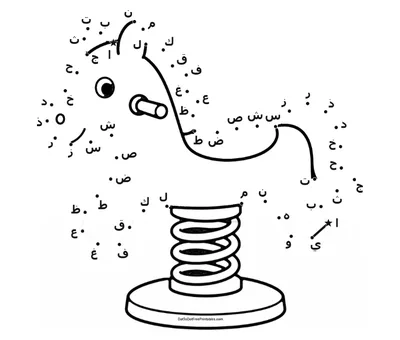
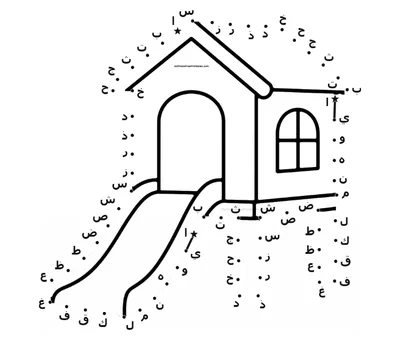
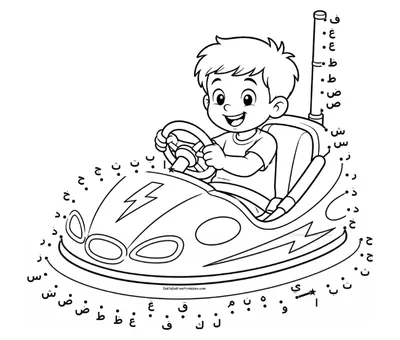
Planes
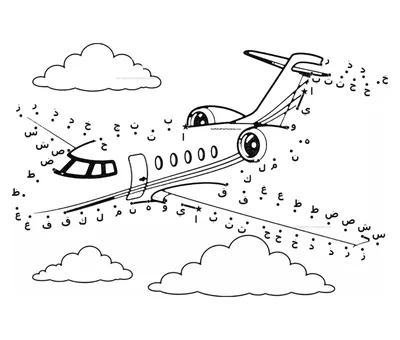
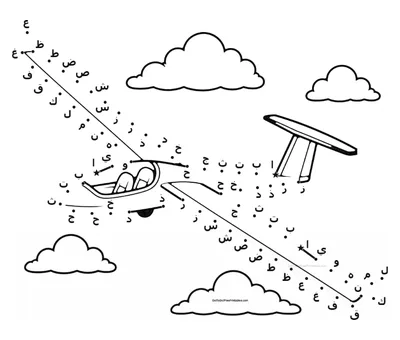
America 250 Years
Arabic Alphabet
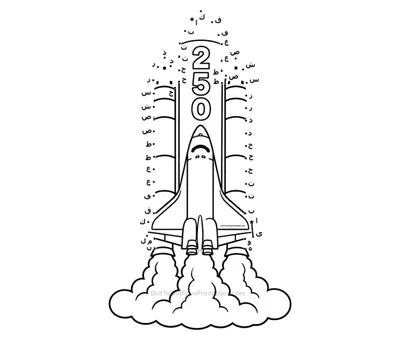
America 250 Space Shuttle
Launch into America's 250th with the Space Shuttle!
View & Download
Canada
Dinosaurs
Vehicle Dot to Dots
Arabic Alphabet Dot to Dot: Letter Order, Pictures and Practice Ideas
Follow ا, ب, ت and See a Picture Appear
Arabic alphabet dot to dot printables are picture puzzles with Arabic letters beside the dots. Begin at ا, continue to ب and ت, and follow the letter sequence to reveal the drawing. These free PDF worksheets give letter recognition a practical purpose: finding the next character adds another line to a flower, animal or space picture.
The page instructions are in English, while the printable labels are Arabic. That makes the collection useful for an English-speaking parent helping a child, a teacher preparing an Arabic lesson, or a beginner who wants a visual activity alongside an alphabet chart. You do not need to translate a full worksheet before getting started.
Choose a picture from the collection, open its page and select Arabic Alphabet Version. Each picture also has its original numbered version. The finished drawing is the same, so the choice is about which labels you want to practice, not which picture you will uncover.
The 28-Letter Sequence Used on These Worksheets
The labels follow this sequence: ا، ب، ت، ث، ج، ح، خ، د، ذ، ر، ز، س، ش، ص، ض، ط، ظ، ع، غ، ف، ق، ك، ل، م، ن، ه، و، ي. Each character appears separately beside its dot. Keep a reference chart with this order nearby while the sequence is unfamiliar.
The first three labels are often introduced as alif, baa and taa. Use the letter names taught in your own class rather than treating an English spelling as a pronunciation lesson. A teacher or a reliable audio resource can model the names; the puzzle supplies the visual search and the drawing task.
These are standalone letter shapes. They are not connected words, and the trail is not a sentence. For a character reference, the Unicode Arabic chart lists the Arabic characters. Learning how letters join inside words is a separate step from recognizing the individual labels here.
What Happens After ي? Another Round Begins
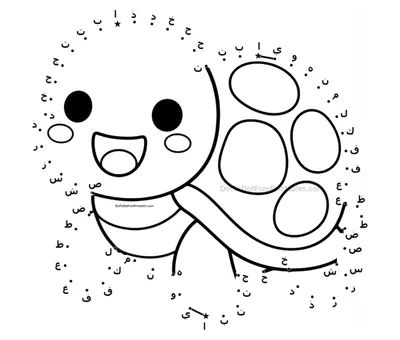
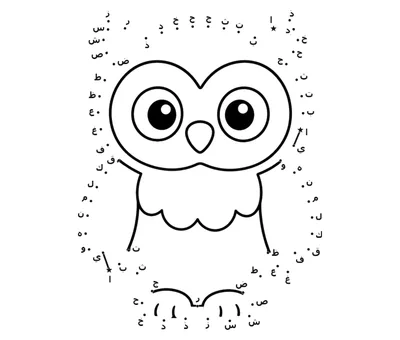
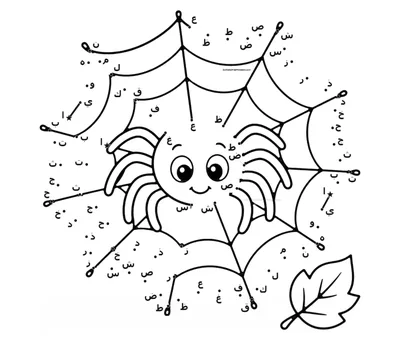
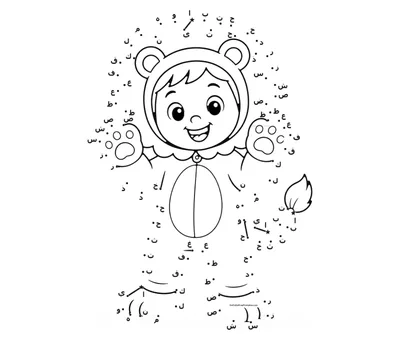
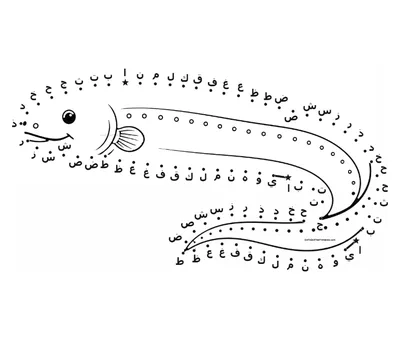
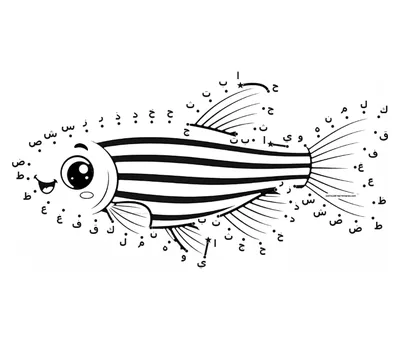
Many pictures need more than 28 dots. After ي, the label sequence starts again at ا. The restart is marked with a small star at the dot, which helps identify the beginning of another round. Repeated letters belong to different positions in the picture; they do not mean that you should return to the first dot.
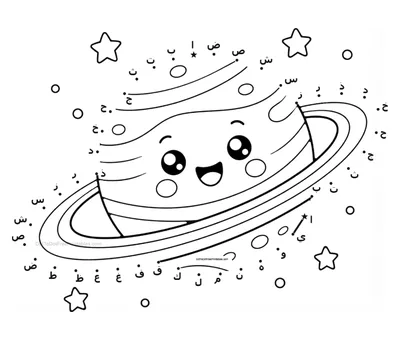
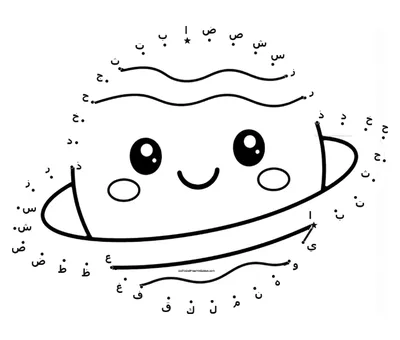
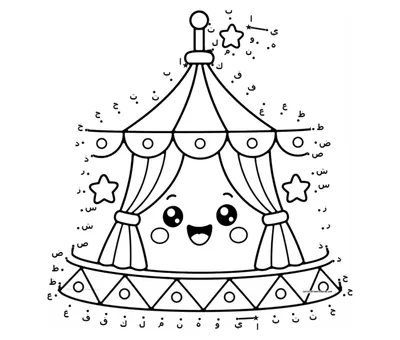
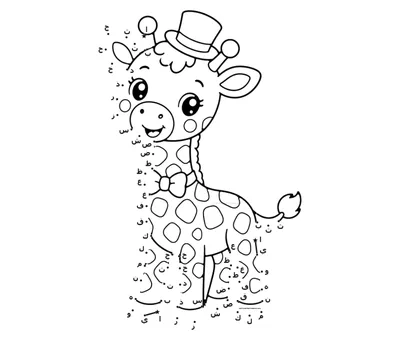
The 60-dot Circus Giraffe uses two complete rounds of 28 labels, followed by the first four letters again. Its final letter is ث. The 43-dot Ringed Planet uses one full round and 15 more labels, finishing at ض. Thinking in rounds explains why a worksheet can be longer than the alphabet.
Before drawing a long line to a repeated letter, check which round you are following. Keep a finger on your current position and use the restart stars as checkpoints. If the route becomes unclear, compare the same section with the original numbered version instead of guessing across the page.
Choose Between Space Pictures, Flowers and Animals
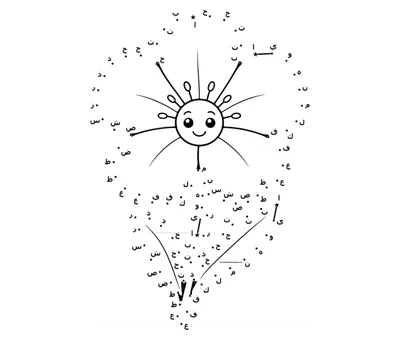
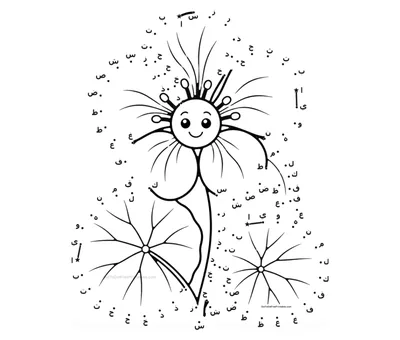
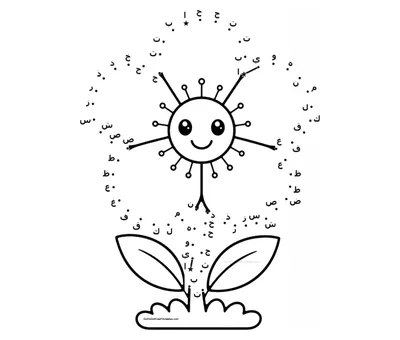
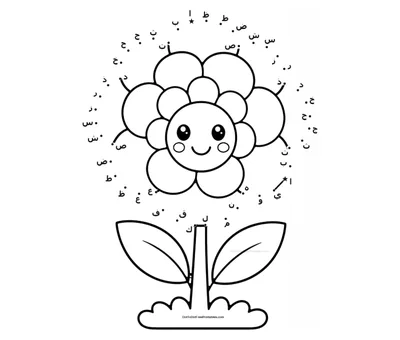
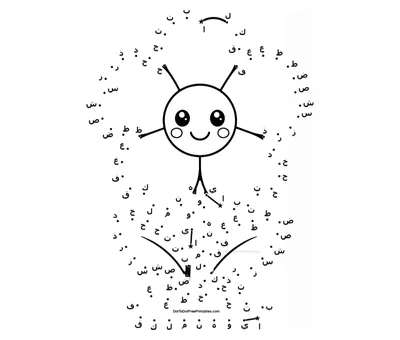
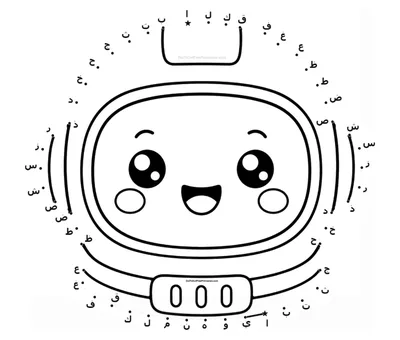
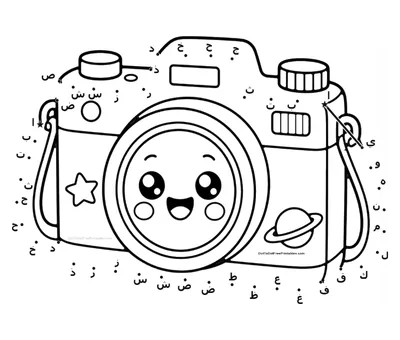
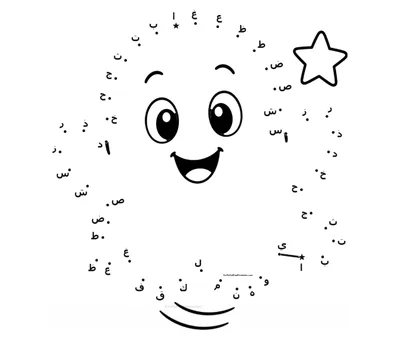
For a relatively short trail, compare Space Camera with 43 dots, Camellia Flower with 45 and Lotus Flower with 46. Each goes beyond one complete alphabet round, but none asks the learner to manage the many repetitions found on a much longer picture. Pick the subject that catches their attention first.
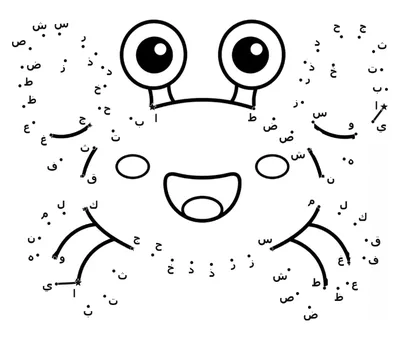
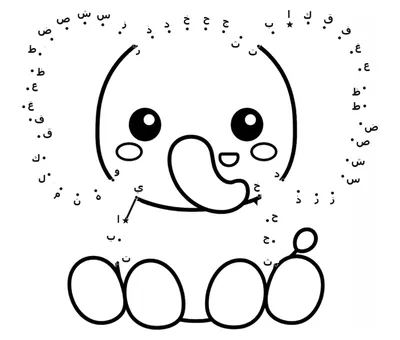
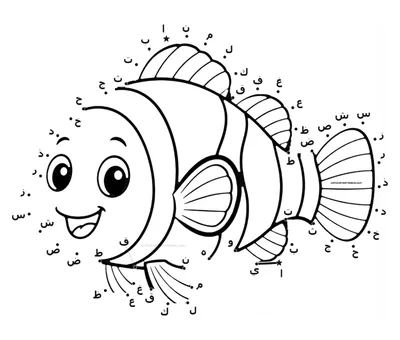
Animal choices include Cute Baby Elephant at 50 dots and Clownfish at 53. These give two children different pictures while keeping the length fairly close. After connecting, one learner can add a habitat around the elephant while another colors an underwater scene around the fish.
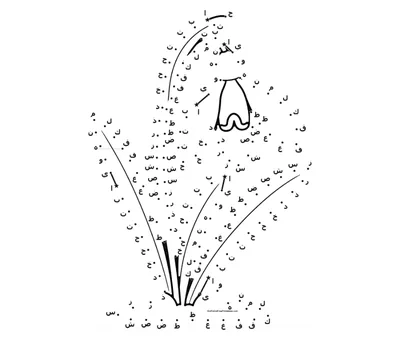
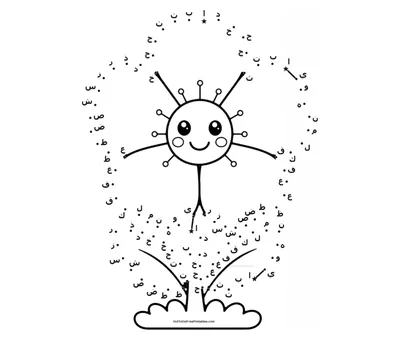
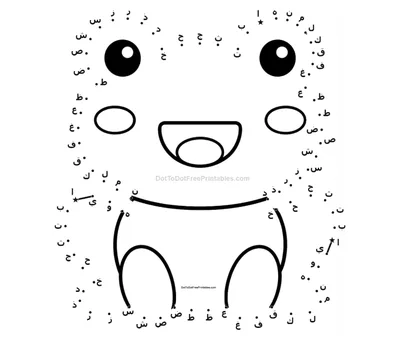
For more repetitions, the Cute Puppy has 70 dots and the Cute Happy Frog has 82. The longer Snowdrop Flower has 145. Length is only one consideration: check each puzzle’s own guidance and preview, because spacing and turns can affect the drawing task as well as the number of labels.
Look Carefully at the Dots Inside the Letters
Arabic letters such as ب, ت and ث share a similar basic shape but differ in their dots. The same kind of close looking helps distinguish ج, ح and خ. Pause before connecting and ask the learner which detail identifies the next letter. The task becomes more useful when they explain what they noticed.
There are two kinds of dots to keep separate: the dots that belong to a printed Arabic character and the puzzle point beside that character. Draw between the puzzle points. Do not connect to a small mark inside a letter, erase its dots or add more to turn it into a different character.
Try a brief warm-up on scrap paper with two or three large letters. Match each one to a label on the worksheet, then begin the trail. Enlarged examples make comparison easier without changing the printable itself. If several labels still look alike, work together through those sections and keep the reference visible.
A First Session: Find, Say, Point, Connect
Start by showing the learner the first few letters on a chart. Find the starting ا on the picture, then point to the next ب before drawing. Say the letter name if that is part of your lesson. Repeat the same steps for ت so that the routine is clear before working independently.
Follow the letter order wherever it takes the pencil. Arabic text is read right to left, but this picture trail can travel up, down or across the paper. The next position is determined by the sequence, not by a rule to move continuously toward one side of the page.
When a child gets stuck, first ask which letter comes next. If they know the answer, help them search a smaller area. If they do not, return to the alphabet strip together. This helps you see whether the difficulty is recalling the order, recognizing the shape or locating a label among many others.
Five Ways to Make Letter Practice More Interesting
Play a shape detective game before drawing. Choose ب, ت or ث and ask the child to point out the identifying dots on a large example. Then find that character on the puzzle. Keep this separate from marking the worksheet so that pencil circles do not obscure the actual connection points.
Try a round prediction. Look at the dot count and ask how many complete sets of 28 fit inside it. For Circus Giraffe, two sets account for 56 dots, leaving four. Younger learners can count rounds with counters rather than doing the calculation mentally.
Pause for a picture guess after a short stretch. Ask whether the outline is starting to suggest the chosen animal or object. The preview may already reveal the subject, so make the question about which part of the drawing is emerging rather than pretending the answer is always a secret.
Work as a finder-and-drawer pair. One person names or points to the next label; the other connects it. Swap jobs after a few connections. This gives a learner who wants help with pencil control a way to participate in the letter task.
Finish with a chart match. Select three letters encountered in the trail and locate them on your alphabet chart. Ask what comes before or after one of them. End with coloring or adding a background so the worksheet remains a picture activity as well as a review.
Arabic Letter Recognition Is Different From Tracing
A search for Arabic alphabet worksheets can bring up tracing sheets, letter-joining practice and connect-the-dots pictures. They serve different purposes. On these sheets, the letters tell you where to move; the lines you draw form the picture. You are not tracing the outline of ا or practicing the pen strokes of ب.
Use a letter-writing model when the goal is handwriting. Use a joining exercise when the goal is recognizing letters inside connected words. This collection is a companion for recognizing standalone shapes and following a familiar sequence, with a drawing to finish along the way.
A simple combination is to review two letters on a separate writing sheet, then locate them in a puzzle. Avoid asking a beginner to master letter names, handwriting, joining rules and the entire trail at once. Choose one main language goal and provide help with the other parts of the activity.
Using the Printables in a Class or at Home
For an Arabic class, choose a common picture theme and offer two trail lengths. One learner might use the 50-dot Baby Elephant while another selects the 70-dot Puppy. They can still discuss animals and display their finished work together without needing identical amounts of repetition.
At home, make a small folder with the worksheet, a matching alphabet chart and a sharpened pencil. Mark the current position on a separate note if you stop halfway through. On returning, say the last completed letter and the next one before continuing, so the child does not accidentally start the sequence over.
The activity also suits a weekend-school review station when the letters have already been introduced. It is practice material, not a complete Arabic reading course. There is no need to promise that finishing a picture means a learner has mastered the alphabet; notice which labels they recognize with less help over time.
Download an Arabic Alphabet Dot to Dot Printable PDF
Open the chosen puzzle and check that Arabic Alphabet Version is selected before downloading. Choose A4 or US Letter to match your paper, and use the orientation options offered on that puzzle page. Download the PDF rather than printing a screenshot of the small preview.
Check print preview at actual size or 100% scale. If your printer clips an edge, adjust the settings enough to keep the whole worksheet visible. Print one test sheet before preparing a classroom stack, paying particular attention to the small dots in the Arabic characters and the restart markers.
Plain paper and pencil are sufficient for connecting. Keep coloring supplies for the finished drawing, and avoid heavy marks over the labels while solving. If a child needs larger print, use an appropriate larger-paper setting or help read the labels instead of shrinking several worksheets onto one page.
Which Alphabet Collection Should You Use Next?
Stay with Arabic letters if the goal is recognizing ا, ب and ت. For a separate counting activity, the Arabic numerals collection uses ١, ٢ and ٣. Those are number symbols, so knowing their sequence is a different task from following the Arabic alphabet.
The English alphabet collection uses A, B and C and continues with combined labels after Z. The Arabic worksheets here repeat their 28-letter sequence instead. Explain the change when switching versions so a learner does not expect the same continuation rule on both.
Choose a new subject when the language task is still useful but the old picture feels too familiar. Choose a shorter trail when the search becomes tiring. The best next page is one the learner can approach with enough support to enjoy finishing, rather than simply the largest dot count available.
A Letter Detective Visit to an Art Collection
Arabic writing also appears on historical objects. The Metropolitan Museum of Art’s introduction to calligraphy includes inscribed bowls, textiles and tiles. Choose one object to look at together. The puzzle is a letter-recognition activity, not a lesson in calligraphy, but the comparison can give children a reason to look closely at writing beyond their worksheet.
Start with observation rather than translation. Is the writing arranged in a band, around an edge or across a surface? Does the object also have a border or a pattern? Let the learner describe what is visible without expecting them to read an unfamiliar historical inscription. A modern standalone label may look quite different from a letter within joined or decorative writing.
After the puzzle, make a small exhibition card for the finished picture. Keep the drawing on one side and copy one familiar standalone letter onto separate paper using a trusted model. Tell a visitor how that letter helped locate a point. Do not copy an inscription whose meaning you do not know or present made-up marks as Arabic. An adult can help write a real caption if they know the language.
A second visit can focus on the learner’s own environment: a book cover, a family label or a greeting written by someone they know. Ask permission before using someone’s writing. The useful connection is personal and concrete: letters belong to communication as well as to a sequence. The activity needs no claim that every family shares the same customs or that finishing a picture means the child can read Arabic.
About This Guide and Reporting a Problem
The Arabic-letter version keeps the picture and connection order while repeating the 28 standalone labels described above. The round calculations in this guide use that worksheet sequence and the listed puzzle dot counts. They do not describe Arabic word formation or handwriting assessment.
This guide was prepared with AI-assisted drafting and editing. Its puzzle examples and sequence calculations were checked against the site’s puzzle data. Read about the project and its creator on our About page, and see our editorial policy for production, automation and correction standards.
If a letter, number or download looks wrong, report the problem with the puzzle URL and the version name, Arabic Alphabet Version. For a printing issue, include the paper size and what was clipped or unclear. See our terms of use for printing and sharing permissions.
Questions about the worksheets
Arabic Alphabet worksheet FAQs
Do Arabic letters on these sheets stand for numerical values?
No. These puzzles use the modern alphabet sequence listed in the guide, beginning ا ب ت. They are not an exercise in the historical numerical values assigned to letters. Follow the supplied letter order and the current round to find each next point.
Do these worksheets use Arabic letters or Arabic numbers?
This collection uses Arabic letters, beginning ا, ب and ت. Arabic numerals such as ١, ٢ and ٣ belong to the separate Arabic numbers collection. Check the version name on the puzzle page to make sure you download the activity that matches your lesson.
What comes after ي on a longer worksheet?
The sequence returns to ا for another round. A small star marks the restart dot. For example, the 60-dot Circus Giraffe contains two full rounds of 28 letters and four further labels. Follow the next round rather than returning to the original starting dot.
Do the labels show joined Arabic handwriting?
No. The worksheet labels show individual, standalone Arabic characters beside puzzle points. Connecting those points reveals a picture. Use separate joining and handwriting exercises to practice how letters appear within words or how to form them with the correct pen movements.
Should the pencil always move from right to left?
No. Follow the next letter in the sequence wherever its puzzle point is located. The trail can turn in any direction to form the drawing. Reading direction in Arabic text does not determine the direction of every connection in a dot-to-dot picture.
Which pictures have relatively short Arabic-letter trails?
Ringed Planet and Space Camera each have 43 dots, Camellia Flower has 45 and Lotus Flower has 46. All go beyond one complete 28-letter round. Check the individual puzzle preview and guidance as well as the count when choosing a first worksheet.
Can a child who knows only a few letters use these?
Yes, with help. Review a small part of the alphabet, connect that section together and assist with the remaining labels. These complete pictures are longer than a few-letter exercise. A reference chart and an adult partner can make the task manageable without expecting instant memorization.
How can we avoid confusing letter dots with puzzle dots?
Look at a large example of the letter before starting. Its small identifying dots belong to the printed character; the separate point beside it is the one used for the drawing. Keep pencil marks away from the label so its identifying details remain visible.
Can two learners use different versions of the same picture?
Yes. The original numbered version and the Arabic alphabet version use the same picture and connection order. One learner can follow numbers while another follows letters. Compare the completed outlines afterward, or use the numbered version as a reference for a confusing stretch.
Are these worksheets suitable for Arabic weekend schools?
They can be used as a letter-recognition review activity alongside your regular lessons. Introduce the sequence first, keep an alphabet chart available and choose a trail length that fits the learner. The pictures provide practice; they do not replace instruction in reading, pronunciation or writing.
Can we stop after one round of Arabic letters?
Yes, as a practice break. One round contains 28 labels and ends at ي. The pictures in this collection need more connections, so the outline will be unfinished at that point. Mark your place and continue at the next starred ا when you return, or finish the remaining rounds together.