79 puzzles
German Alphabet Dot to Dot Printables
Free German alphabet dot to dot PDFs with lowercase a–z, ä, ö, ü and ß. See the worksheet order and restart guide; print pictures in A4 or US Letter.
Browse all 79 German Alphabet dot to dot puzzles
Flowers






Cute
Space
Circus
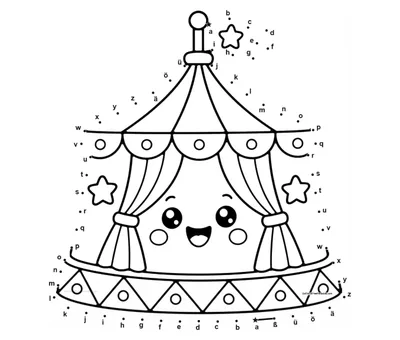
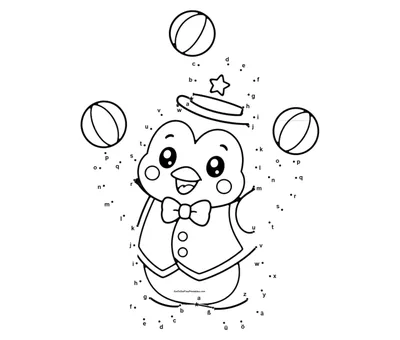
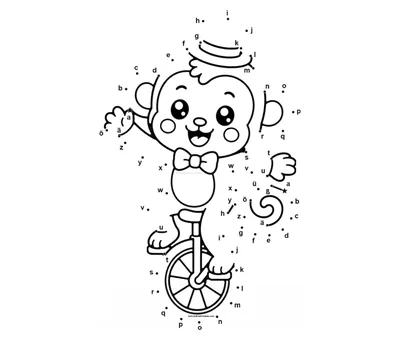
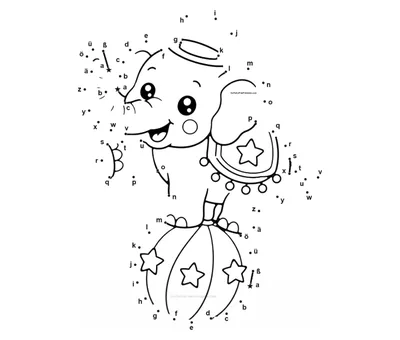
German Alphabet
Circus Elephant Balancing on a Ball
Balance a Big-Top Star One Dot at a Time
View & Download
Halloween
Ocean
Playgrounds
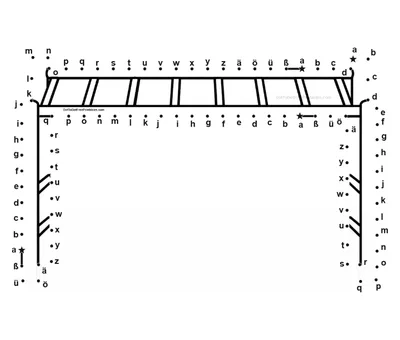
UAE

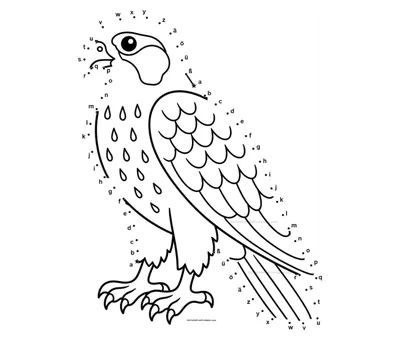

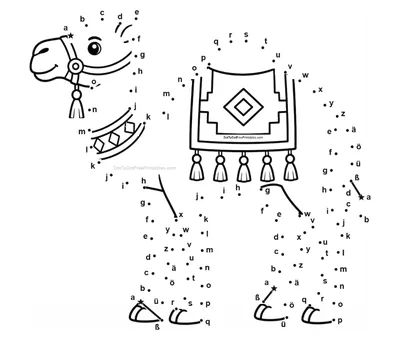
America 250 Years
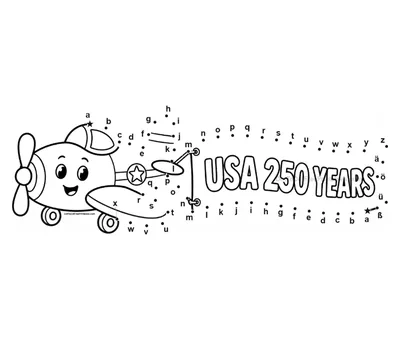
German Alphabet
America 250 Anniversary Airplane Banner
Fly High for America's 250th Anniversary!
View & Download
German Alphabet
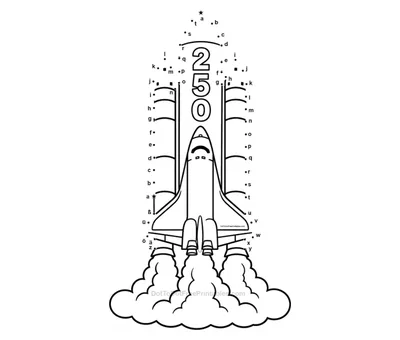
America 250 Space Shuttle
Launch into America's 250th with the Space Shuttle!
View & Download
German Alphabet
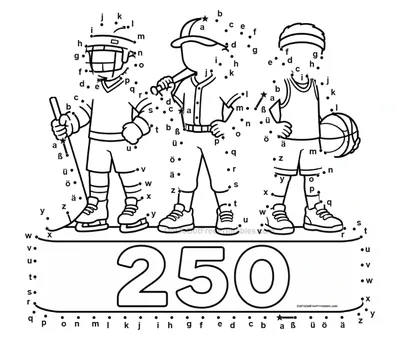
America 250 Anniversary Sports Kids Podium
Cheer for America's Young Champions at 250!
View & Download
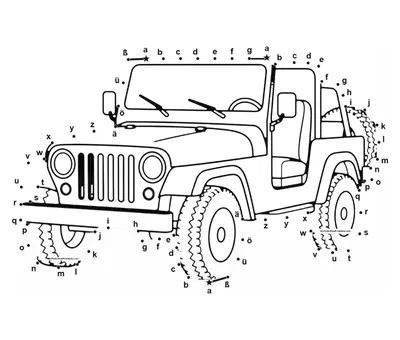
Vehicle Dot to Dots
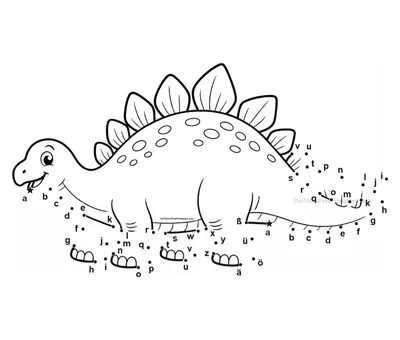
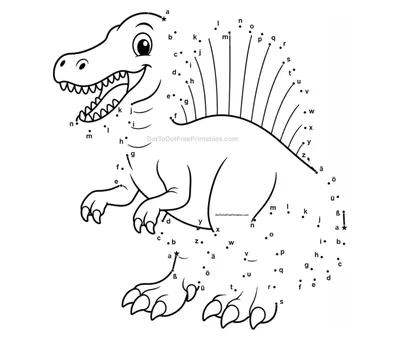
Dinosaurs
Garden
Planes
Canada
German Alphabet Dot to Dot: Lowercase Letters, Umlauts and Picture Games
A Familiar ABC With Four More Labels to Find
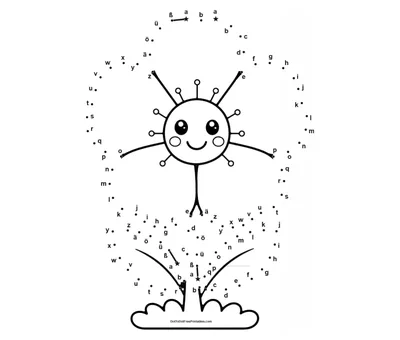
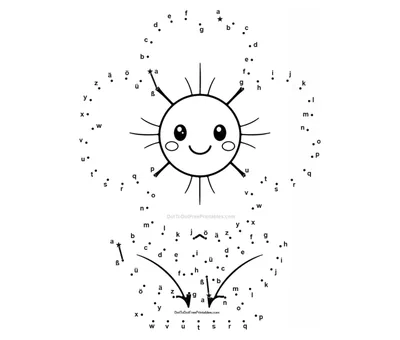
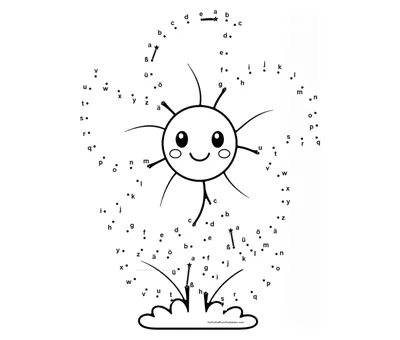
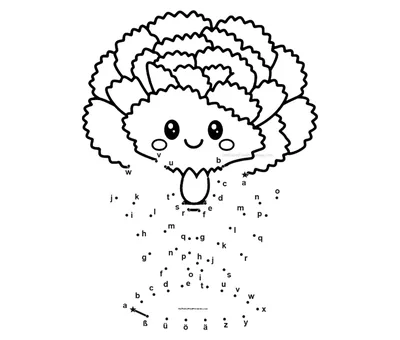
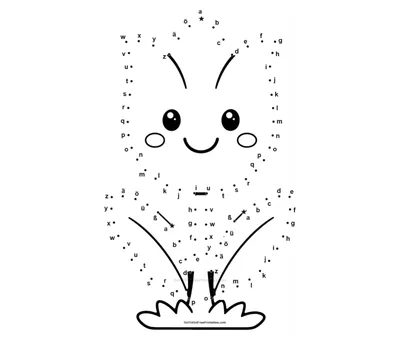
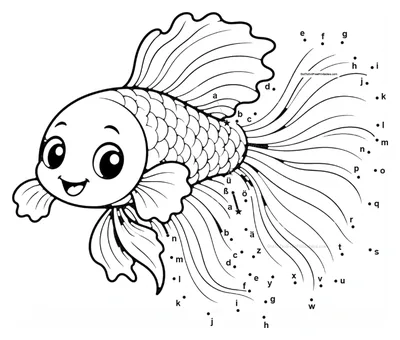
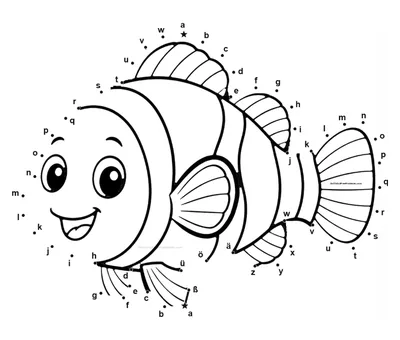
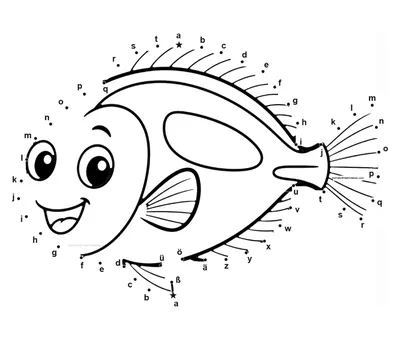
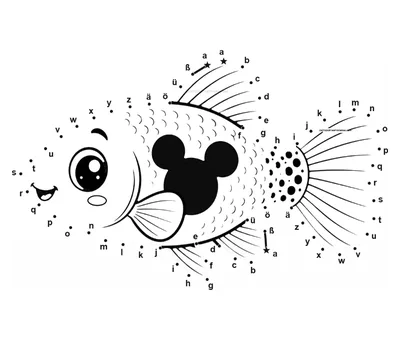
German alphabet dot to dot printables are picture puzzles labeled with lowercase letters. Follow a, b and c through z, then continue to ä, ö, ü and ß. Every correct connection adds another line to an animal, flower, vehicle or space drawing. When the trail is complete, the picture is ready to color.
These English-language instructions explain how to use the German-letter worksheets. They suit families introducing German, teachers preparing a letter-recognition activity, and learners who want a change from copying rows of characters. The labels give you a sequence to follow; the subject gives you a reason to keep looking for the next one.
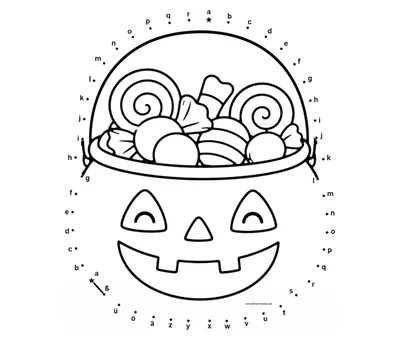
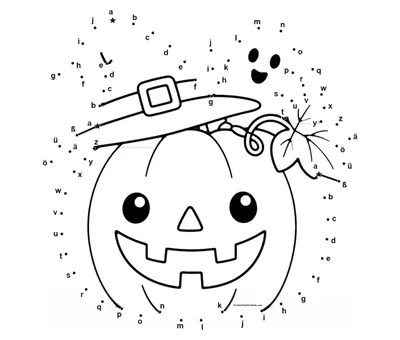
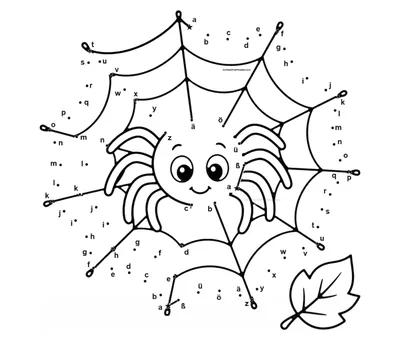
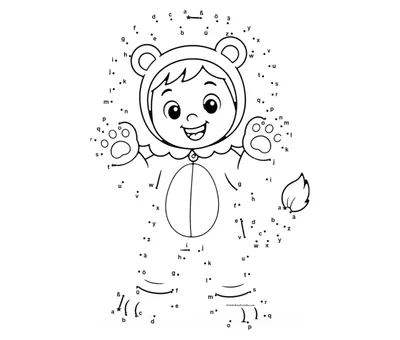
Choose a picture in the grid and open German Alphabet Version on its puzzle page. The German sheet keeps the same drawing and connection order as the original numbered puzzle. What changes is the label beside each dot, including the umlaut characters and Eszett that distinguish this version from an ordinary English ABC sheet.
The Exact Letter Order on These German Worksheets
Each round uses 30 labels in this order: a, b, c, d, e, f, g, h, i, j, k, l, m, n, o, p, q, r, s, t, u, v, w, x, y, z, ä, ö, ü, ß. Keep this sequence beside the page, especially when the learner approaches z for the first time.
This is the order chosen for these puzzles. It brings the four additional German characters together after a–z so that each has its own position in the trail. It is not a claim that every German dictionary, classroom chart or alphabet song sorts these characters in exactly the same way.
The characters are lowercase throughout the sequence. An uppercase chart can still help with letter names, but a matching lowercase strip makes visual searching more direct. If a learner recognizes capital A but hesitates at a, show the pair separately before asking them to find the small label on a crowded picture.
German Umlaut Worksheets: Notice ä, ö, ü and ß
The two marks above ä, ö and ü belong to the letters. They are not extra puzzle points, and the line should not run through them. Compare a with ä, o with ö and u with ü before starting. The change is small on paper, but it matters when choosing the next label.
The character ß, called Eszett or sharp s, has its own position at the end of this worksheet sequence. It is not a lowercase b. Give it a large example on a reference strip so that learners can examine the shape without squinting at the printable. The Unicode Latin-1 chart provides a character reference for ä, ö, ü and ß.
Recognition is the immediate task here. For pronunciation, use a teacher or a reliable German audio model rather than guessing from English letter names. A dot-to-dot sheet can prompt you to notice and say a character, but it does not provide all the information needed to learn its sounds in words.
After ß, Begin a New Round at a
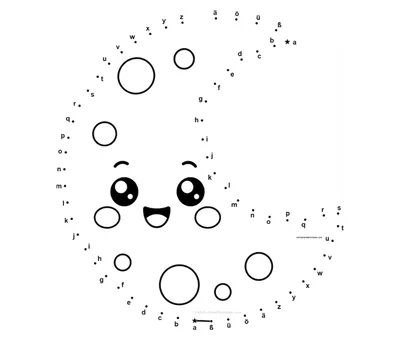
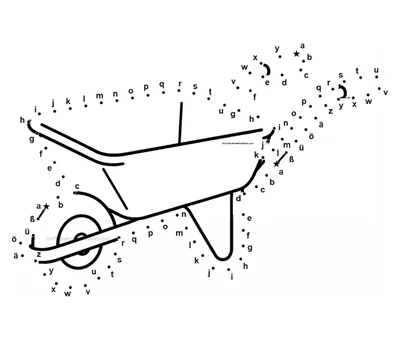
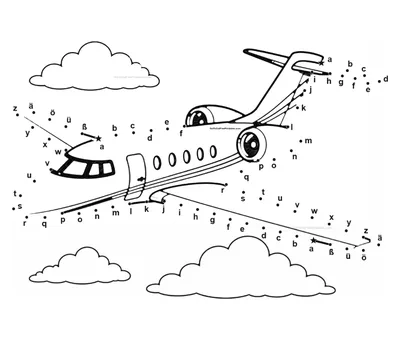
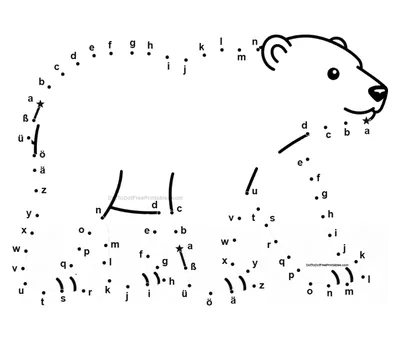
A full round contains 30 labels. When a picture has more than 30 dots, the sequence starts again at a, with a small star marking the restart. The repeated a belongs to the next part of the drawing. Do not connect back to the a where the whole picture began.
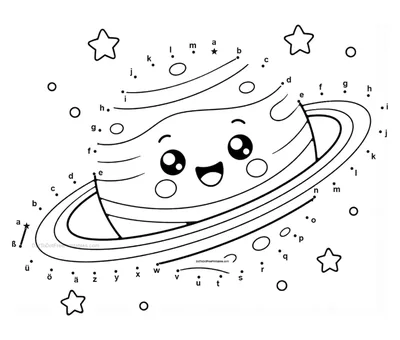
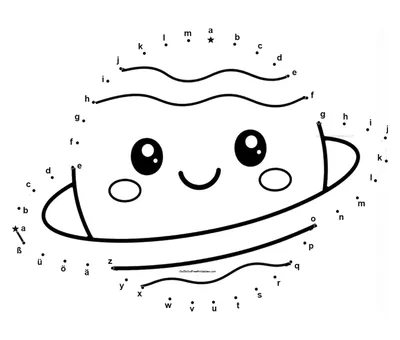
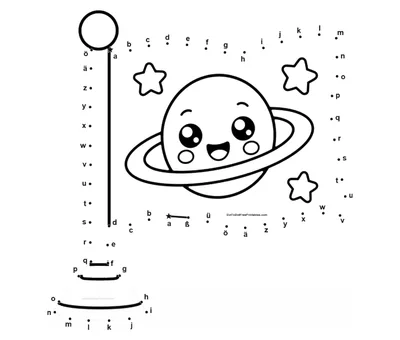
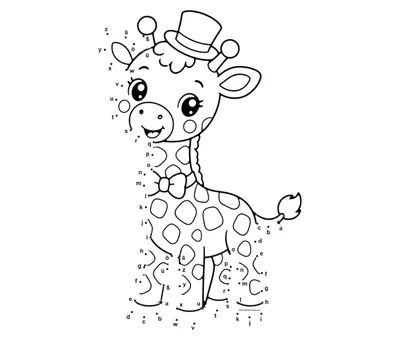
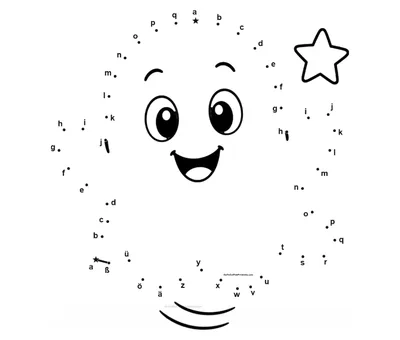
The 60-dot Circus Giraffe contains exactly two complete rounds and finishes at ß. The 43-dot Ringed Planet contains one complete round plus 13 more labels, ending at m. These examples make the repetition easier to explain than a rule alone: count one round, then see how much of the next round the picture needs.
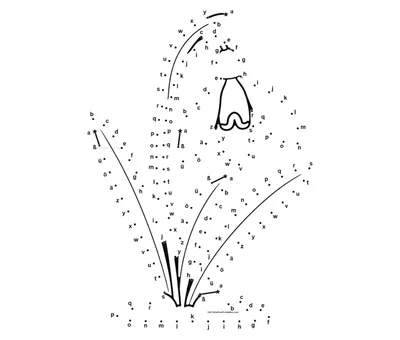
For a longer example, Snowdrop Flower has 145 dots. Four complete rounds account for 120 positions, leaving 25 labels in the next round. It finishes at y. Keep track of the current round as you work, because the same letter can appear several times in different places on a long worksheet.
Pick a Picture That Makes the Letter Hunt Worthwhile
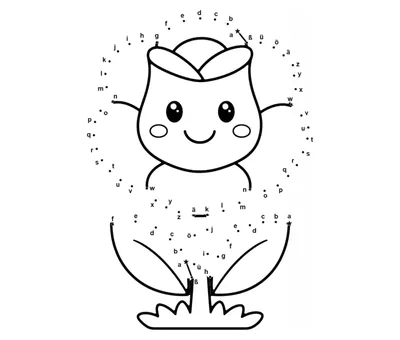
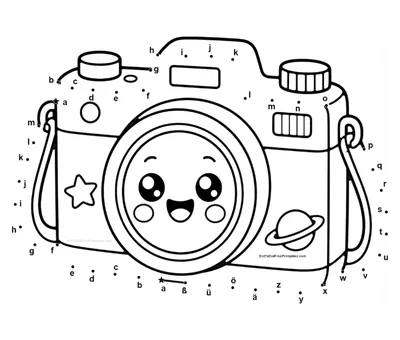
If space is the favorite topic, Space Camera and Ringed Planet each offer a 43-dot trail. A flower fan can choose Camellia Flower at 45 dots or Lotus Flower at 46. All four include the first set of ä, ö, ü and ß before beginning another round.
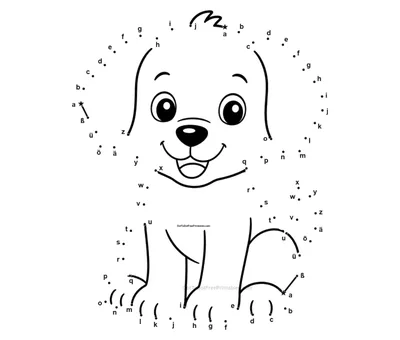
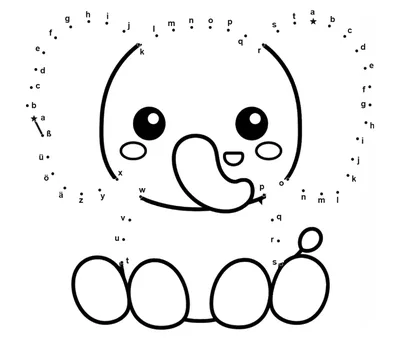
For an animal pair, compare Cute Baby Elephant with 50 dots and Cute Puppy with 70. The elephant stays within two rounds; the puppy enters a third. That is a useful difference to explain when the learner wants more letter searching but does not yet want a very long picture.
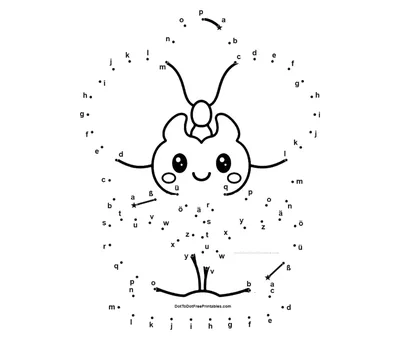
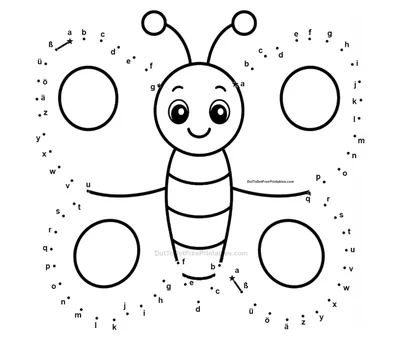
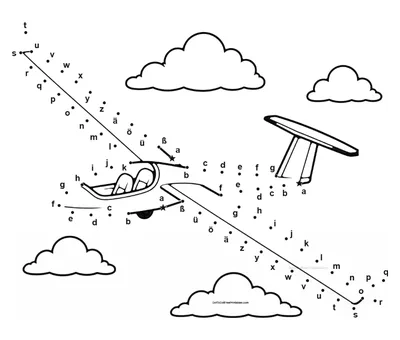
The 67-dot Cute Butterfly and 67-dot Glider have equal numbers of labels but different subjects. Choose between them by interest and the individual page guidance. Equal dot counts do not guarantee identical spacing, turns or drawing demands, so use the preview as well as the length.
How to Start a German Alphabet Connect the Dots Activity
Show the learner the complete worksheet sequence before handing over the pencil. Ask them to point to a, b and c on a reference strip, then find those labels on the picture. Begin with a few shared connections so that the difference between reading the sequence and locating a point is clear.
Pause before the first z. Ask what this worksheet puts next: ä, then ö, ü and ß. Looking ahead prevents the familiar English alphabet song from taking the child straight back to a too early. After ß, identify the marked a for the new round and continue from there.
Use a pencil while learning the routine. If a line looks wrong, return to the last certain connection and check the letter order before erasing half the picture. When the same label appears in more than one place, consult the original numbered version to confirm the position rather than choosing a distant dot at random.
Six Small Games for German Letter Recognition
Try an umlaut match on scrap paper. Write a, o and u in one group and ä, ö and ü in another. Match the related shapes, then find their separate positions in the worksheet sequence. This highlights the marks without drawing over the printed labels.
Play “what comes after z?” before connecting that part of the trail. Let the learner arrange four small cards in the order ä, ö, ü, ß. Leave the cards beside the picture as a reminder, then remove them on a later attempt if the sequence feels familiar.
Use a round counter. Put one counter aside whenever a full group of 30 labels is complete. On the 60-dot Circus Giraffe, the second completed group reaches the end. Counting rounds makes progress visible without turning the activity into a speed test.
Make a letter-name listening game with a German-speaking partner. One person names a label from the current section, and the other points to it. Use a short stretch of the trail so that repeated letters elsewhere on the page do not make the question ambiguous.
Pause for a drawing prediction. Ask which part of the chosen picture the newest lines seem to belong to. A learner who already saw the preview can still notice how the outline develops. The conversation keeps attention on the picture as well as the letters.
Finish with three letter pairs. Write a lowercase label from the puzzle and its uppercase partner on separate paper. This extends the activity into case recognition without changing the lowercase path or suggesting that the printable itself teaches every uppercase form.
German Letter Practice and English Alphabet Practice Are Different Choices
Many of the base letter shapes will be familiar to an English reader. The German version still asks for a different worksheet sequence because it includes ä, ö, ü and ß. German letter names also need their own spoken model; recognizing a shape from English does not supply its German name automatically.
Our English alphabet dot to dot printables use A to Z and then combined labels such as AA and AB. The German worksheets on this page use lowercase labels and repeat their 30-character sequence. Explain both changes when moving between the collections.
You can use the same subject in different letter versions when it is available, but compare the actual download controls first. The original numbered sheet is another option for checking a difficult section. It follows the same picture positions, so it can help identify the intended next connection when repeated letters become confusing.
A Home Lesson or Classroom Station With One Clear Goal
Choose a small goal before printing: noticing umlauts, remembering the order after z, or finding lowercase letters without a chart. A worksheet can support any of those aims, but doing all of them as a formal test can take the enjoyment out of the drawing. Keep the other parts of the activity supported.
At a classroom station, place the lowercase sequence beside the paper and demonstrate one transition into ä, ö, ü and ß. Learners can work alone or in pairs, taking turns to find and connect. An adult can then listen to a few letter names rather than monitoring every pencil movement.
At home, let the child choose the picture and decide whether to finish it in one sitting or continue later. Save the page with a note of the last completed position. A longer trail provides more repetition, but a shorter, carefully followed one may fit the day better than a partly guessed marathon.
What These Worksheets Practice, and What Needs Another Activity
These German alphabet worksheets ask the learner to recognize printed characters, recall an order and search for the next position. Drawing the connections also gives practice in making controlled lines. The finished image offers something concrete to color and keep, even when the letter sequence still needs a reference.
They are not letter-tracing pages. The pencil forms the outline of a picture instead of the strokes of a, ä or ß. If handwriting is the aim, use a separate writing model and practice space. If reading words is the aim, add a suitable German word activity after the puzzle.
Do not assume that the subject automatically teaches its German name. A puppy picture can lead to vocabulary practice, but the labels themselves are letters, not a word list. Add a verified word or spoken example from your lesson materials if you want to connect the drawing to language beyond the alphabet.
Printing a Clear German Alphabet PDF
Open the chosen puzzle, select German Alphabet Version and download the PDF for A4 or US Letter paper. Check the orientation choices offered on that page. Printing the PDF keeps the worksheet layout clearer than printing a small preview image or a screenshot of the whole webpage.
Inspect print preview at actual size or 100% scale. Adjust the settings if your printer clips an edge. Before making multiple copies, check a sample: the two dots over ä, ö and ü should remain distinct, and ß should be easy to distinguish from neighboring labels.
Use a sharp pencil for the trail and keep heavy coloring until the connections are complete. Avoid reducing several pictures onto a single sheet when small letters are already a challenge. A visible reference strip, clear print and enough room to work are more useful than squeezing in extra worksheets.
A German-Letter Postcard, with a Swiss Spelling Note
German-language writing is not identical everywhere. The official spelling rules, section 25 E2, allow ss in place of ß throughout Switzerland and Liechtenstein. These worksheets still include ß in their fixed 30-label sequence. A Swiss learner can recognize the symbol without being told to replace the spelling convention used at school.
Turn a completed picture into a pretend postcard. On separate paper, give it a destination supplied by the learner: a friend, a grandparent or an imaginary gallery. Ask a German-speaking adult to help with a short, correctly written greeting if desired. Keep the puzzle labels separate from the message; their alphabetical trail does not spell the name of the animal or place in the picture.
For a visual sorting game, make cards showing a, ä, o, ö, u and ü. Pair each plain letter with its umlaut partner, then ask which exact card matches a label in the final part of the worksheet round. Do not turn this into a pronunciation rule based on English sounds. When spoken practice is wanted, use the learner’s established teacher or audio model.
Finish by letting the child curate a tiny postcard display. They choose one feature to explain: why the dots above ü belong to the letter, how they found the next a after ß, or why their reference strip uses lowercase. The explanation can be spoken in their strongest language. This optional activity brings the additional characters into a purposeful conversation without claiming that a dot-to-dot puzzle teaches German spelling on its own.
About This Guide and Reporting a Problem
The German-letter version keeps the picture and connection order while repeating the specific 30-label sequence described above. The round calculations use that sequence and the listed puzzle dot counts. The sequence is a worksheet convention, not a rule for sorting every German word.
This guide was prepared with AI-assisted drafting and editing. Its puzzle examples and sequence calculations were checked against the site’s puzzle data. Read about the project and its creator on our About page, and see our editorial policy for production, automation and correction standards.
If a letter, number or download looks wrong, report the problem with the puzzle URL and the version name, German Alphabet Version. For a printing issue, include the paper size and what was clipped or unclear. See our terms of use for printing and sharing permissions.
Questions about the worksheets
German Alphabet worksheet FAQs
Can a Swiss German learner use the sequence even though school spelling uses ss?
Yes. Keep ß as one label when following this worksheet; replacing it with two s labels would change the puzzle order. For actual writing, follow the learner’s school convention. The official rules allow ss throughout Switzerland and Liechtenstein, as explained in the postcard activity above.
Which German letters appear in the dot-to-dot sequence?
These worksheets use lowercase a through z, followed by ä, ö, ü and ß. That creates a 30-label round. It is the sequence used for this puzzle collection, rather than a statement about how every German dictionary or classroom resource orders the additional characters.
Do the puzzles include umlauts and Eszett?
Yes. The labels ä, ö and ü appear after z, followed by ß, the Eszett or sharp s. Their identifying marks are part of the printed characters. Draw between the separate puzzle points, not between the dots above an umlaut letter.
What happens after ß on a longer picture?
The next round starts at a, and the restart point has a small star. Continue through that new round in the same order. Because labels repeat, keep track of where you are in the trail instead of connecting back to the original starting a.
Are the labels uppercase or lowercase?
The German version uses lowercase labels. This includes a–z and ä, ö, ü, ß. A lowercase reference strip is the closest match for the printed worksheet. You can practice uppercase partners on separate paper, but the trail itself does not alternate between cases.
Is the German version the same as the English ABC version?
No. The English alphabet version uses A–Z followed by combined labels such as AA and AB. This German version uses a 30-character lowercase sequence and repeats it after ß. A shared picture can have different label rules, so check the version before printing.
Which picture has two complete German-letter rounds?
Circus Giraffe has 60 dots, which makes exactly two rounds of this 30-label sequence. It finishes at ß. Ringed Planet has 43 dots, so it completes one round and continues through m in the second. These examples help explain how repeated labels work.
Can beginners use these German alphabet printables?
Beginners can use a matching letter strip and work with an adult or partner. Start with a manageable section and explain the additional labels before reaching z. The complete pictures are longer than a single a–z exercise, so independent completion is not the only way to use them.
Do these PDFs teach German pronunciation or handwriting?
They provide visual letter labels and a picture trail. Use a teacher or audio model for pronunciation, and a separate stroke or writing guide for handwriting. Saying labels while connecting can accompany those lessons, but the printable itself is not a complete spoken or written alphabet course.
How can I keep the umlaut dots clear when printing?
Download the PDF for your paper size and print one sample before making a batch. Check that ä, ö and ü are readable at the chosen scale. Avoid shrinking multiple worksheets onto one sheet, and keep pencil or coloring marks away from the labels while solving.
Do these worksheets use German dictionary order?
They use a fixed puzzle sequence: a–z, then ä, ö, ü and ß. This places each additional character at its own dot; it is not a rule for sorting German words in a dictionary. Follow the worksheet sequence for drawing and use a separate word-sorting activity for dictionary practice.