70 puzzles
Japanese Hiragana Dot to Dot Printables
Free hiragana dot to dot PDFs in 46-kana gojūon order. Compare partial and complete rounds, follow あ to ん, and print pictures in A4 or US Letter.
Browse all 70 Japanese Hiragana dot to dot puzzles
Flowers
Cute
Space

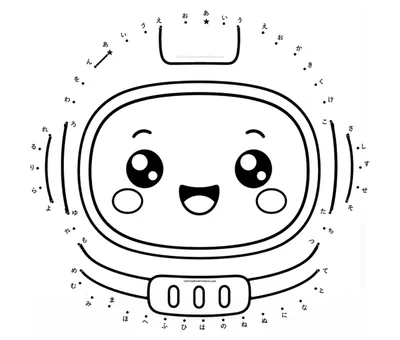
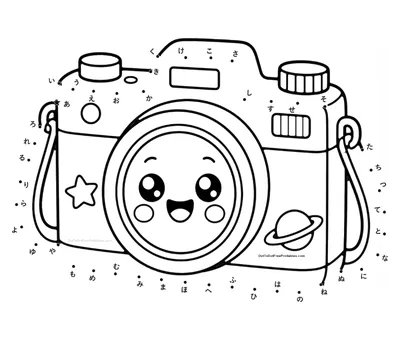
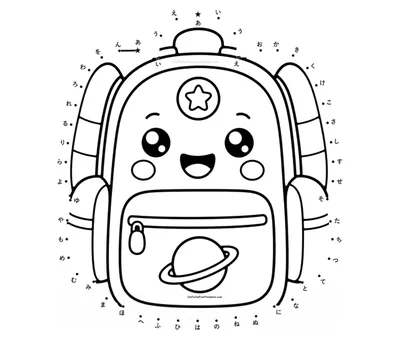
Circus
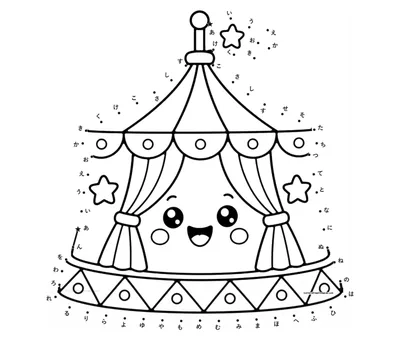
Japanese Hiragana
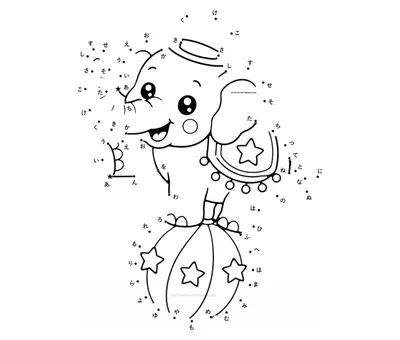
Circus Elephant Balancing on a Ball
Balance a Big-Top Star One Dot at a Time
View & Download
Halloween
Ocean
Playgrounds
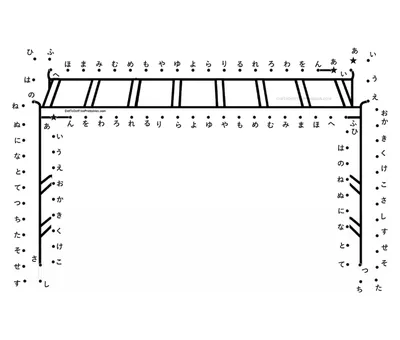
UAE

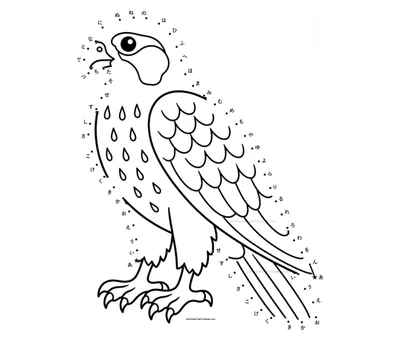
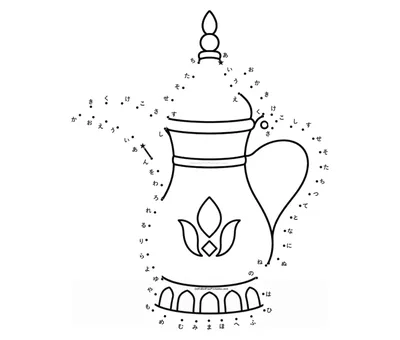
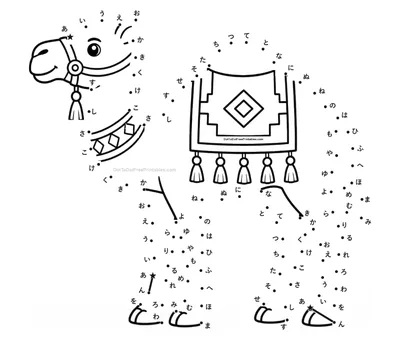
America 250 Years
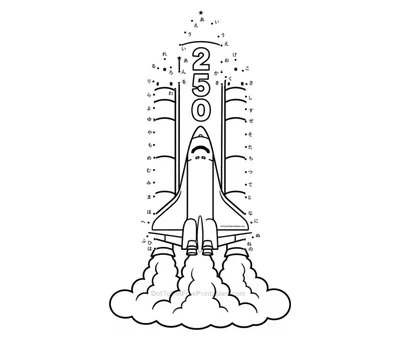
Japanese Hiragana
America 250 Space Shuttle
Launch into America's 250th with the Space Shuttle!
View & Download
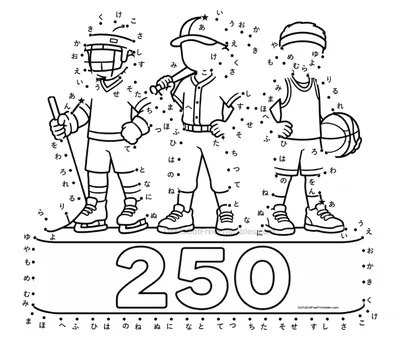
Japanese Hiragana
America 250 Anniversary Sports Kids Podium
Cheer for America's Young Champions at 250!
View & Download
Planes
Canada
Dinosaurs
Garden
Vehicle Dot to Dots
Hiragana Dot to Dot: The 46-Kana Order, Picture Choices and Practice Ideas
Find あ, Then い: A Japanese Picture Puzzle Begins
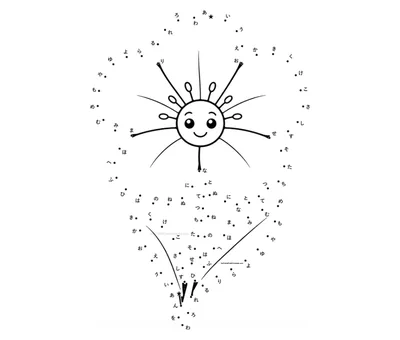
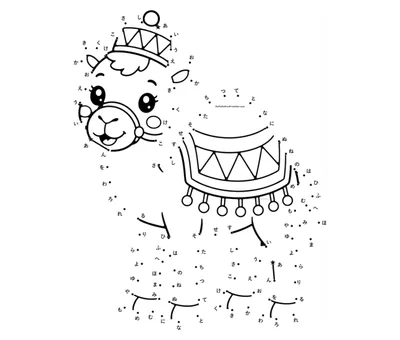
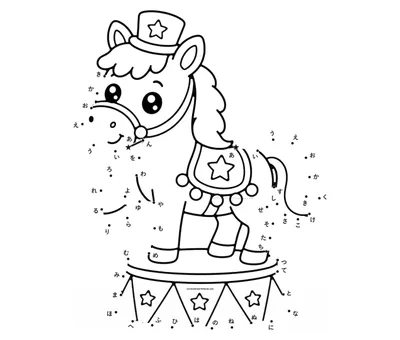
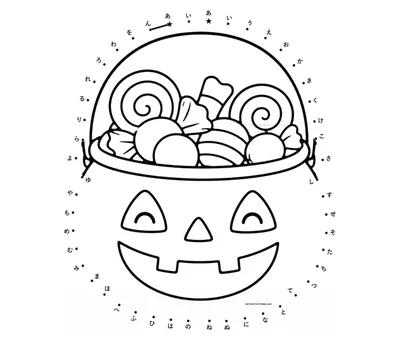
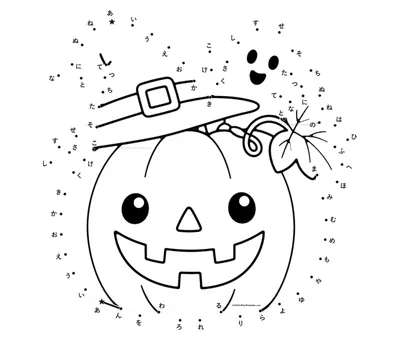
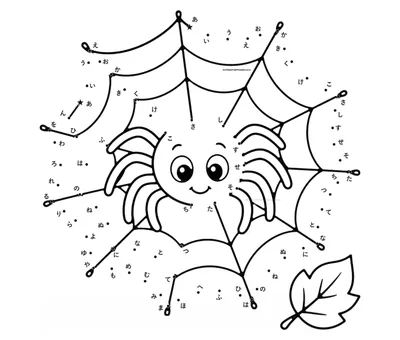
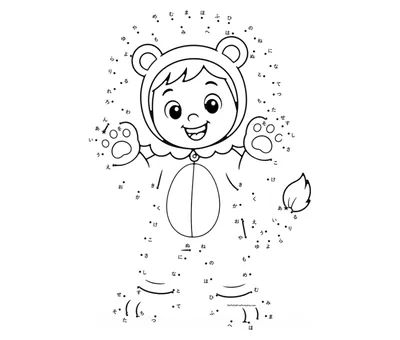
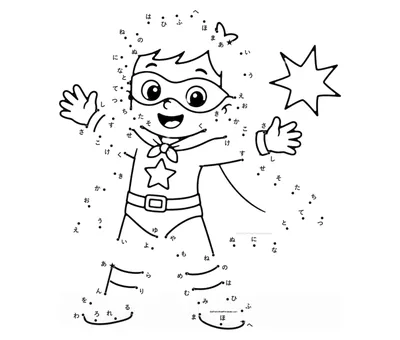
Hiragana dot to dot printables are pictures made by following Japanese kana labels instead of ordinary numbers. Start with あ, find い and continue through the worksheet sequence. Each connection adds a line to an animal, flower or other drawing, giving the character search a visible result to work toward.
The instructions on this collection page are in English, while the downloadable puzzles use hiragana. You can keep an English explanation nearby without replacing the Japanese characters on the activity itself. Choose a picture, open Japanese Hiragana Version and download the PDF for your paper size.
People sometimes search for these as Japanese alphabet worksheets. More precisely, hiragana is a kana syllabary, with characters representing sound units rather than an English-style alphabet. On these sheets, the kana are route labels. They do not spell the name of the picture or form a sentence as you connect them.
The 46 Basic Hiragana Used in the Trail
The sequence begins with the familiar vowel row あ, い, う, え, お. It continues through か, き, く, け, こ and the remaining basic kana in gojūon order. A reference chart makes the sequence easier to follow, especially where the learner has only practiced the first few rows.
Here is the complete worksheet order grouped for reading: あいうえお; かきくけこ; さしすせそ; たちつてと; なにぬねの; はひふへほ; まみむめも; やゆよ; らりるれろ; わをん. The groups near the end are not all five characters long, so do not invent extra positions to fill a chart-shaped gap.
This label set contains 46 basic kana. It does not add voiced forms such as が, the small kana used in combinations, or katakana characters. The Tofugu hiragana guide offers a broader learning reference; the puzzles here focus on recognizing the selected basic characters and following their order.
A Full Round Ends at ん
The 46th position is ん. If the picture continues, the next label is あ again, beginning a new round. A small star marks the restart point. The repeated character belongs to a new position in the drawing; it is not an instruction to go back to the original start.
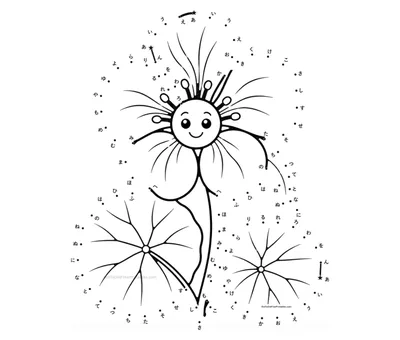
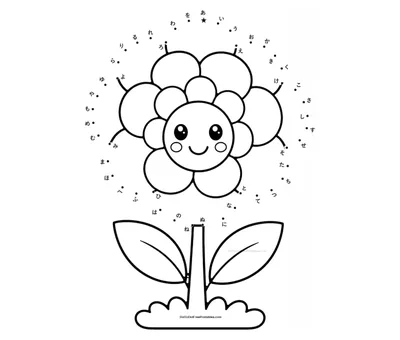
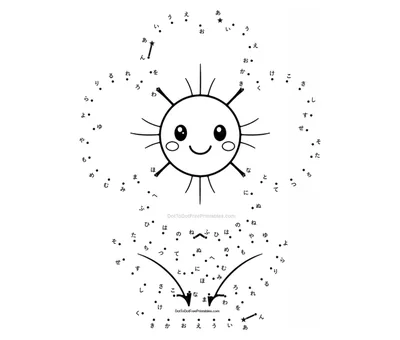
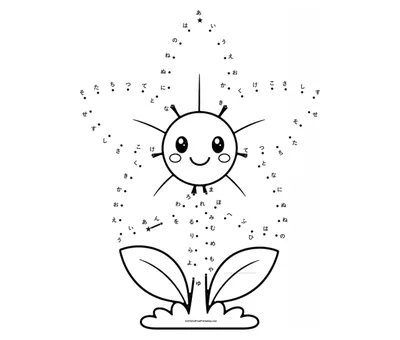
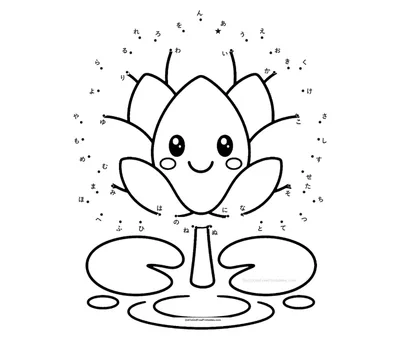
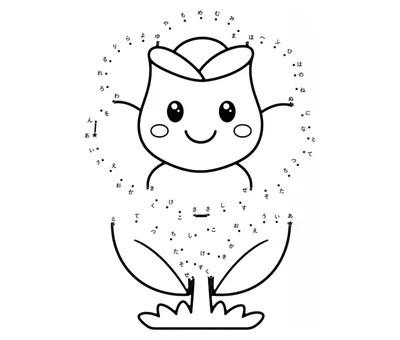
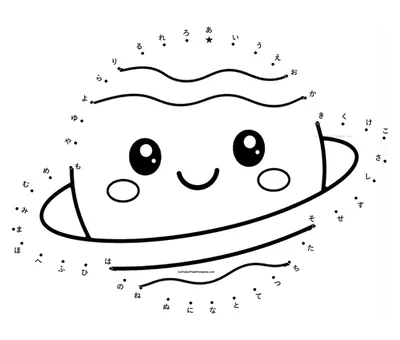
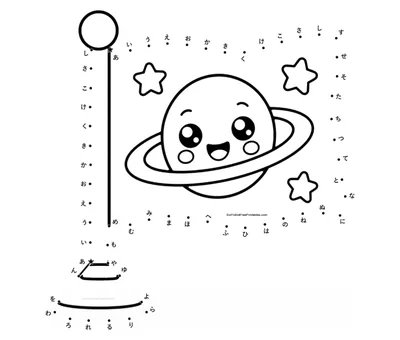
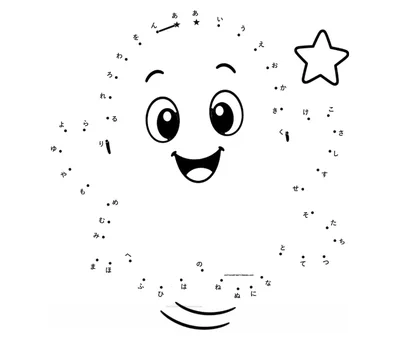
The 46-dot Lotus Flower is a useful example because it covers one complete round and finishes at ん. The 45-dot Camellia Flower stops one position earlier, at を. A 43-dot picture such as Ringed Planet stops at ろ, so it does not include the final three characters in its trail.
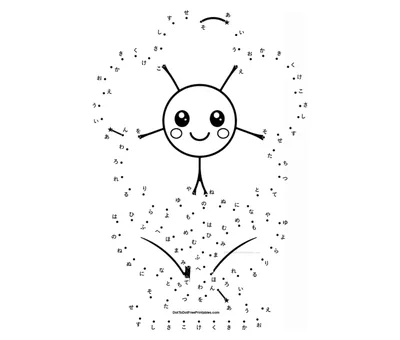
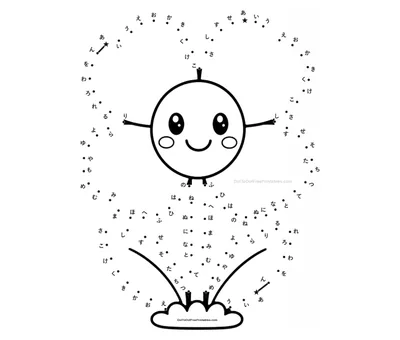
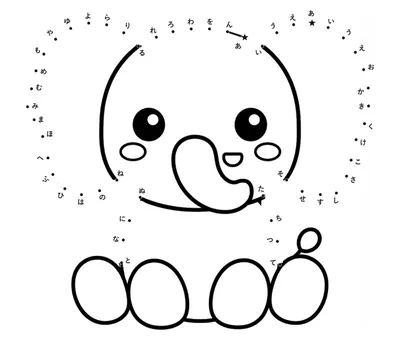
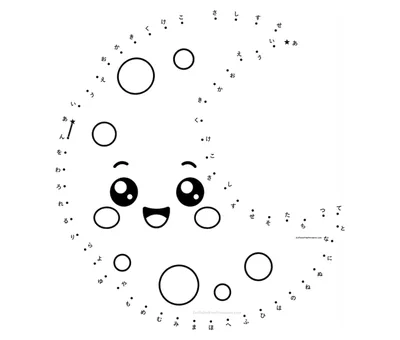
The 50-dot Cute Baby Elephant completes all 46 kana and then continues through あ, い, う and え in a second round. That makes it a practical choice for showing what a restart means without adding a large number of repeated labels. Review the first transition together before working independently.
Choose a Picture by Kana Coverage and Interest
Dot count can tell you something useful about which part of the hiragana sequence a picture reaches. Space Camera has 43 dots, so it is shorter than a complete round. Lotus Flower has 46, making it a direct way to practice the full basic set once. Neither choice is automatically better; choose according to your lesson.
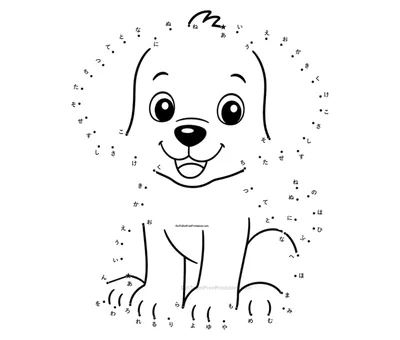
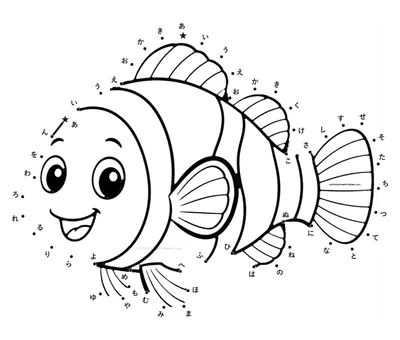
For animals, compare the 50-dot Cute Baby Elephant, 53-dot Clownfish and 70-dot Cute Puppy. The first two add a short second round, while the puppy repeats more of the sequence. Children can pick the animal they want to color while an adult checks how much repeated searching the trail involves.
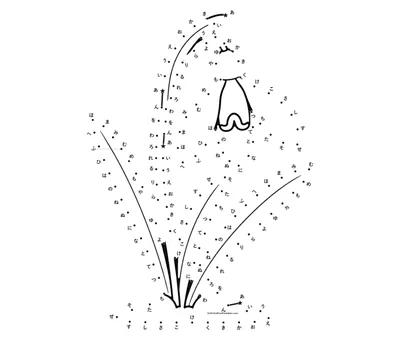
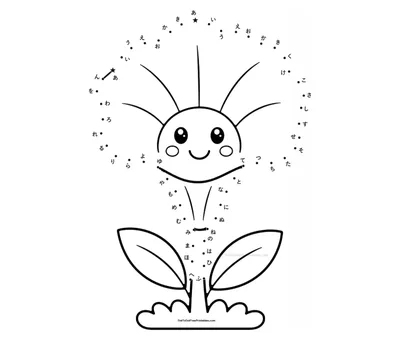
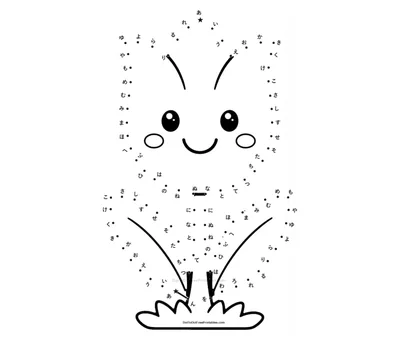
For a longer project, the 145-dot Snowdrop Flower contains three complete rounds of 46 kana, followed by seven more positions. Its final label is き. Use the puzzle’s own preview and guidance as well as this calculation; the number of labels alone does not describe every turn or crowded section of the drawing.
Use a Hiragana Chart as a Map, Not an Answer Sheet
Place a matching basic hiragana chart beside the puzzle. Before drawing, point to the next character on the chart and then find it on the picture. This allows a learner to concentrate on recognition even if the order is not yet memorized. Using a reference is a valid way to practice.
Keep track of your row when moving through the chart. After お comes か; after こ comes さ. Near the end, pay attention to the shorter やゆよ group and the final わをん group. A finger or a small strip of paper under the current group can help avoid skipping ahead.
As confidence grows, try a short section without looking at the chart, then check it. There is no need to remove the reference for the whole picture at once. The aim is to recognize more labels with less help over time, not to turn every connection into a memory test.
Slow Down for Similar-Looking Kana
A character search becomes more interesting when two shapes seem alike. Learners may want to compare ぬ and め, は and ほ, or れ and わ. Look at large examples first, then find the corresponding printed labels. Ask what feature helped identify the character instead of accepting a quick guess.
Keep the distinction between recognizing a printed form and writing it yourself. A font may present a shape differently from a teacher’s handwritten model. When the learner is unsure, compare it with the model used in the lesson rather than assuming that one unfamiliar printed shape must be a different kana.
Do not draw over a label to make it easier to remember. A heavy circle or correction can hide the very detail needed for the next search. Put comparison notes on separate paper, and keep the worksheet’s small characters readable until the trail is complete.
How to Complete the First Hiragana Worksheet
Begin with the first five kana on a chart: あ, い, う, え, お. Find their positions on the chosen picture and connect the first few together. Say the sounds if you have a reliable model from your teacher or lesson materials. Otherwise, begin with visual matching and add pronunciation with support.
The path can travel in any direction across the paper. Follow the sequence rather than trying to read the picture like a line of text. A kana near the top is not necessarily earlier than one near the bottom; the labels are arranged to create an outline.
If you lose your place on a repeated round, stop at the last connection you are certain about. Use the restart marker and the original numbered version to identify the intended next position. Avoid a long speculative line across the drawing. Pencil makes a mistaken connection easy to erase once you have checked it.
Five Activities Beyond Simply Joining the Dots
Try a vowel-row warm-up. Point to あいうえお on a chart and find those five labels in the first round of the picture. Read or match them before drawing. A learner who is new to hiragana can complete this section with a partner even if the whole worksheet would be too much alone.
Play “finish the group.” Pause after かきく and ask which two kana complete that group in the worksheet sequence. Use only groups already introduced in the lesson. The question gives a reason to revisit order without requiring a long recitation from the beginning every time.
Make a same-or-different comparison on separate paper. Write one large pair, such as ぬ and め, and ask the learner to point to a distinguishing feature. Then locate one of the pair in the current part of the puzzle. Keep the focus on accurate observation rather than speed.
Predict the final label using a known example. A 46-dot Lotus Flower ends at ん, while a 50-dot Baby Elephant adds four characters and ends at え. Ask the learner to check the prediction as the picture finishes. This connects the dot count with the repeated sequence in a concrete way.
Finish with a picture conversation. Describe what has appeared, add a background or choose colors. If you want to add a Japanese word for the subject, take it from a checked lesson resource. The kana labels do not themselves spell that word, so explain that this is a separate extension.
Hiragana Recognition, Handwriting and Reading Need Different Practice
A hiragana tracing worksheet shows how to form the character itself. This dot-to-dot activity asks you to recognize a kana label and draw toward its puzzle point. The line becomes part of a flower or animal, not part of the written character. It therefore cannot demonstrate Japanese stroke order.
Use a separate stroke-order model and writing space when handwriting is the goal. Use words and short reading exercises when you want to practice kana in context. These printable picture puzzles can provide a change of activity between those lessons while keeping the basic shapes in view.
Recognizing a chart sequence also differs from reading unfamiliar text. A learner may know what comes after き in a puzzle but still need practice reading き elsewhere. Vary the practice with flashcards, listening or suitable reading material rather than treating one completed picture as proof of complete hiragana mastery.
Using Hiragana Worksheets for Kids at Home and in Class
Choose the aim first: a first look at the vowel row, a review of similar shapes, or one complete basic-kana round. Then choose a picture that fits. Lotus Flower is useful for the full set; a longer animal picture offers repeated encounters after the first round. Keep the reference chart available when needed.
For paired work, let one learner find the next label while the other draws, then switch roles. A teacher can hear a few kana sounds without asking everyone to read the full sequence aloud at once. For independent work, show how to mark the current position on a separate note before taking a break.
At home, let the child decide what to do with the finished picture: color it, add a setting or keep it in a folder. Adults learning Japanese can use the same printables as a quiet recognition exercise. The artwork is playful, but the task can still be useful to someone learning the characters later in life.
Download a Clear Hiragana PDF and Choose the Right Version
Open the picture page and select Japanese Hiragana Version. Download the A4 or US Letter PDF that matches your printer paper, and check which orientation options the page offers. A PDF is preferable to a screenshot because the small kana need to remain readable on the printed sheet.
Start with actual size or 100% scale in print preview. If an edge is clipped by the printer’s margins, adjust the setting enough to keep the entire worksheet visible. Print a sample before making classroom copies and inspect curved or closely spaced characters for clarity.
The English alphabet collection uses a different label system, beginning A–Z and continuing with combined letters. The Korean Hangul collection uses another script entirely. Stay on Hiragana Version when your lesson concerns あいうえお, and check the preview before printing.
About This Guide and Reporting a Problem
The hiragana version keeps the picture and connection order while using the 46 basic kana described above. The coverage and final-kana examples use that sequence and the listed dot counts. They help you choose a worksheet; they are not a test of Japanese reading proficiency.
This guide was prepared with AI-assisted drafting and editing. Its puzzle examples and sequence calculations were checked against the site’s puzzle data. Read about the project and its creator on our About page, and see our editorial policy for production, automation and correction standards.
If a letter, number or download looks wrong, report the problem with the puzzle URL and the version name, Japanese Hiragana Version. For a printing issue, include the paper size and what was clipped or unclear. See our terms of use for printing and sharing permissions.
Questions about the worksheets
Japanese Hiragana worksheet FAQs
Are the hiragana dot to dot printables free PDFs?
Yes. You can download the Japanese Hiragana Version of the linked pictures as free PDFs for home or classroom activities. Choose the picture first, then select A4 or US Letter on its page. Print the PDF rather than a screenshot of the small preview.
Which hiragana order do these worksheets follow?
The labels follow the 46 basic kana in gojūon order, beginning あ, い, う, え, お and ending わ, を, ん. Use a matching basic chart beside the picture. The worksheet sequence does not add voiced forms or small kana combinations.
Which puzzle includes all 46 basic hiragana exactly once?
Lotus Flower has 46 dots, so its hiragana trail runs through one complete basic set and finishes at ん. Camellia Flower has 45 dots and stops at を. Ringed Planet has 43 dots and stops at ろ, before the final three characters.
What happens after ん in a longer picture?
The next round starts at あ, with a small star marking the restart. Continue through the sequence again at the next positions in the drawing. The repeated labels do not mean you should return to the first dot; each round follows another part of the picture.
Do these worksheets teach hiragana stroke order?
No. You connect points to form a picture rather than tracing the strokes of each kana. Use a separate handwriting guide for stroke order and character formation. These puzzles practice visual recognition and sequence following, which can accompany writing lessons without replacing them.
Are katakana, kanji or dakuten included in this label set?
No. This version uses the selected 46 basic hiragana. It does not switch to katakana or kanji, and it does not add voiced characters such as が. Check the version name before downloading if you are choosing an activity for a specific Japanese script.
Can a beginner who knows only あいうえお try a picture?
Yes, with support. Find and connect the first five labels together, then use a chart and a partner for the remaining sequence. The complete pictures extend beyond that first group, so they are not independent five-character worksheets. Stopping after a short supported section is fine.
Do the kana labels spell the Japanese name of the picture?
No. The labels follow the worksheet sequence, regardless of whether the picture is a flower, elephant or planet. You can add vocabulary from a checked lesson resource afterward, but the trail itself is not a spelling exercise or a sentence about the subject.
Can adults use these hiragana worksheets too?
Yes. The pictures are playful, but any beginner can use the character-recognition task. Keep a basic kana chart nearby, work at a comfortable pace and compare similar shapes carefully. Add reading and listening practice separately if your wider goal is learning Japanese.
How do I handle the same kana appearing more than once?
Track the current round and use the small restart marker when the sequence begins again. If two matching labels cause confusion, compare the relevant positions with the original numbered version of the same picture. Check before drawing a long line to a distant repeated character.
Does every row on the hiragana reference chart contain five labels?
No. The worksheet order includes the three-character group やゆよ and finishes with わをん after the らりるれろ group. Follow the 46 characters listed in the guide rather than adding labels to fill empty spaces on a chart. Each printed label corresponds to one dot position.