72 puzzles
Japanese Katakana Dot to Dot Printables
Free katakana dot to dot PDFs with 46 basic kana from ア to ン. Practice recognizing the labels and following gojūon order; A4 and US Letter downloads.
Browse all 72 Japanese Katakana dot to dot puzzles
Flowers
Cute
Space
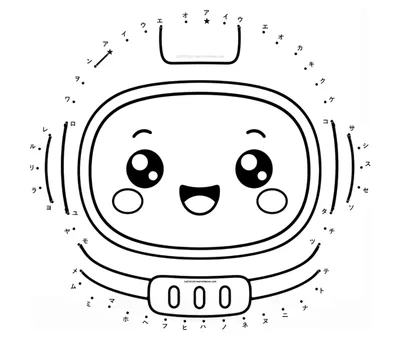
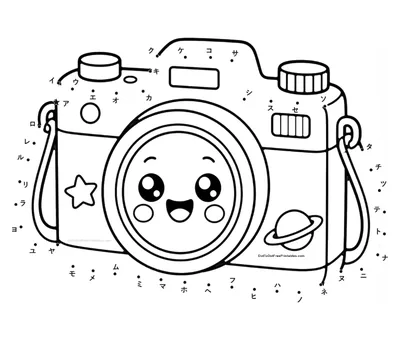
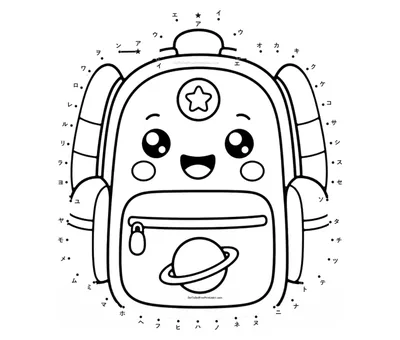
Circus
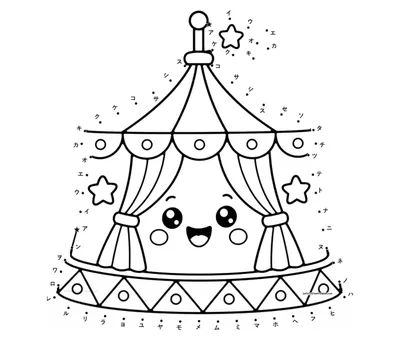
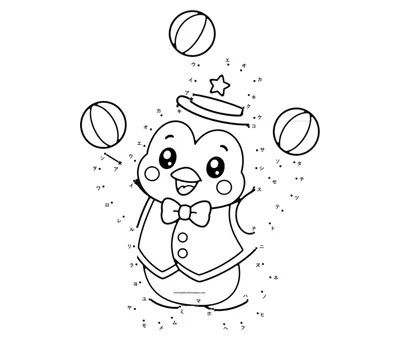
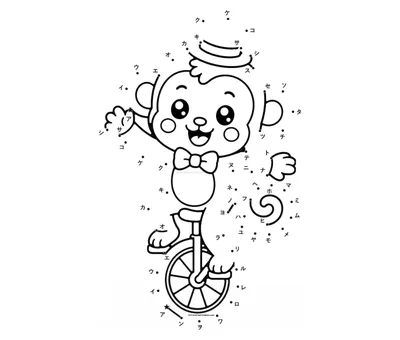
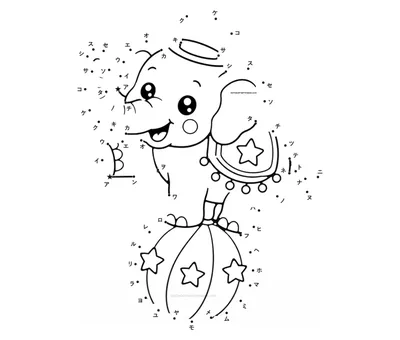
Japanese Katakana
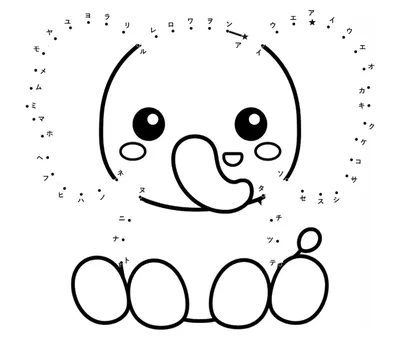
Circus Elephant Balancing on a Ball
Balance a Big-Top Star One Dot at a Time
View & Download
Halloween
Ocean
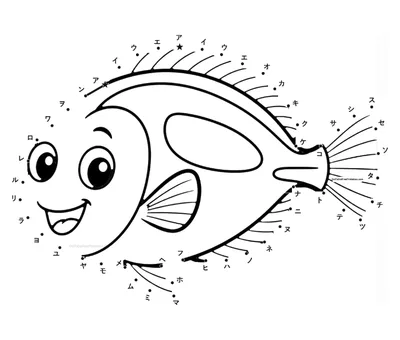
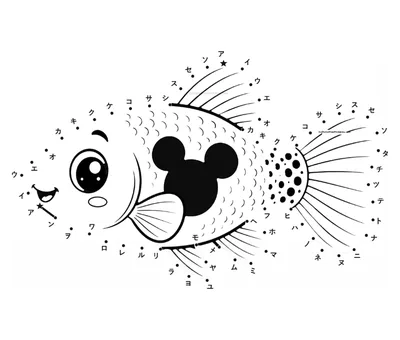
Playgrounds
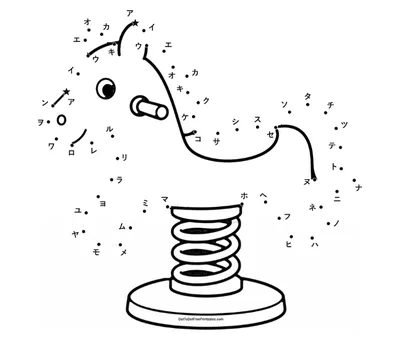
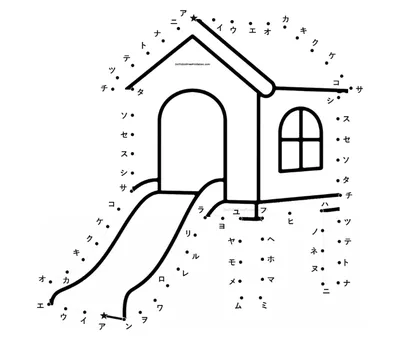
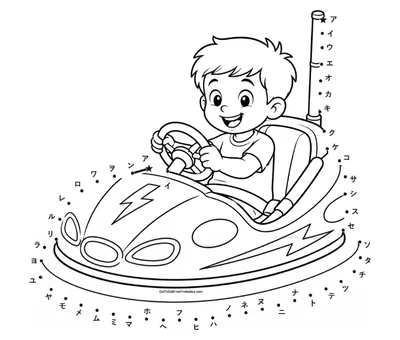
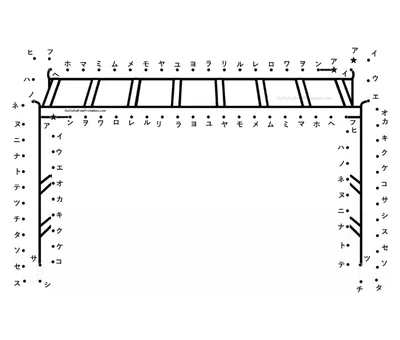
UAE

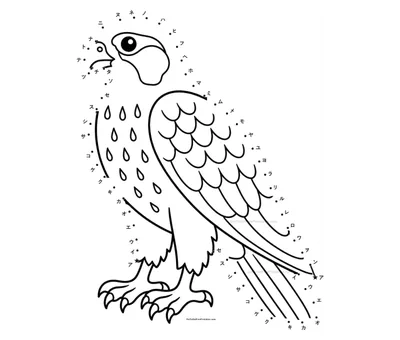
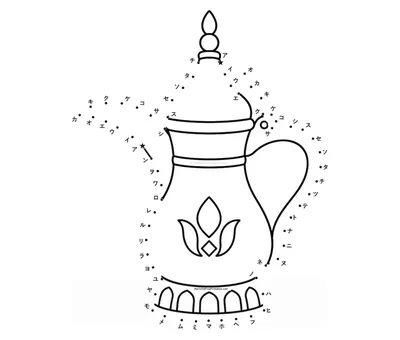
America 250 Years
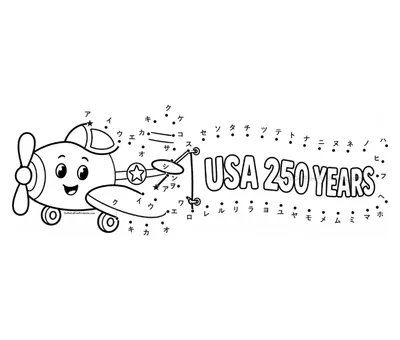
Japanese Katakana
America 250 Anniversary Airplane Banner
Fly High for America's 250th Anniversary!
View & Download
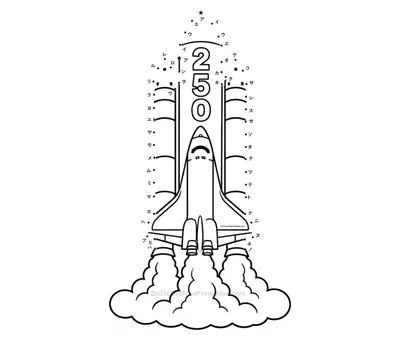
Japanese Katakana
America 250 Space Shuttle
Launch into America's 250th with the Space Shuttle!
View & Download
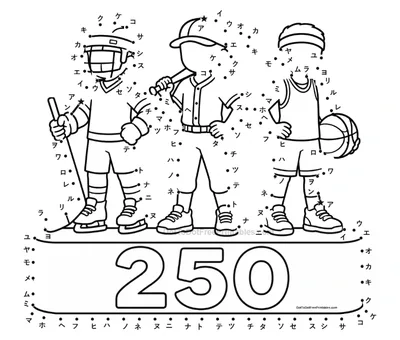
Japanese Katakana
America 250 Anniversary Sports Kids Podium
Cheer for America's Young Champions at 250!
View & Download
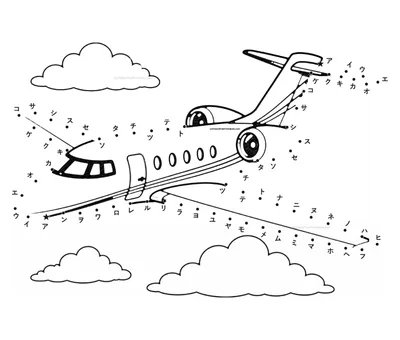
Planes
Canada
Dinosaurs
Garden
Vehicle Dot to Dots
Japanese Katakana dot to dot: a guide for parents and teachers
Katakana Dot to Dot: Follow ア, イ, ウ to Reveal a Picture
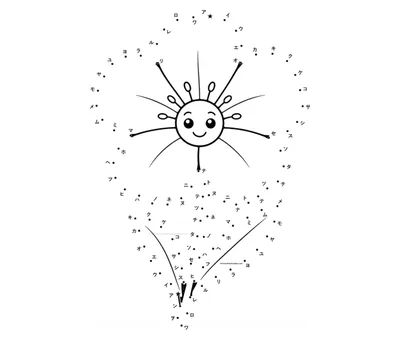
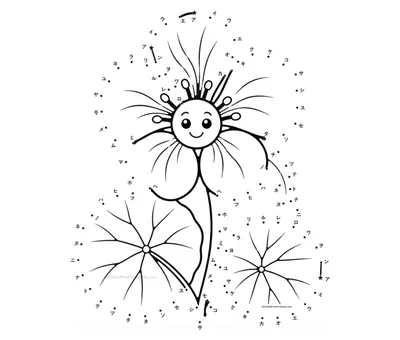
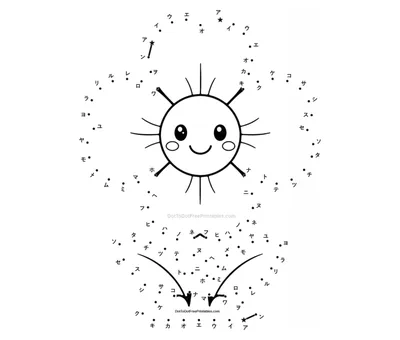
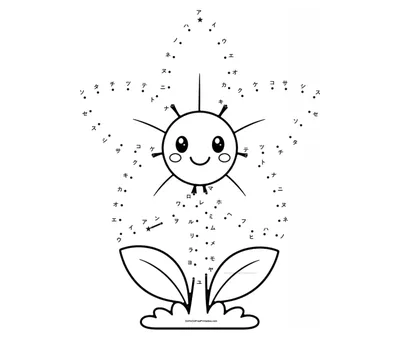
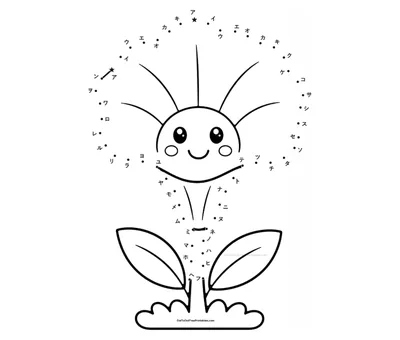
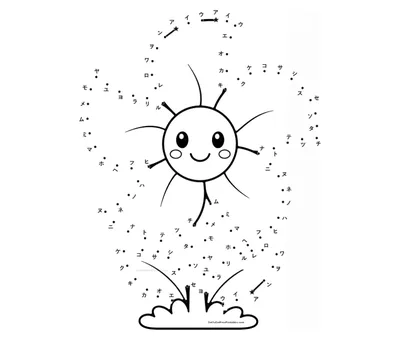
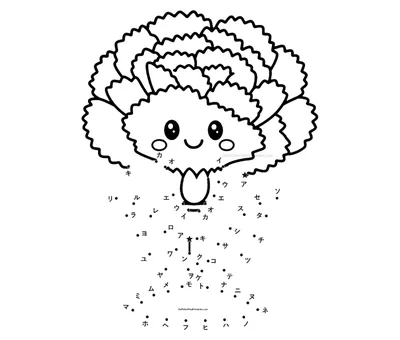
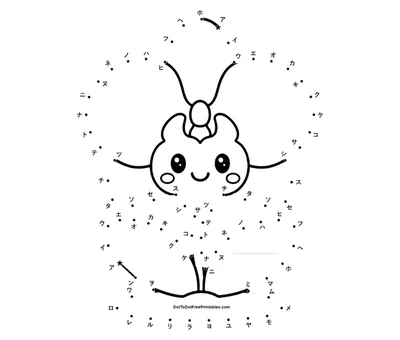
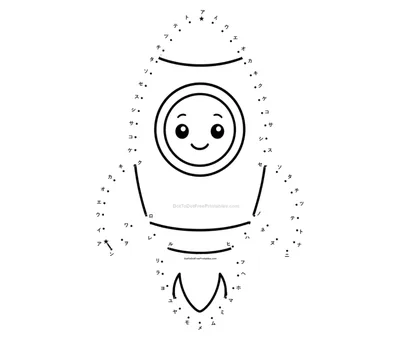
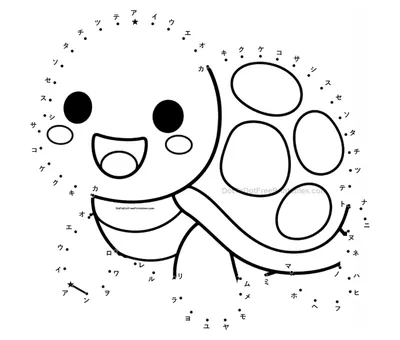
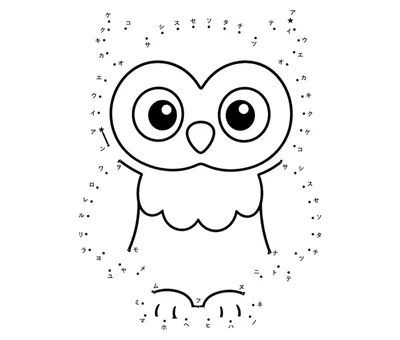
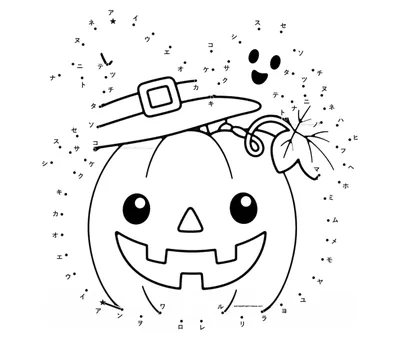
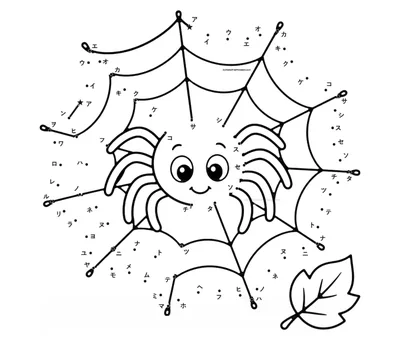
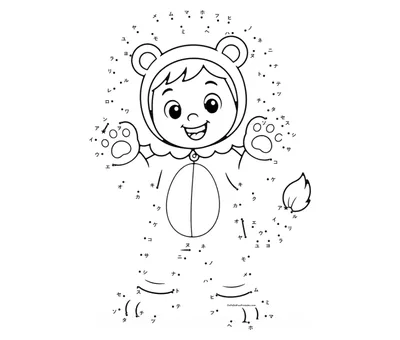
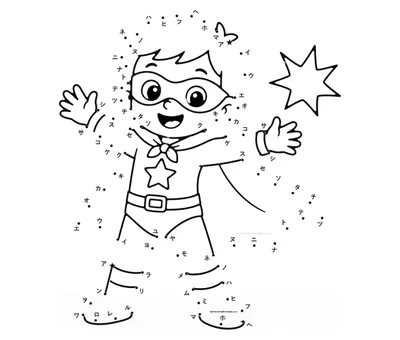
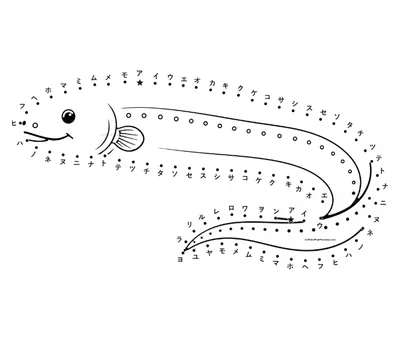
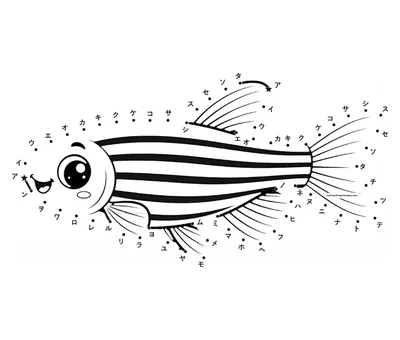
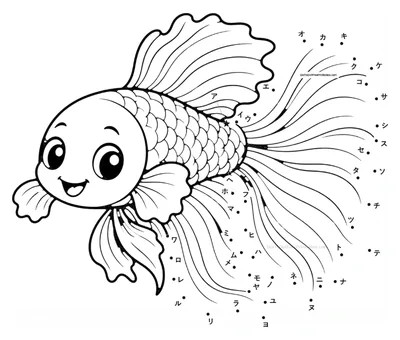
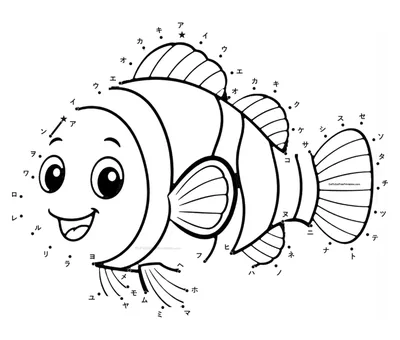
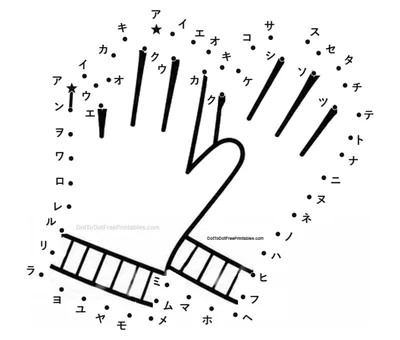
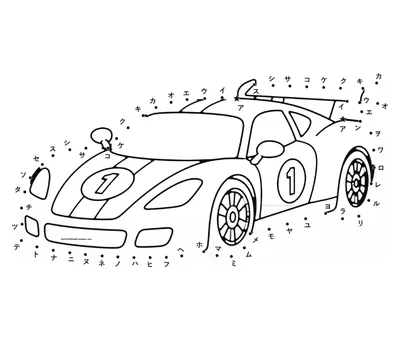
Katakana dot to dot printables are picture puzzles in which each dot carries a katakana character instead of a number. Start at ア, draw to イ, then ウ, エ and オ, and keep going in gojūon order. Each correct connection adds a line to an animal, flower, vehicle or space drawing, and the finished outline is ready to color.
These sheets suit families who are introducing Japanese at home, teachers running a Japanese club or heritage-language class, and older learners who want a calmer way to review katakana than copying rows of characters. The picture gives a reason to search for the next character; the order gives a structure to follow.
Choose a picture from the grid and open Japanese Katakana Version on its puzzle page. The sheet keeps the same drawing, dot positions and connection order as the original numbered puzzle. Only the labels change, so the numbered version is always available for checking a section that looks confusing.
The 46 Katakana Labels and Their Order
Each round uses the 46 basic katakana in the familiar gojūon order: ア イ ウ エ オ, カ キ ク ケ コ, サ シ ス セ ソ, タ チ ツ テ ト, ナ ニ ヌ ネ ノ, ハ ヒ フ ヘ ホ, マ ミ ム メ モ, ヤ ユ ヨ, ラ リ ル レ ロ, ワ ヲ, ン. This is the order printed on standard Japanese kana charts, read row by row from the vowel row to ン.
The voiced forms with dakuten or handakuten (such as ガ, ザ, バ and パ), the small characters used in combinations (such as ャ, ュ, ョ and ッ) and the long-vowel mark ー are not puzzle labels. They are important in real katakana words, but leaving them out keeps the trail to one character per dot and one clear order.
Print or write a gojūon chart and keep it beside the worksheet. Reading the chart in rows of five, for example “ka, ki, ku, ke, ko”, makes it easier to predict the next label than memorizing 46 separate positions. The Unicode Katakana chart is a reliable reference for every character shape.
What Katakana Is Used For
Japanese is normally written with three scripts together: kanji, hiragana and katakana. Katakana is mainly used for words borrowed from other languages, foreign names and many sound words, and it is also used for emphasis. Children in Japan see it every day on menus, packaging and signs, often in words such as テレビ or アイスクリーム.
Each katakana character represents the same sound as a hiragana character in the same position on the chart. ア and あ are both read “a”, カ and か are both read “ka”. A learner who already knows hiragana can therefore use the same chart order and focus on recognizing the new, more angular shapes.
That shared order is why the katakana sheets follow exactly the same sequence as our hiragana dot to dot printables. If the same picture is available in both versions, a child can complete the hiragana sheet first and then try the katakana one, comparing the characters at the same positions.
After ン, a New Round Starts at ア
A full round contains 46 labels. When a picture has more than 46 dots, the sequence starts again at ア, and the restart dot is marked with a small star. The new ア begins the next part of the drawing. Do not draw a line back to the very first ア.
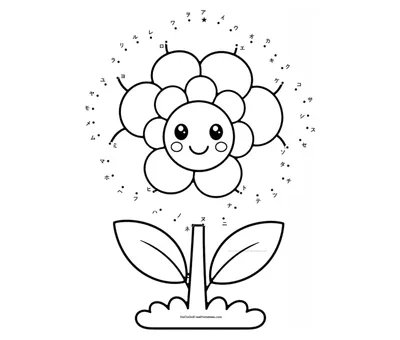
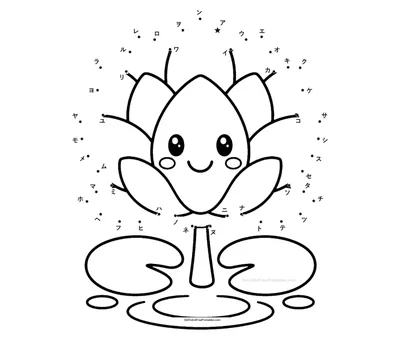
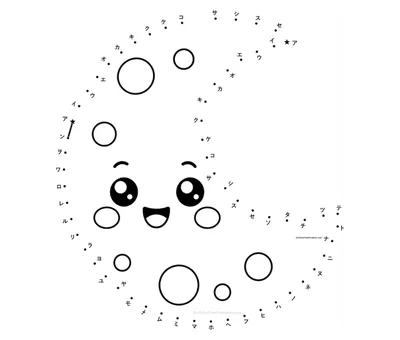
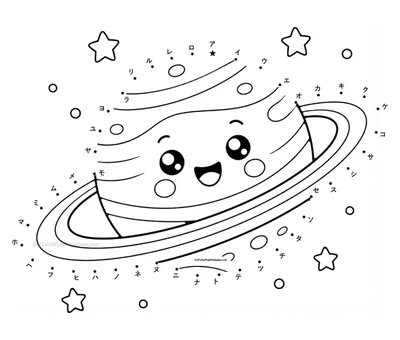
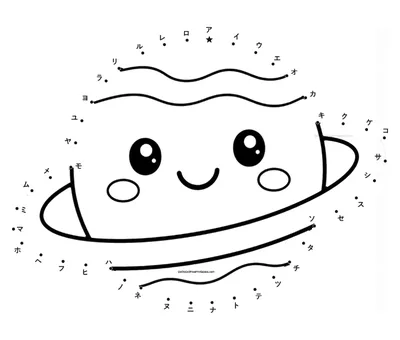
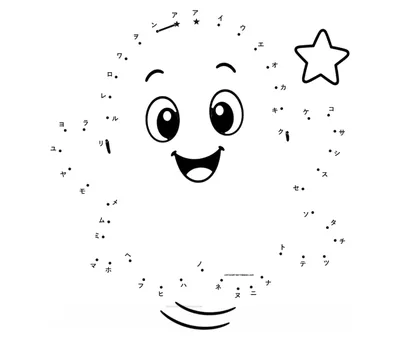
The 46-dot Lotus Flower is exactly one complete round, so it begins at ア and ends at ン. The 43-dot Ringed Planet stops three labels short of the end, at ロ, and the 45-dot Camellia Flower stops at ヲ. All three avoid repeated labels, but only Lotus Flower covers all 46 characters. Ringed Planet and Camellia Flower stop before the end of the chart.
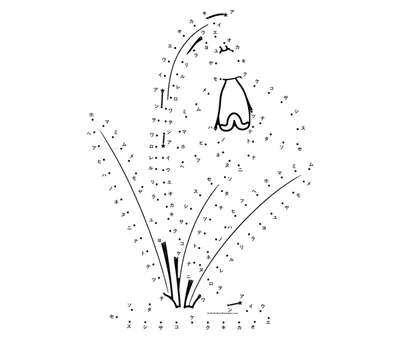
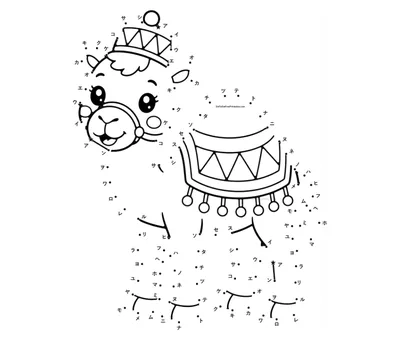
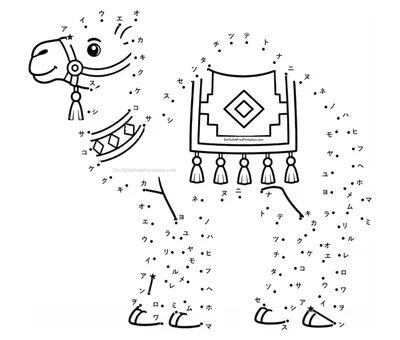
Longer pictures repeat the chart. The 104-dot Circus Camel completes two rounds and continues to シ in the third. The 145-dot Snowdrop Flower completes three rounds and finishes at キ in the fourth. On long sheets the same character appears in several places, so keep track of which round you are in.
Choosing a Picture by Length and Interest
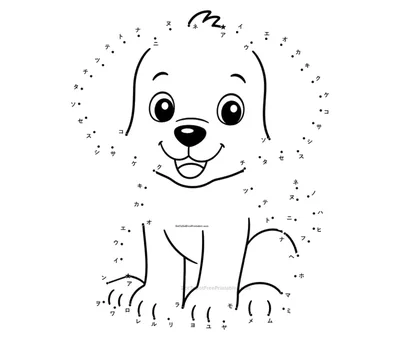
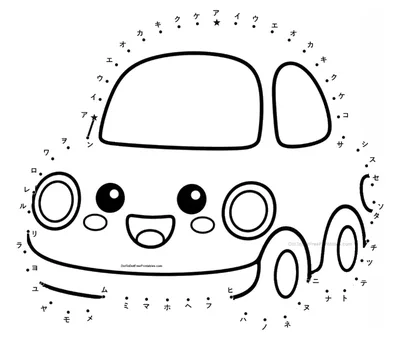
For a first try, pick a picture that fits within one round. Besides Ringed Planet, the 43-dot Space Camera also ends at ロ, before the ワ row. A child who likes animals may prefer the 50-dot Cute Baby Elephant, which completes the chart once and adds four labels, ending at エ.
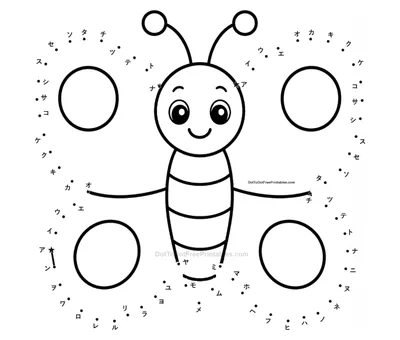
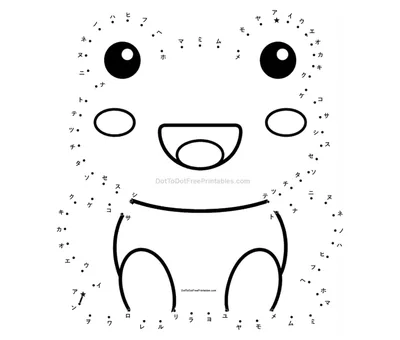
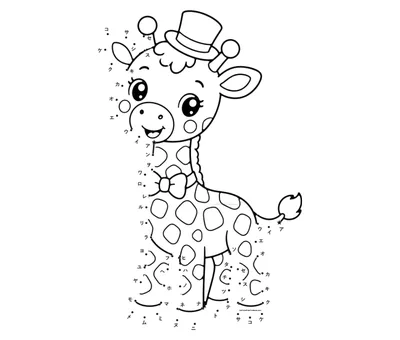
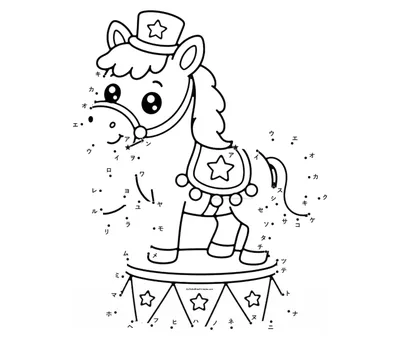
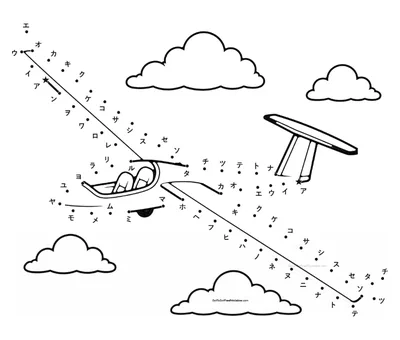
For a middle step, the 60-dot Circus Giraffe ends at セ in its second round, and the 67-dot Cute Butterfly and Glider both end at ナ. The 70-dot Cute Puppy reaches ネ. Each card in the grid shows the dot count, suggested age range and difficulty.
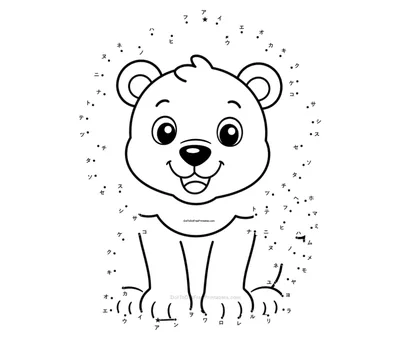
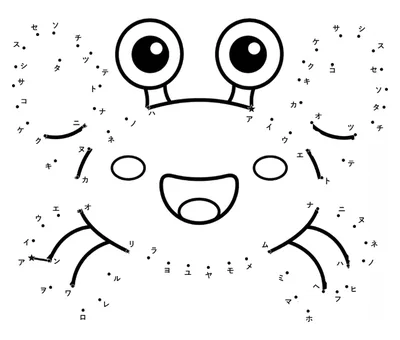
The 72-dot Cheerful Crab is rated harder than the pictures above and suggested for ages 6 to 9, so it suits a child who already reads the chart confidently. Equal dot counts do not mean equal difficulty: spacing, turns and how close the dots sit all matter, so look at the preview as well as the number.
How to Start a Katakana Connect the Dots Activity
Before the pencil touches the page, read the first row of the chart together: ア, イ, ウ, エ, オ. Ask the child to point to each character on the chart and then find it on the picture. Doing the first few connections together shows the difference between knowing the order and finding a dot.
Pause at the end of each row. Ask what comes after オ, then after コ, and so on. Thinking in rows helps a child recover quickly when they lose their place, because they only need to remember which row they are in and how far along it they are.
Use a pencil while the routine is new. If a line seems to go somewhere strange, return to the last connection you are sure of and check the chart. If you are still unsure, open the numbered version of the same picture: the dot positions match, so the number shows which dot comes next.
Look-Alike Katakana to Point Out Before You Start
Some katakana are well known for looking alike. シ (shi) and ツ (tsu) are both built from short strokes and a longer sweep, and ソ (so) and ン (n) are another such pair. The difference is in the direction and position of the strokes, which can be hard to see in small print.
Point these pairs out on the chart before starting. Write each pair large on scrap paper, then ask the child to find one of them on the worksheet. Because シ and ツ sit in different rows, and ソ and ン are far apart in the order, the puzzle itself gives a helpful check: if the next label should be ン, the ソ belongs to a different place in the trail.
Other characters, such as ク and ケ, or ワ and ウ, may also cause hesitation for some learners. Rather than drilling every possible confusion, notice which shapes your child actually mixes up and give those pairs some extra attention away from the puzzle.
Small Games That Build Katakana Recognition
Row race: before connecting, read one row of the chart aloud and let the child find all five characters of that row on the page. Since long sheets repeat the chart, they may find more than one of each. That is fine for a search game; the trail itself still follows one round at a time.
Hiragana match: write a few hiragana on cards, such as あ, か and さ, and ask the child to find the katakana with the same sound on the chart, then on the worksheet. This uses what they already know to anchor the new shapes.
Round counter: put a counter aside each time the trail passes ン and starts again at ア. On the 104-dot Circus Camel, two counters are set aside before the final stretch to シ. Counting rounds shows progress without turning the activity into a race.
Word spotting: after the picture is finished, look together for katakana on food packets or signs at home. Recognizing a character from the puzzle in a real word is a natural next step, and it shows why katakana is worth learning.
Using the Sheets at Home or in a Classroom
At home, let the child choose the picture and decide whether to finish it in one sitting. A long trail can be completed over several days; write the last label reached in the margin so you can pick up again. A short sheet completed carefully is more useful than a long one finished by guessing.
In a class or club, set one goal for the session, such as reading the ア to オ and カ to コ rows without the chart, or noticing the シ and ツ difference. Learners can work in pairs, one reading the next label aloud and the other finding and connecting it, then swap roles.
For older learners of Japanese, the sheets work as a quick warm-up before a vocabulary lesson. Completing a 46-dot picture is a full read-through of the chart, and the finished drawing is a small reward that does not depend on test scores.
What These Worksheets Practise, and What They Do Not
A katakana dot to dot practises recognizing printed characters, recalling the chart order and scanning a page for the next target. Drawing the lines also gives practice in controlled pencil movement. The picture adds motivation and something to color and keep.
They are not handwriting sheets. The pencil draws the outline of a picture, not the strokes of each character, so stroke order and correct proportions need a separate writing model. They are also not a reading course: the labels are single characters, not words, and they do not teach the voiced and small characters needed to read real katakana words.
The sheets do not teach pronunciation by themselves. Use a teacher, a Japanese-speaking family member or a reliable audio resource for sounds. Saying each character while connecting is a good habit, but only when the learner has heard a trustworthy model first.
Printing a Clear Katakana PDF
Open the chosen puzzle, select Japanese Katakana Version and download the PDF for A4 or US Letter paper. Print from the PDF rather than from a screenshot of the web page, so the labels stay sharp and correctly sized.
Print at actual size or 100% scale and check one copy before printing a set. Small strokes matter in katakana: make sure シ and ツ, and ソ and ン, can still be told apart on your printer. If they cannot, avoid scaling the page down, and try a higher print quality setting.
Use a sharp pencil for the trail and save heavy coloring until all the connections are done. Coloring over the labels too early makes it harder to check the order if something looks wrong.
Check the print preview before making copies. If an edge is clipped, use the printer’s fit option or reduce the scale only enough to keep the whole drawing on one page. Check the smallest labels again after resizing.
Make a Katakana Picture Ticket
Let the learner design a ticket for the picture they want to reveal. On the ticket, copy one row from the reference chart, such as カ キ ク ケ コ, leaving space beside each character for a small tick. As each label is found in the first round, tick the ticket and connect its dot on the worksheet.
The ticket is a reminder of the search, not a spelling exercise. These five characters are a chart row, not the name of the picture. Once the learner is comfortable, try another row or a new drawing rather than racing through the same sheet. If a character is hard to distinguish, compare it with the chart before continuing. End with a question about the picture: where would this animal go, or what would this spacecraft discover? The learner can answer in whichever language feels comfortable.
About This Guide and Reporting a Problem
The Japanese Katakana Version keeps each picture and its connection order, and replaces the numbers with the 46 basic katakana in gojūon order, repeating the chart on longer pictures. The round and end-label calculations on this page come from that sequence and the dot counts listed on each puzzle.
This guide was prepared with AI-assisted drafting and editing. Its puzzle examples and calculations were checked against the site’s puzzle data, and the character order against the standard kana chart. Read about the project on our About page, and see our editorial policy for how content is produced and corrected.
If a label, dot or download looks wrong, report the problem with the puzzle URL and the version name, Japanese Katakana Version. For printing issues, mention the paper size and what was unclear. See our terms of use for printing and sharing permissions.
The activity ideas are suggestions for home and classroom use, not results from a classroom trial. This guide has not been reviewed by a specialist teacher.
FAQ
Japanese Katakana worksheet FAQs
Are these katakana worksheets free to print?
Yes. Every Japanese Katakana Version is a free PDF for home and classroom use, in A4 and US Letter. Choose a picture, open its page, select the katakana version and download the size you need. No sign-up is required.
Which katakana appear on the dot to dot sheets?
The 46 basic katakana from ア to ン in gojūon order, including ヲ. Voiced characters such as ガ, small characters such as ャ and ッ, and the long-vowel mark ー are not used as labels.
What happens after ン on a longer picture?
The order starts again at ア, and that restart dot is marked with a small star. Continue through the new round in the same order. Do not connect back to the first ア where the picture began.
Which pictures use the chart exactly once?
Lotus Flower has 46 dots, one complete round from ア to ン. Ringed Planet and Space Camera have 43 dots and end at ロ, and Camellia Flower has 45 and ends at ヲ, so none of them repeat a label.
Should my child learn hiragana before katakana?
Many learners meet hiragana first, and both scripts share the same chart order and sounds. Our hiragana collection uses the same pictures and order, so it can come first. A child who already knows some katakana can start here.
How do I help with シ and ツ, or ソ and ン?
Show each pair large on paper before starting and compare the stroke directions. On the worksheet, use the order as a check: シ and ツ are in different rows, and ソ and ン are far apart, so the expected next label tells you which one belongs.
Do the sheets teach katakana writing or pronunciation?
No. They practise recognizing characters and their order. Use a stroke-order guide for writing and a teacher or reliable audio for pronunciation. The puzzle works well alongside those, not instead of them.
What age are the katakana dot to dot printables for?
Most pictures are suggested for ages 5 to 7 or 5 to 8, and a few for 6 to 8 or 6 to 9. Each card shows the age range, dot count and difficulty. Older children and adults learning Japanese can use them too.
Can a beginner use these without knowing every letter?
Yes, with a reference letter strip and help for a short section. Choose a picture the learner likes, then pause or finish together. The card’s suggested age describes the drawing challenge, not mastery of Japanese Katakana. Completing a picture is not a reading assessment.
Can I use the katakana labels to spell the name of the picture?
The labels follow gojūon order; they do not spell a word. For a separate spelling activity, ask a knowledgeable reader to supply the correct katakana word after the picture is finished. Real words may need marks or small kana that are not included in this 46-label puzzle sequence.